
Endeavour,
February 2000
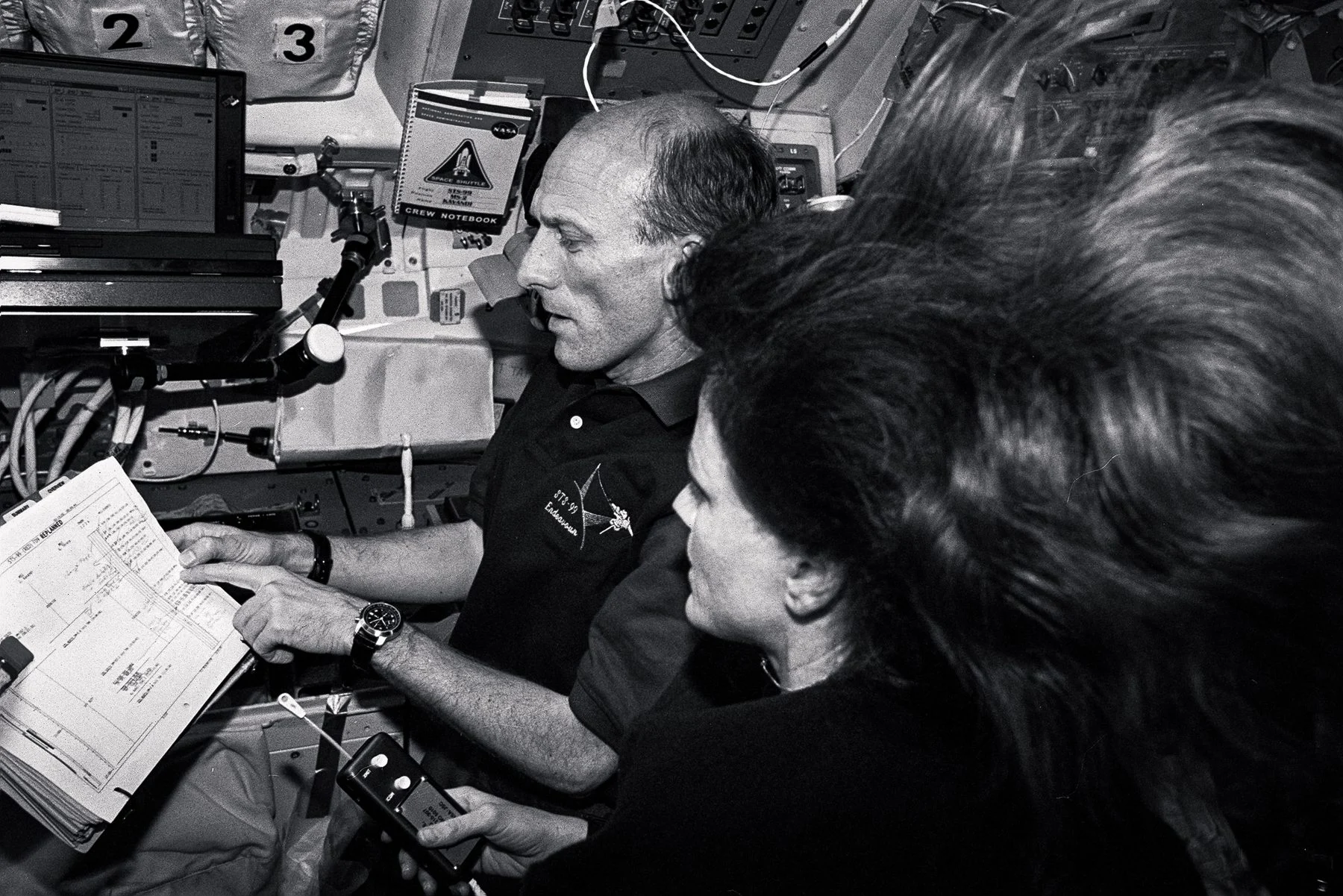
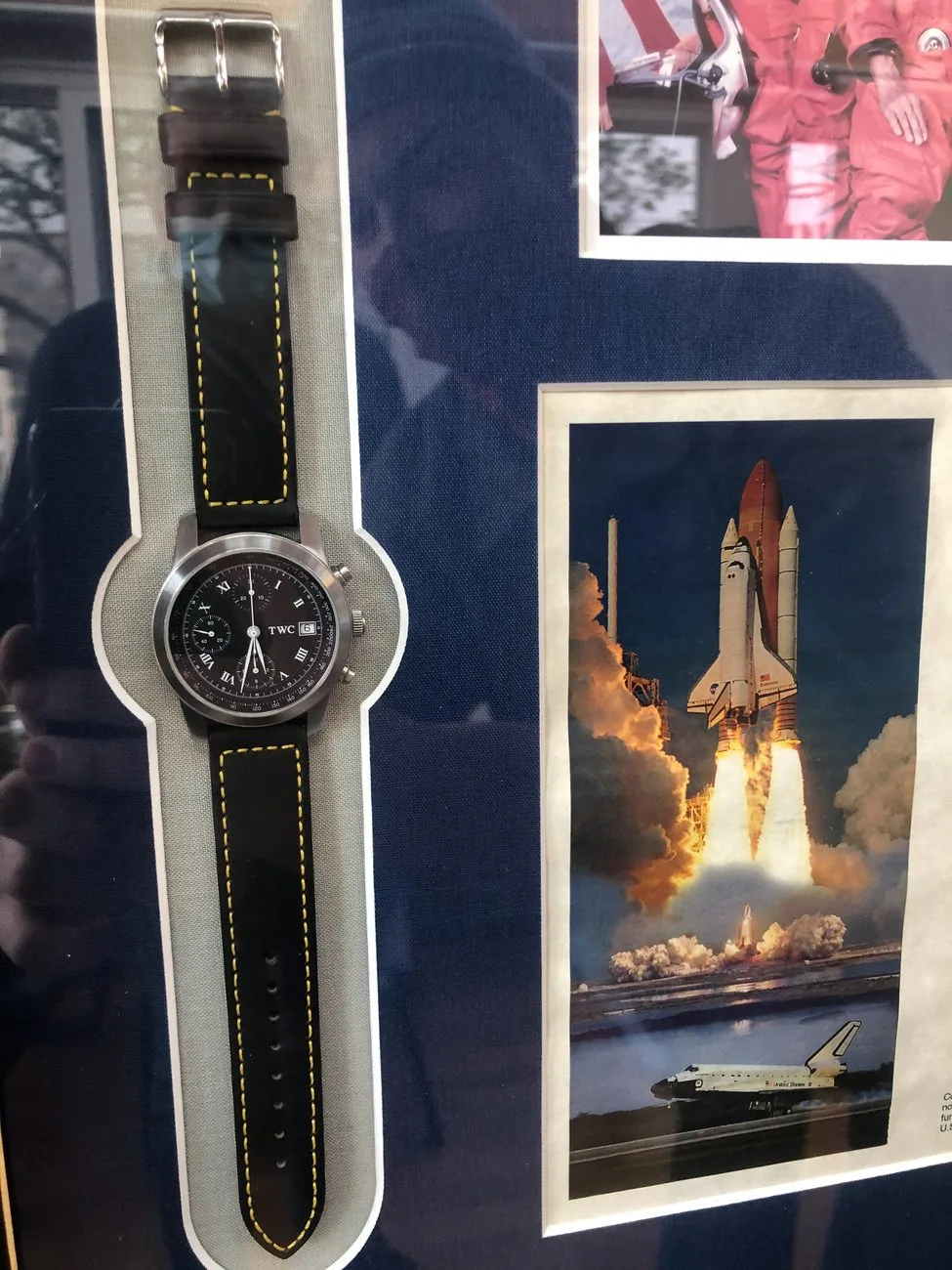
Flown aboard Space Shuttle Endeavour on STS-99, February 2000, on the wrist of ESA astronaut Gerhard Thiele. This is that watch's story, and the story of the collection that grew from it.
A watchmaker in Maryland, an astronaut in training
Towson Watch Company was founded in Annapolis in 1998 by George Thomas, a Czech-born master watchmaker trained in Prague, and Hartwig Balke, a German engineer.
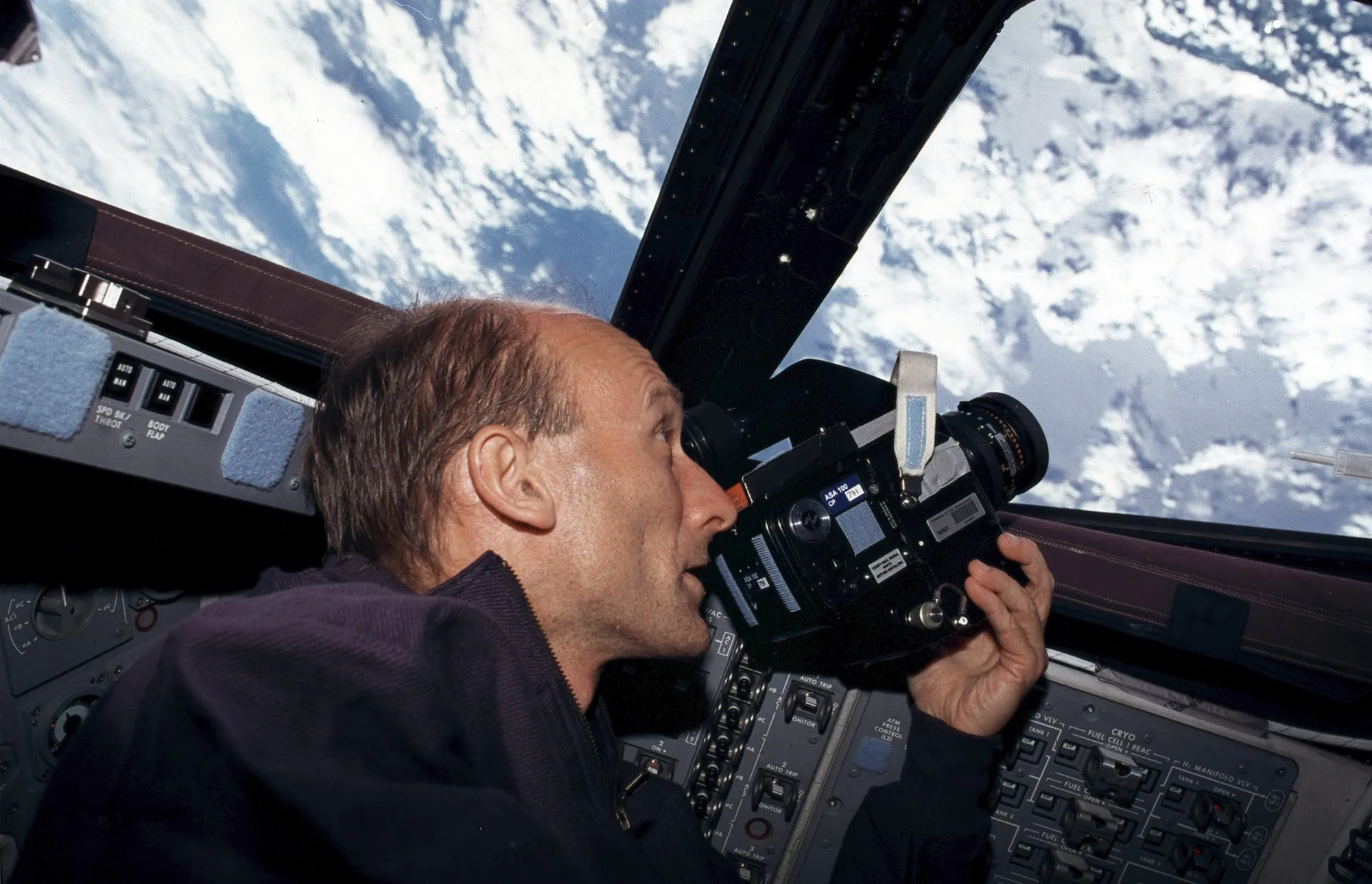
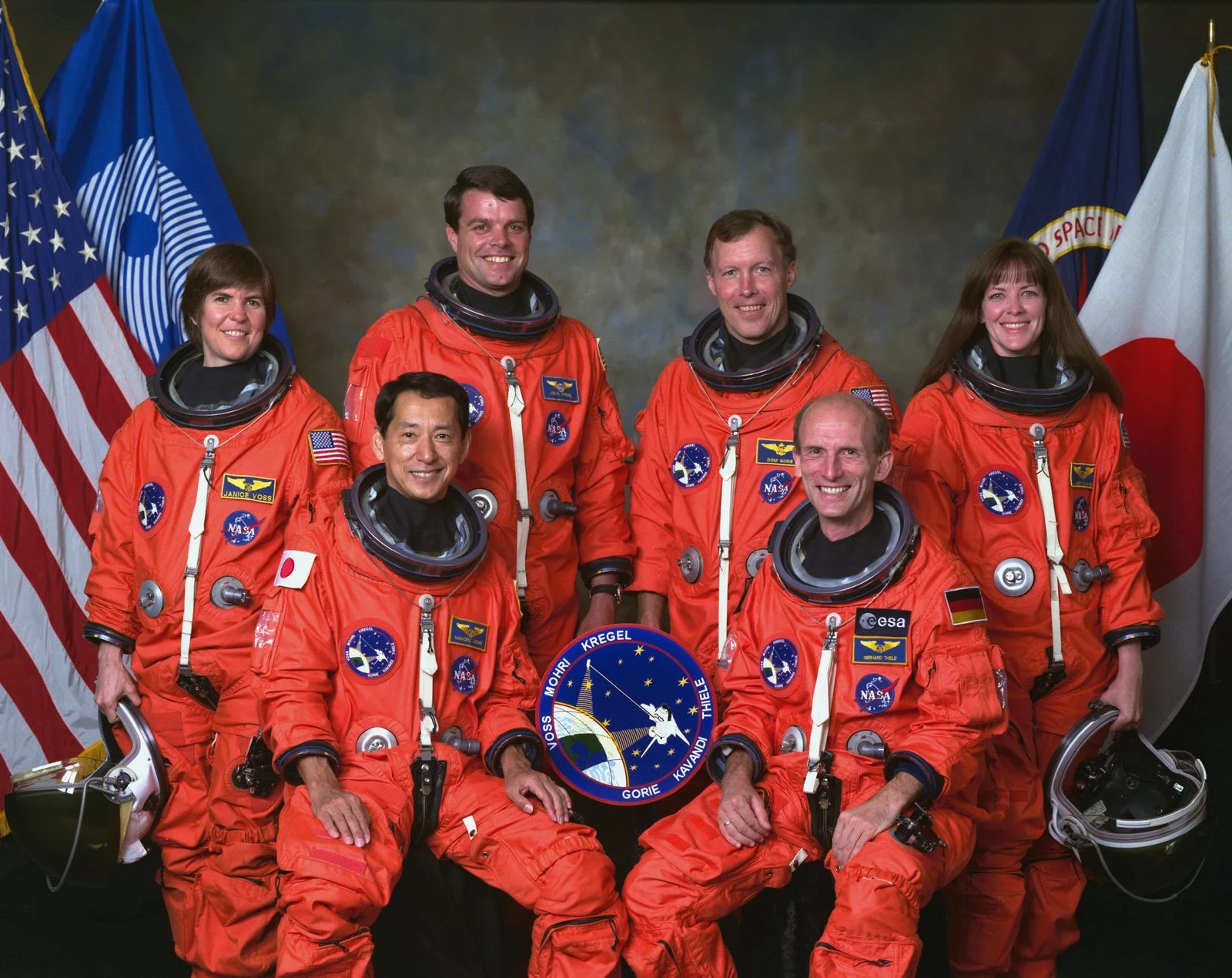
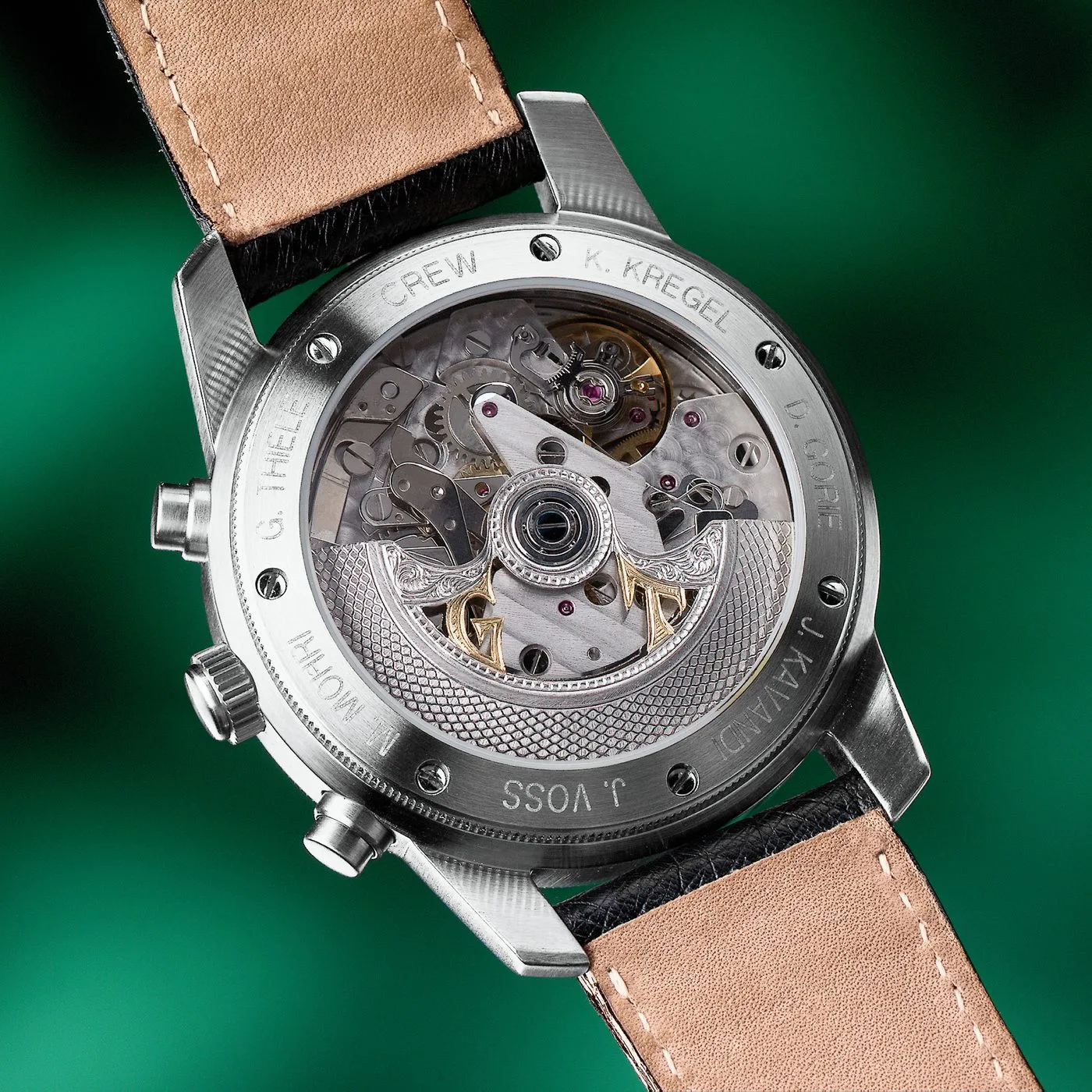
Gerhard Thiele was Balke's friend. A German physicist and ESA astronaut, Thiele was assigned to STS-99, the Shuttle Radar Topography Mission, as Mission Specialist 1. In 1998 he asked Balke and Thomas for a chronograph to wear on the mission. The movement passed chronometer testing in 1999, and Balke and Thomas built the watch in 2000. Two steel chronographs were made for the flight, their casebacks engraved with the names of the six crew.
Each was an automatic chronograph built on the Valjoux 7750, with a 42 mm steel case, a tachymeter, and 30-minute and 12-hour registers. It was a working instrument, made to be read at a glance under a flight-deck light and trusted for the full eleven days.
Mapping the planet in eleven days
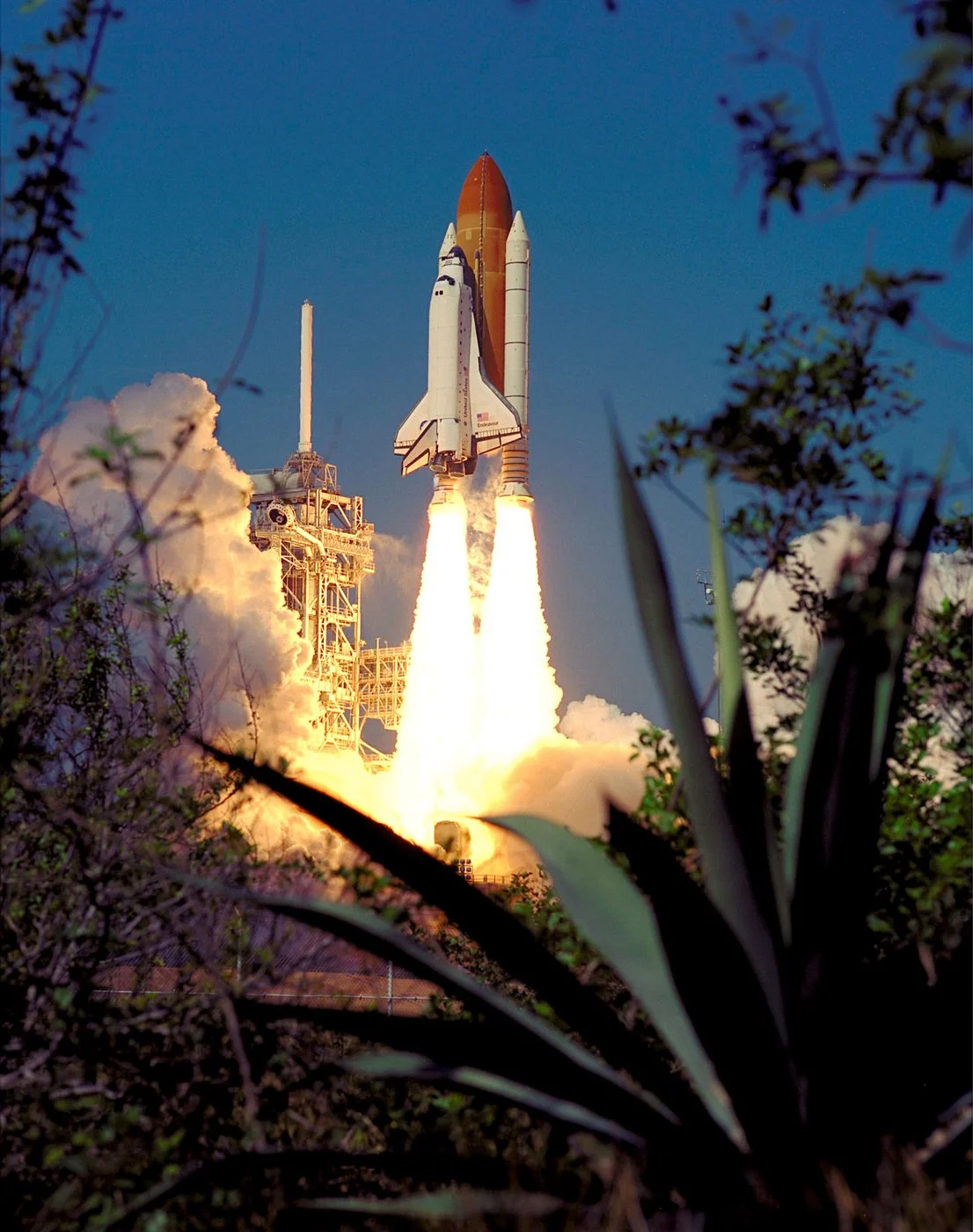
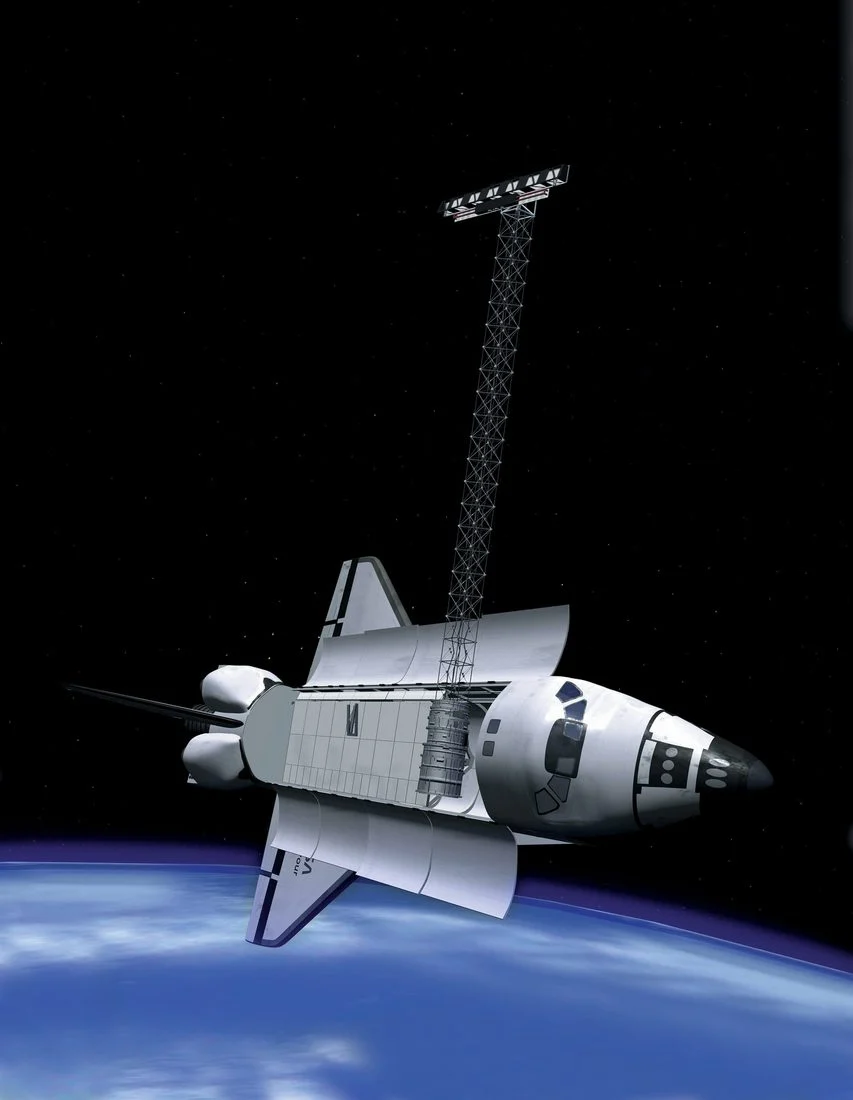
STS-99 carried a radar system on a 60-meter mast, the longest rigid structure flown in space at the time. Endeavour launched from Pad 39A at 12:43 p.m. on 11 February 2000. Working in two shifts around the clock, the crew mapped Earth's land surface between 60° north and 56° south.
The result was the first near-global, high-resolution elevation map of the planet. Endeavour landed at Kennedy Space Center on 22 February 2000.
What went into orbit
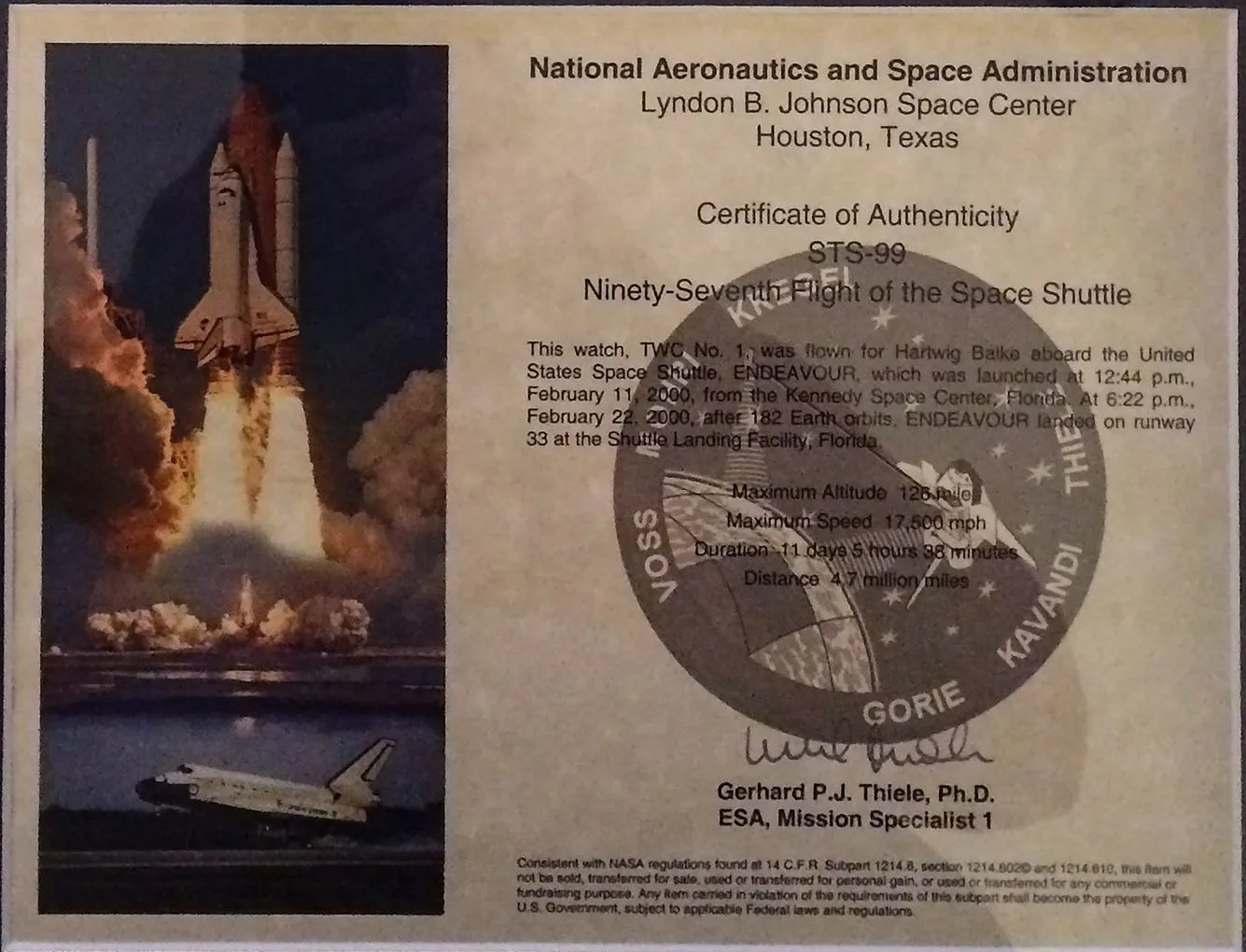
NASA's certificate records that the watch "was flown for Hartwig Balke."
Thiele wore both chronographs in orbit. TWC No. 1 is the one NASA's Johnson Space Center certified, and the one Towson keeps. It is company heritage and is not for sale. The first 25 Towson wrist chronographs followed the flight.
The same six names were engraved into steel: CREW · K. KREGEL · D. GORIE · J. KAVANDI · J. VOSS · M. MOHRI · G. THIELE.
The watch that flew, and the watch you can own
TWC No. 1 stays with Towson. It is company heritage and is not for sale. What a collector can own is the MISSION: the current production of that chronograph, designed by Hartwig Balke and built in Maryland by watchmakers the founders trained.
The Mission collection
Towson's family of automatic chronographs, built on the Valjoux 7750 and, for the full-calendar Moon versions, the 7751. It begins with TWC No. 1 and runs in two lines: the Mission, which keeps No. 1's three-register layout, and the Cockpit, the smaller and more formal chronograph. Each line also comes as a Moon version with day, date, month and moonphase.
Every reference has a stainless steel case, sapphire crystal and exhibition back, is water-resistant to 5 ATM, is regulated and decorated by our watchmakers in Maryland, and carries a two-year warranty. Retired references are not remade.
MISSION and MISSION MOON
Three references carry the flight watch forward. Each is a numbered edition of 100 per dial, built, regulated and tested by our watchmakers in Maryland. Retired references are not remade.
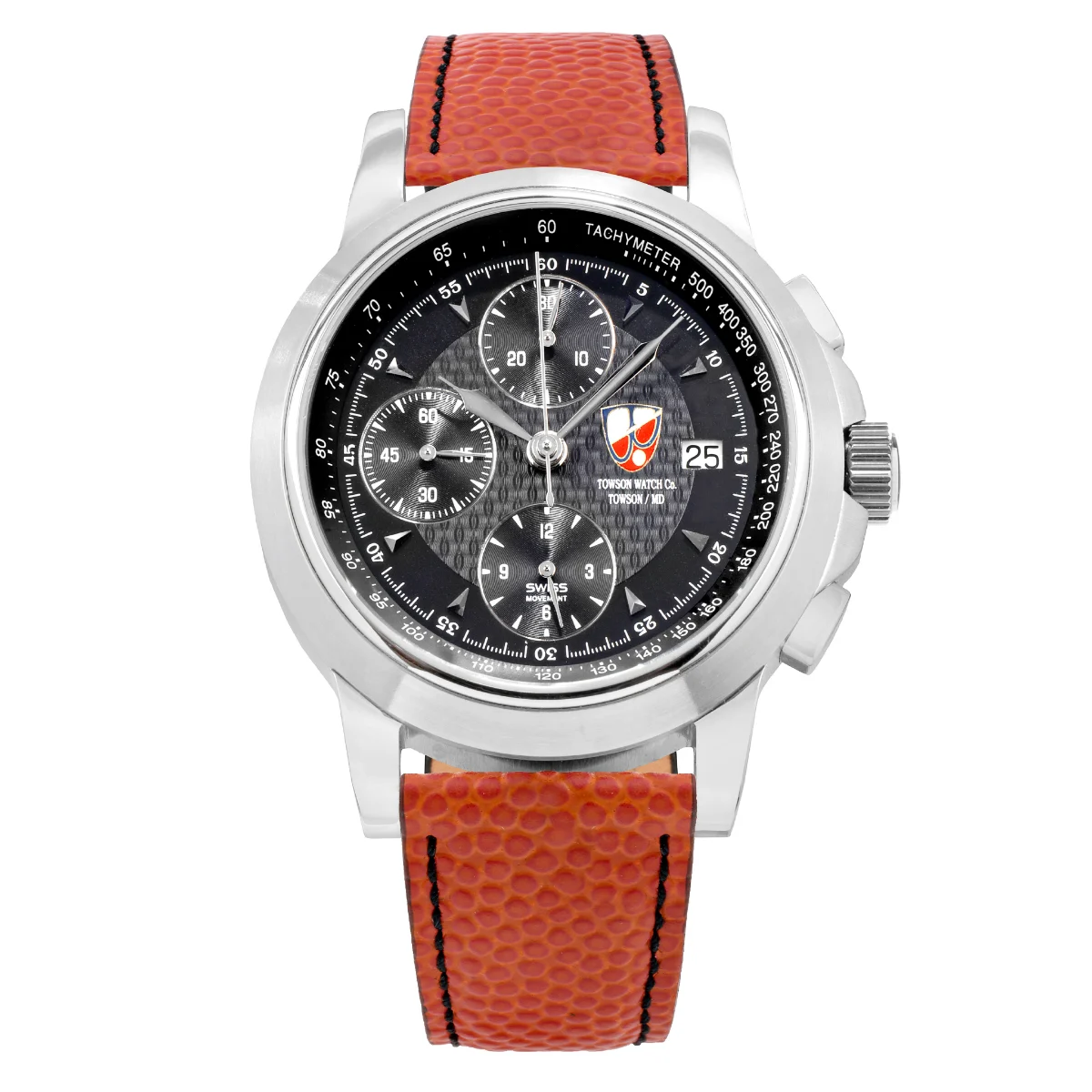
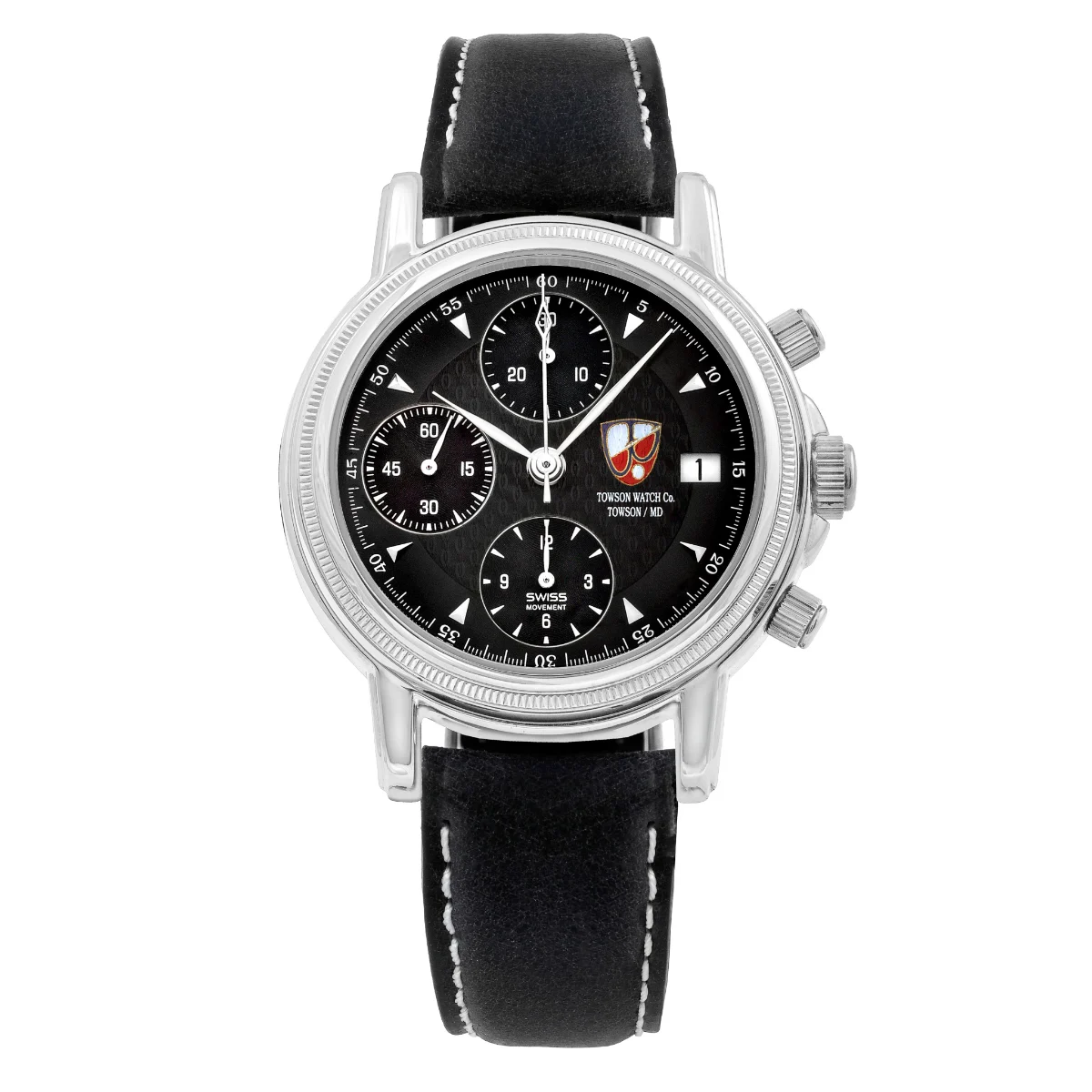
The direct descendant of the flight watch. Black carbon guilloché dial with the Towson shield, a black or silver tachymeter, rhodium or rose-gold hands and six straps.

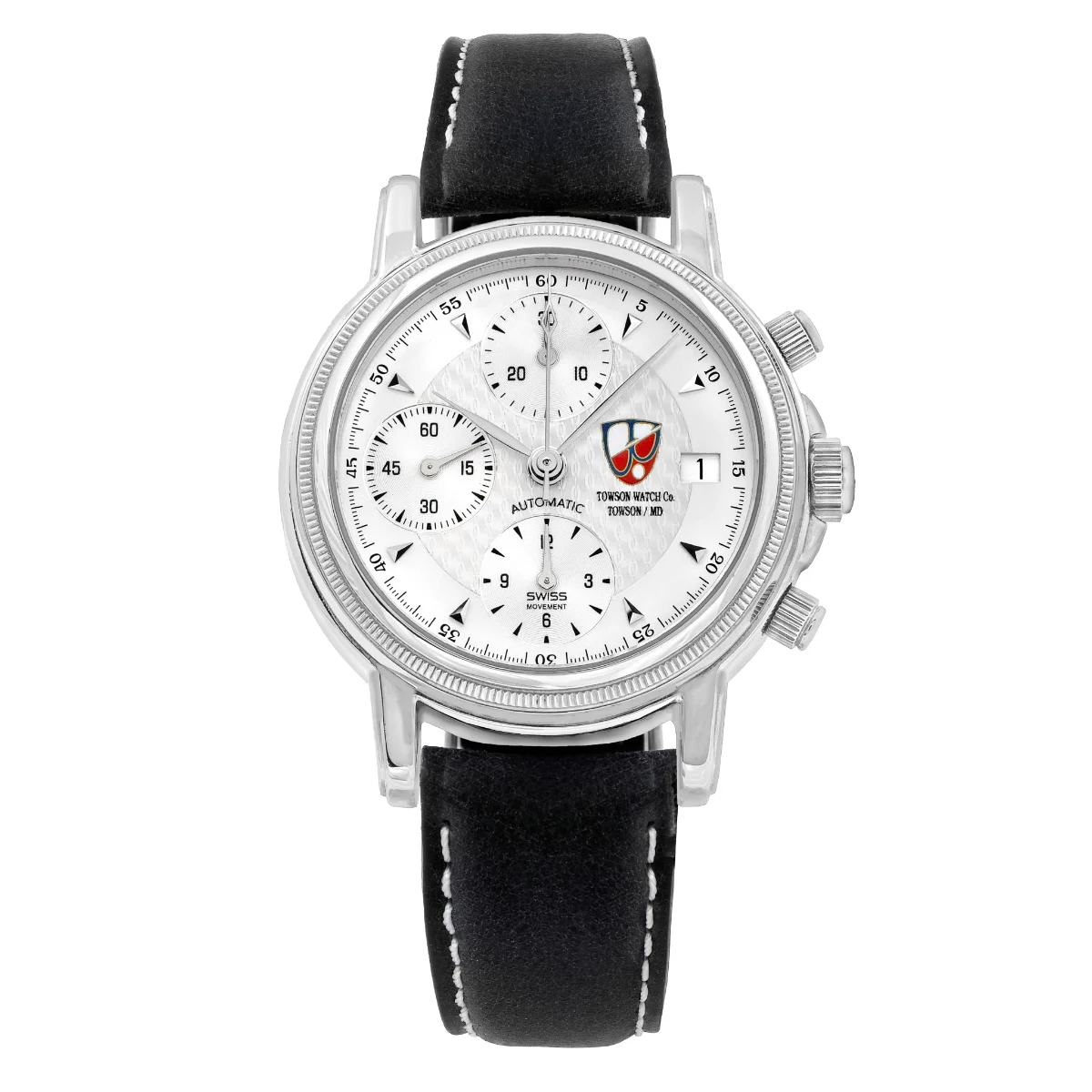
The same 42 mm case and movement behind a silver carbon guilloché dial. Six straps, from nappa to Horween leather.
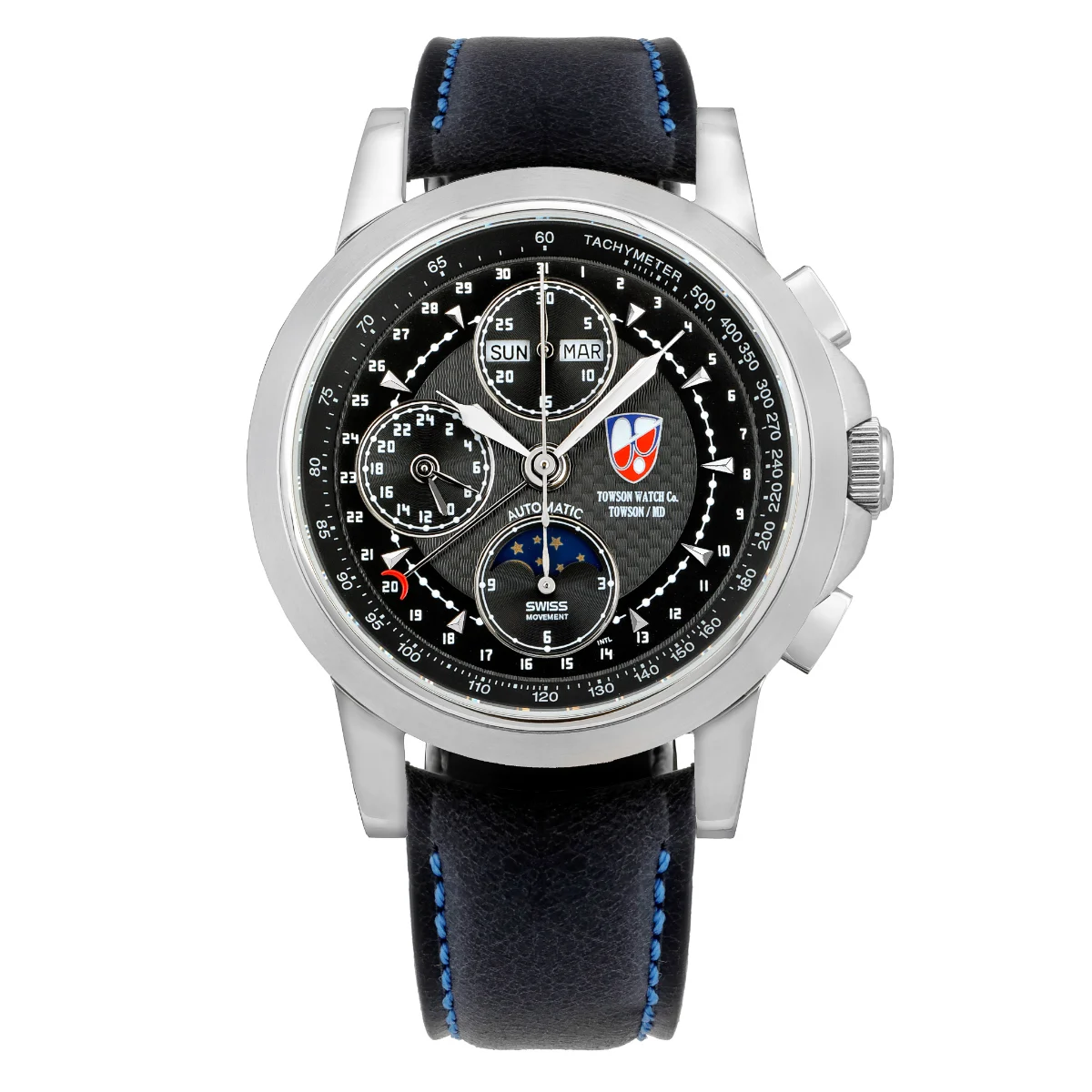
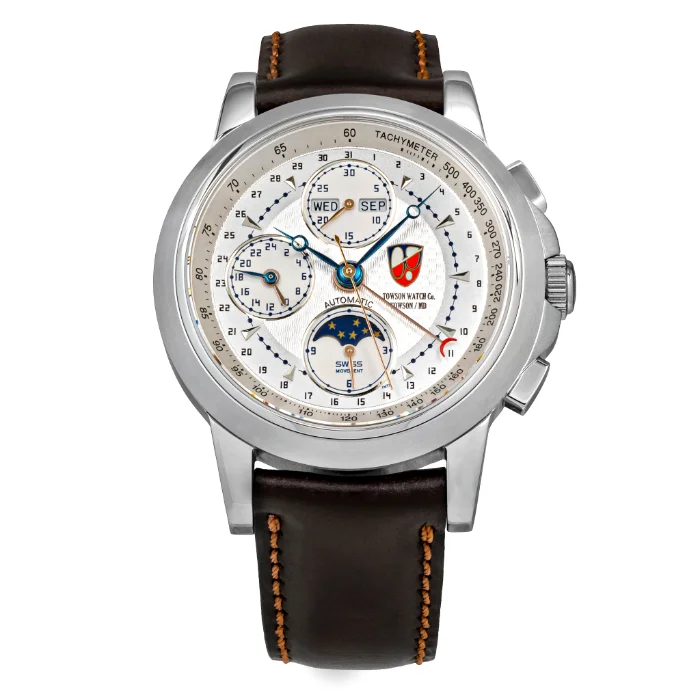
The Mission chronograph with a full calendar: day, date, month, moonphase and 24-hour indication. Black or silver tachymeter and four straps.
COCKPIT, the collection's 38 mm chronograph
The COCKPIT belongs to the Mission collection and runs the same ETA 7750 automatic chronograph as the MISSION, in a 38 mm case. Its name comes from the cockpit of a sailing vessel: three engine-turned sub-dials, laid out like the instruments at a helm. Series Two was released in 2024, and every watch is numbered on its caseback.
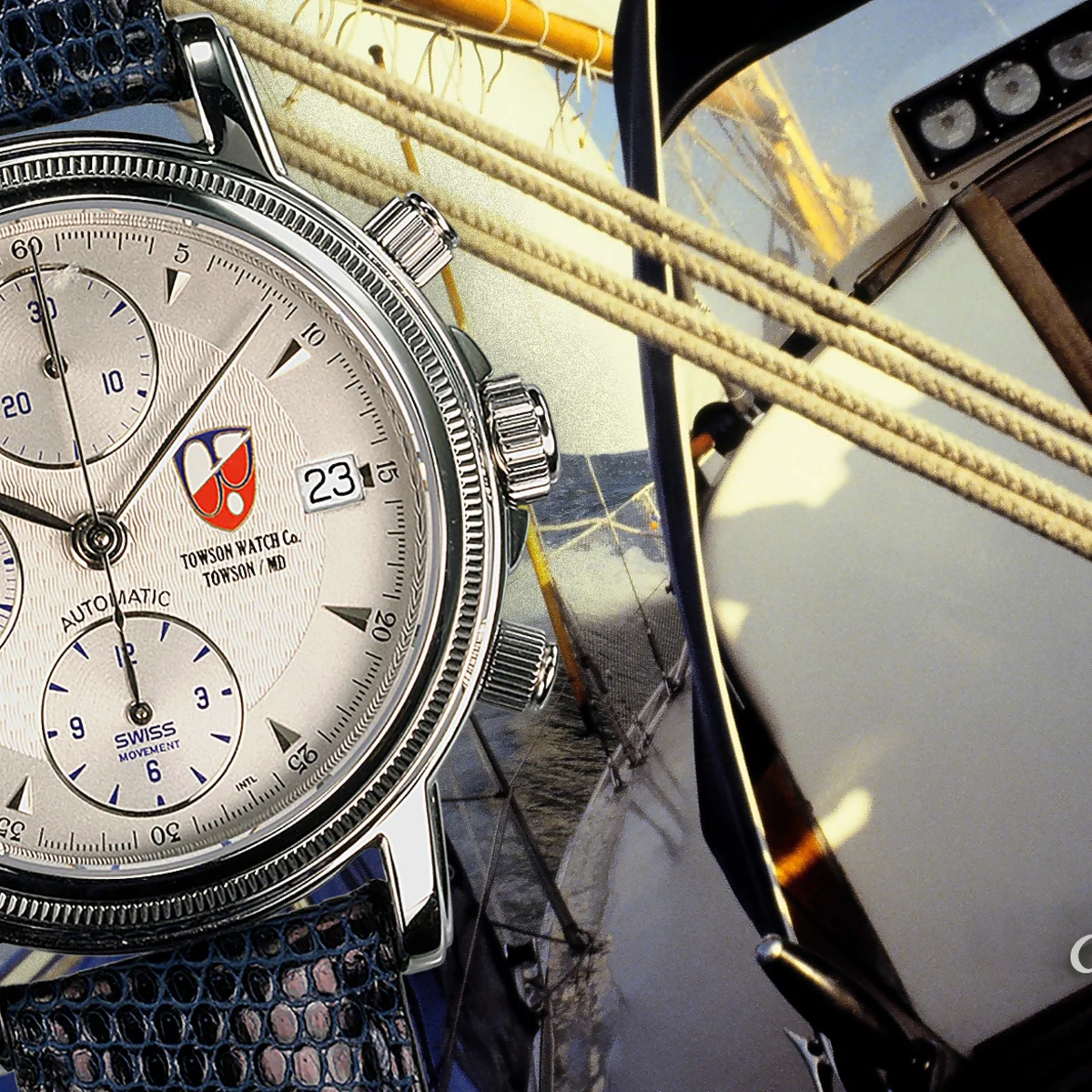
Five references you can order today
Every reference since 2000
One flight watch became a family. The Mission collection now takes in every Mission, Mission Moon and Cockpit chronograph Towson has built on the Valjoux 7750 and 7751. Here is the full line, generation by generation. Each reference is a numbered edition, and a retired reference is not remade.
TWC No. 1. Built by Hartwig Balke and George Thomas for ESA astronaut Gerhard Thiele and flown aboard Space Shuttle Endeavour on STS-99. Towson keeps it; it is not for sale.
The first chance for collectors to own the space watch. The STS-99 Chronometer was released in 2010 as the commercial edition of TWC No. 1, with a COSC-certified Valjoux 7750 and a rotor hand-engraved by Jochen Benzinger. The STS-99 Chronograph, a special edition in silver and black, descends from it.
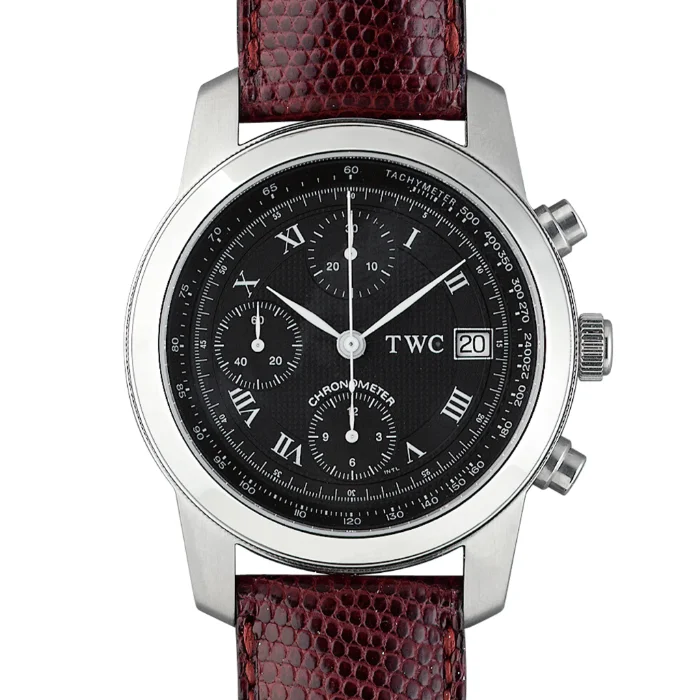
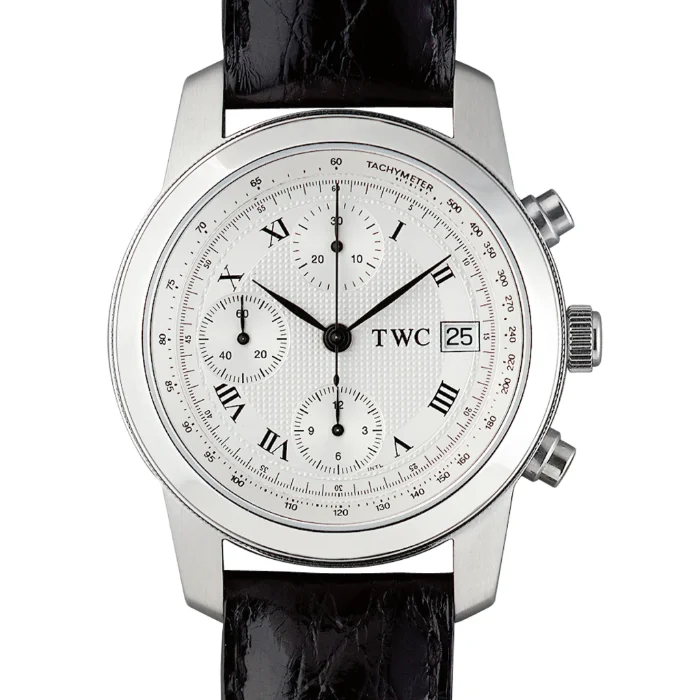
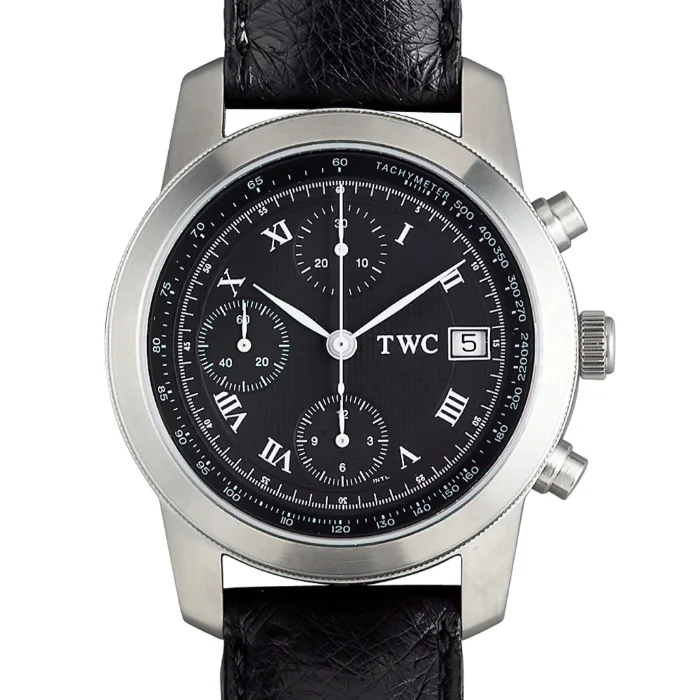
The Cockpit opened the collection's second line: a smaller, more formal chronograph named for the cockpit of a sailing vessel, with a coin-edged bezel and Roman numerals. Silver came first in 2012 at 36 mm, then black in 2014 and copper in 2015 at 38 mm. The Cockpit Moon set the Valjoux 7751, with full calendar and moonphase, in the same case.
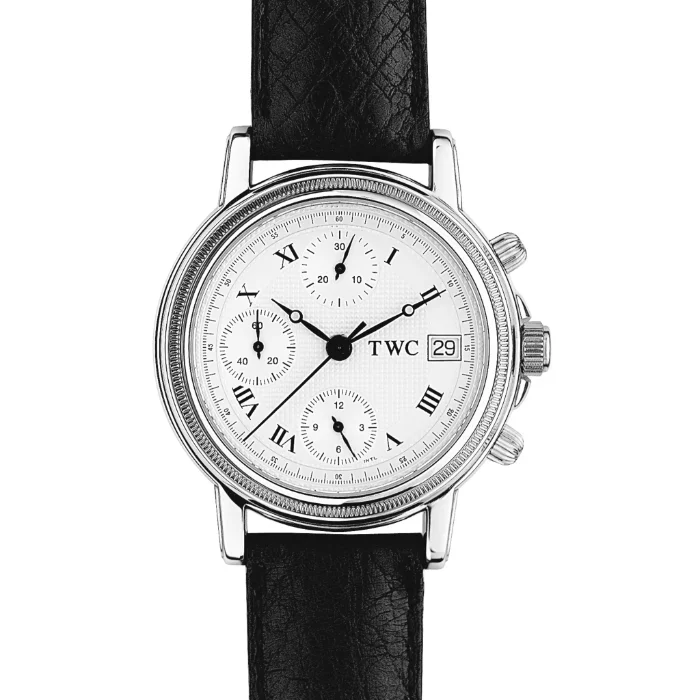
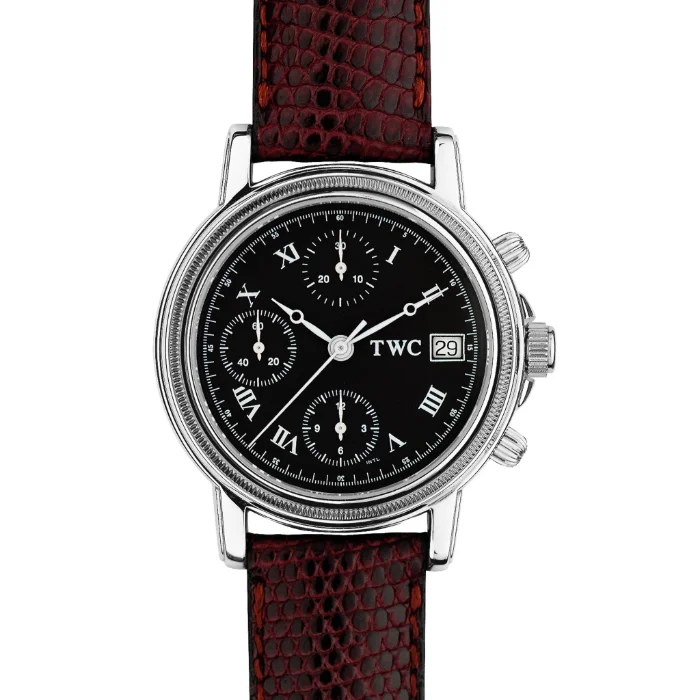
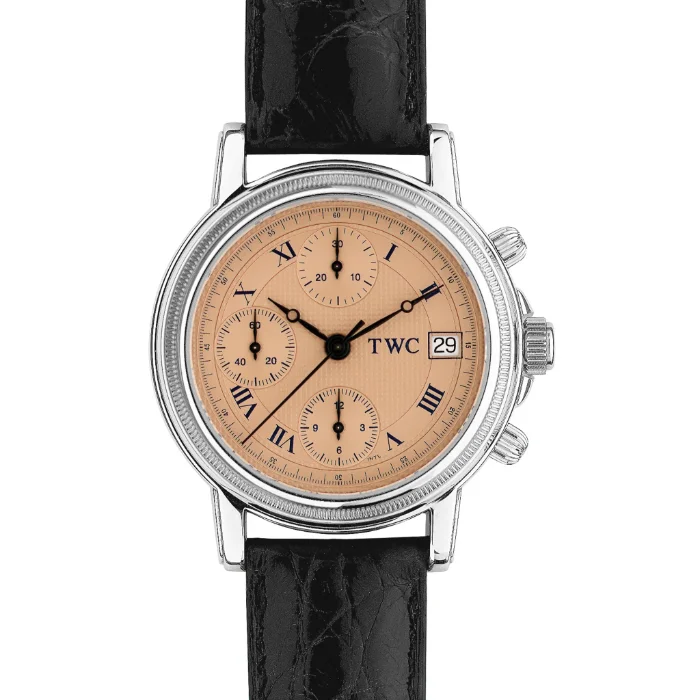
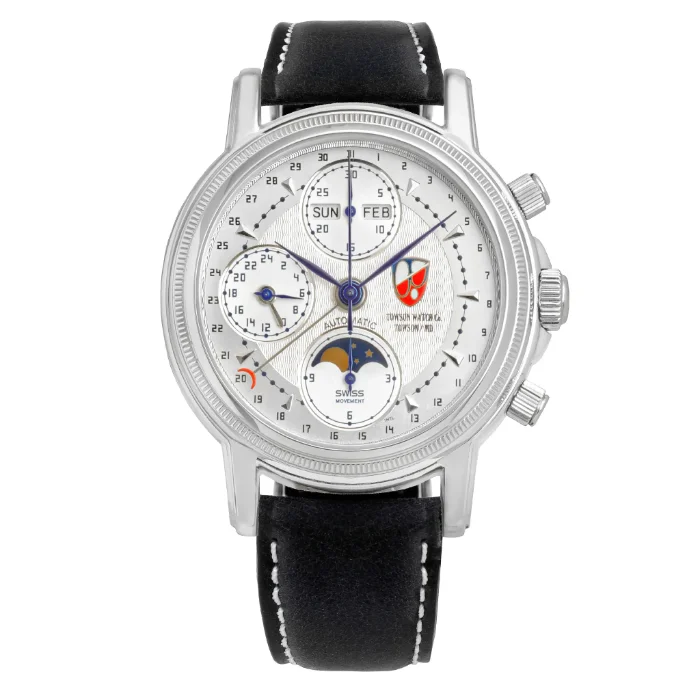
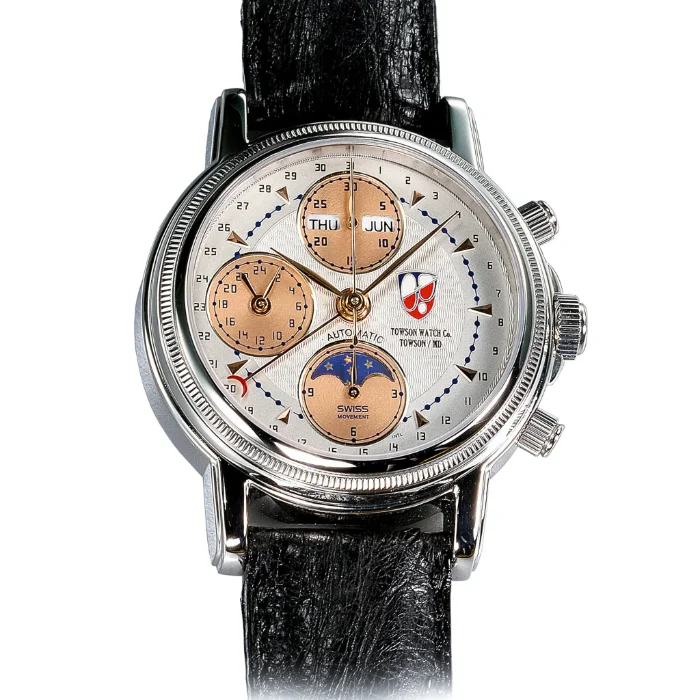
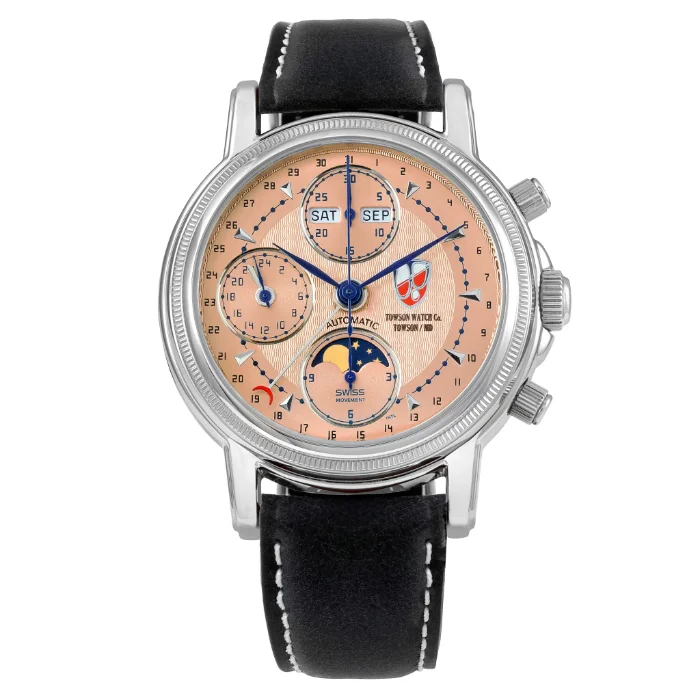
Mission One carried the flight watch's three-register layout into regular production at 40 mm, with an engine-turned dial. Mission Moon I added the Valjoux 7751: day, date, month and moonphase.
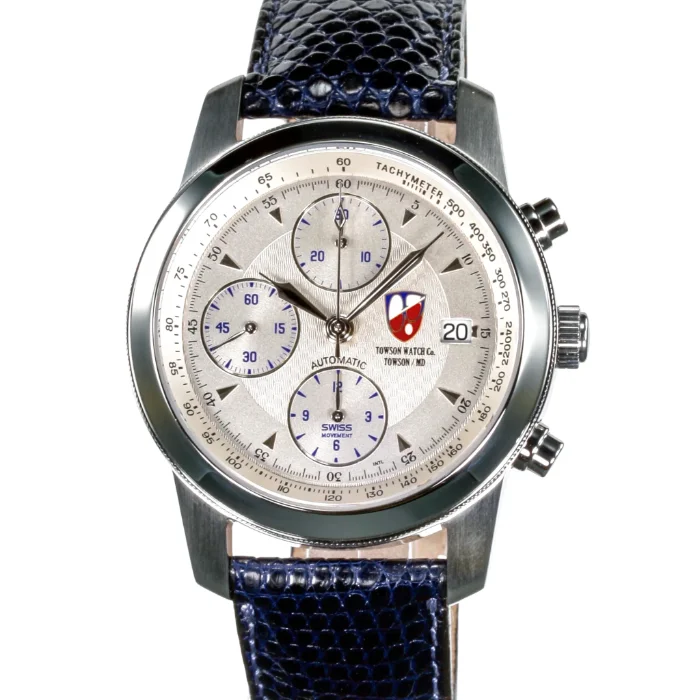
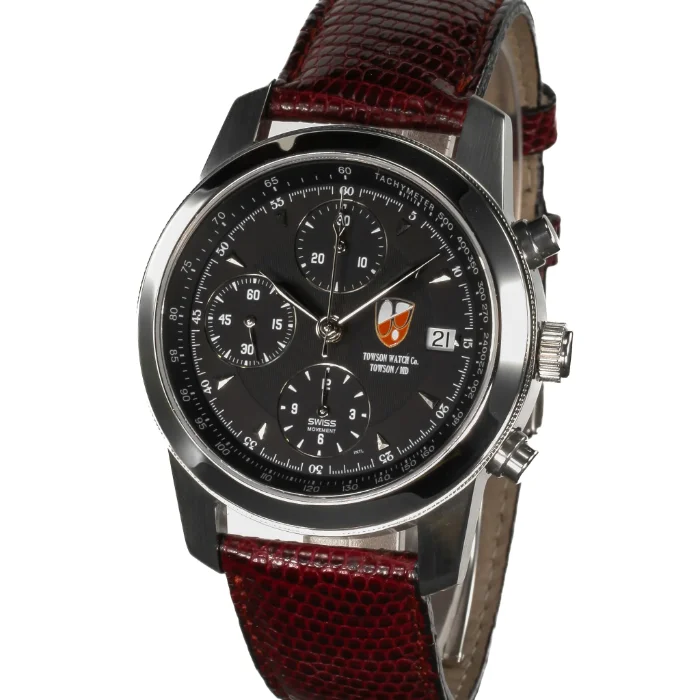
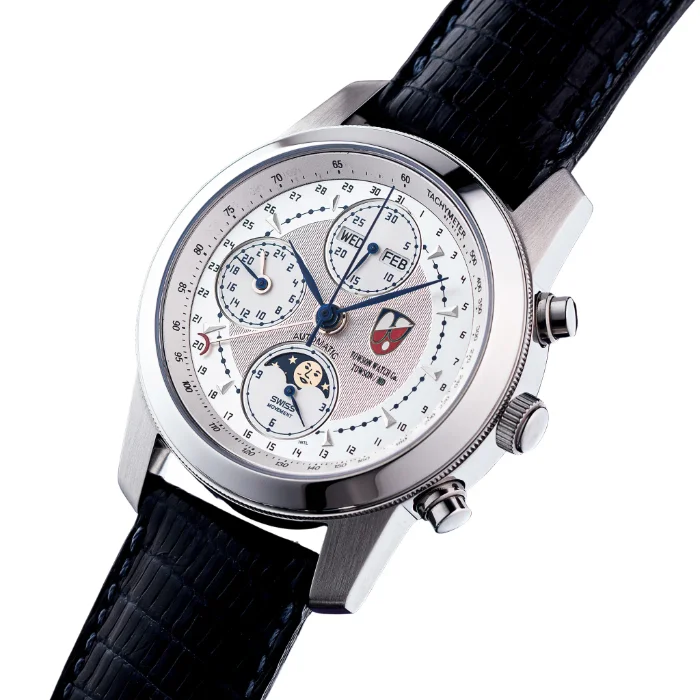
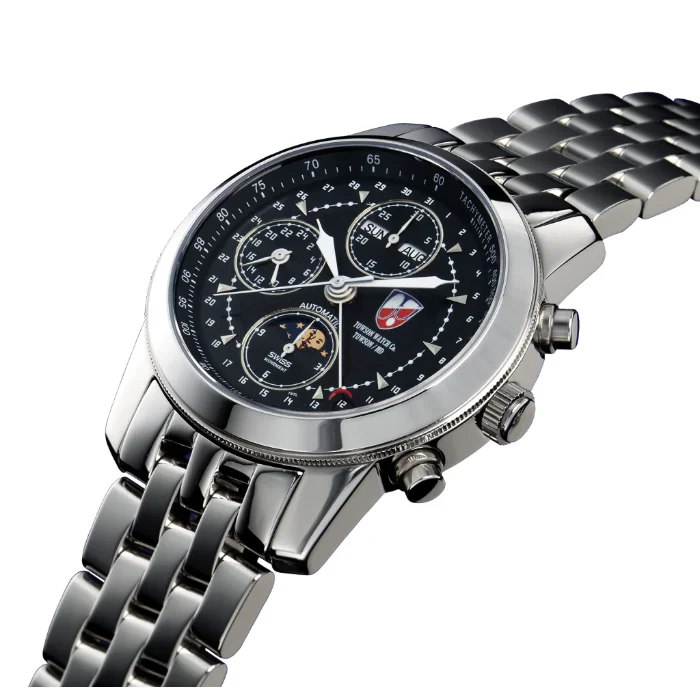
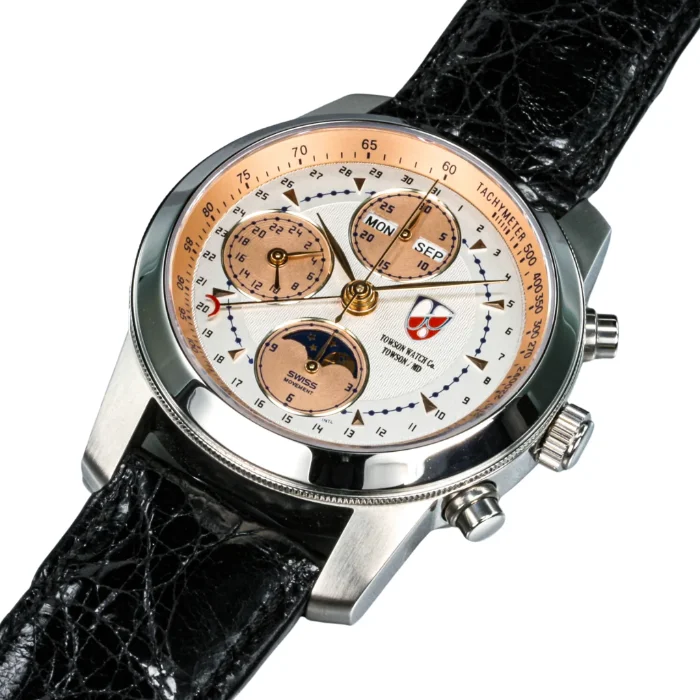
The current generation. The MISSION grew to 42 mm in 2020 with a carbon guilloché dial. The MISSION MOON Series Two dates from 2022, and the COCKPIT returned in 2024 at 38 mm with engine-turned sub-dials.
Choose your reference
Towson Watch Company. Maryland, since 1998.