TWC No. 1: The Towson Chronograph Flown on STS-99

In February 2000, TWC No. 1 spent eleven days in orbit aboard Space Shuttle Endeavour, worn by ESA astronaut Gerhard Thiele. The record: the NASA certificate, the watch, the crew and the mission.

On February 11, 2000, Space Shuttle Endeavour lifted off from Kennedy Space Center on STS-99. ESA astronaut Gerhard Thiele, Mission Specialist 1, had a Towson automatic chronograph on his wrist. He wore it for eleven days in orbit. After Endeavour landed, NASA's Johnson Space Center certified the flight. The watch is TWC No. 1.

Towson Watch Company was founded in Maryland in 1998. Two years later, No. 1 was in orbit. This page is the record of that flight.
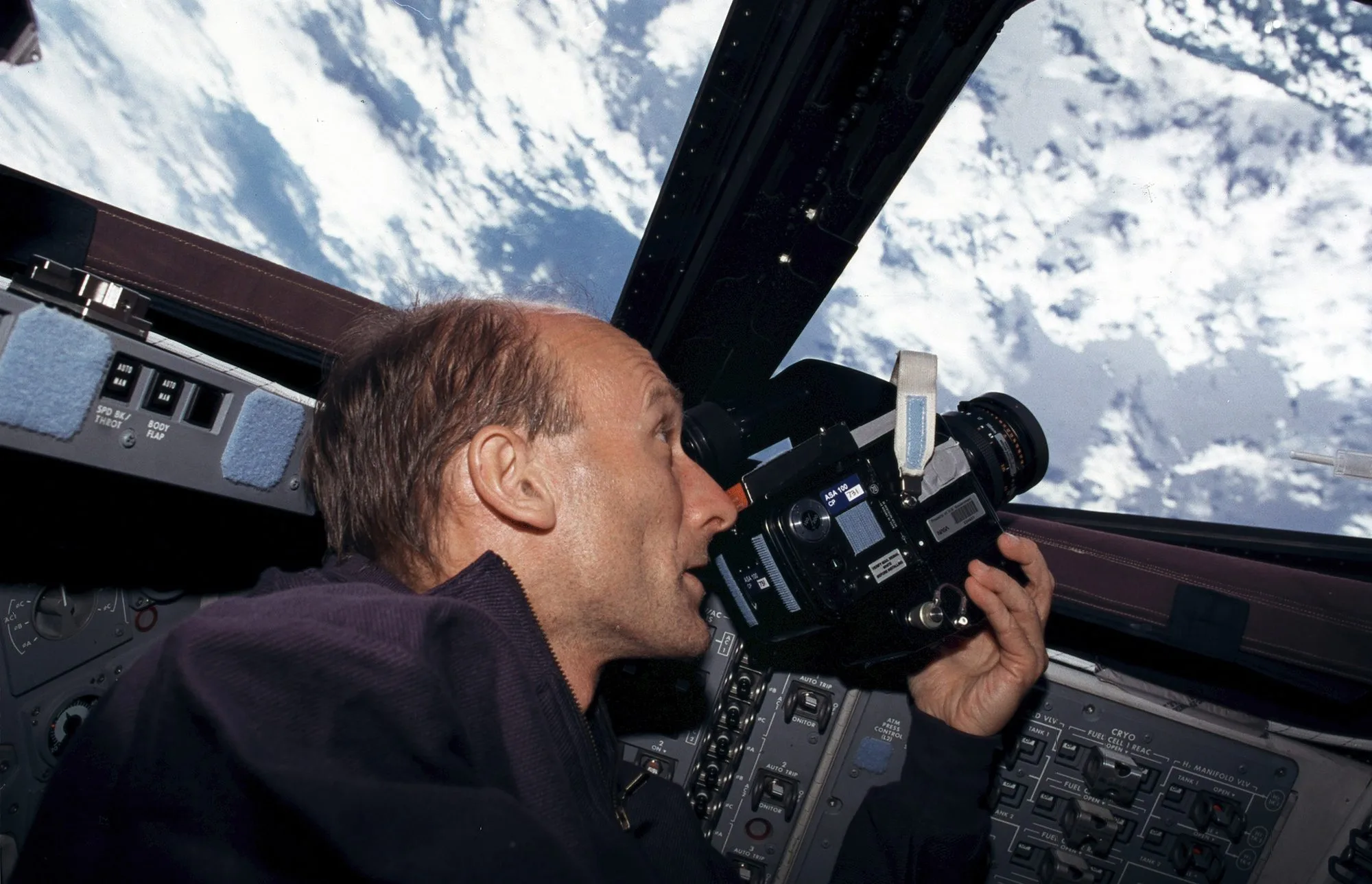
ESA astronaut Gerhard Thiele films Earth from Space Shuttle Endeavour's flight deck during STS-99
Gerhard Thiele, ESA Mission Specialist 1, on Endeavour's flight deck during STS-99. NASA photograph.

Made for the flight

The watch began with a friendship. Gerhard Thiele was Hartwig Balke's friend, and in 1998 he asked Balke and George Thomas for a chronograph to wear on the mission. Balke built it in 1999. It was his first wrist chronograph, and he was 56.

Two steel chronographs were made for the flight, their casebacks engraved with the names of the six crew. Thiele wore both in orbit. No. 1 is the one NASA certified as flown for Hartwig Balke, and the one Towson keeps. The first 25 Towson wrist chronographs followed the flight.

The flight record

  • Mission: STS-99, Shuttle Radar Topography Mission (SRTM)
  • Orbiter: Space Shuttle Endeavour
  • Launch: February 11, 2000, 12:43 p.m. EST, Launch Complex 39A, Kennedy Space Center
  • Landing: February 22, 2000, 6:22 p.m. EST, runway 33, Shuttle Landing Facility
  • Duration: 11 days, 5 hours, 39 minutes
  • Commander: Kevin R. Kregel
  • Pilot: Dominic L. Gorie
  • Mission specialists: Gerhard P.J. Thiele (ESA), Janet L. Kavandi, Janice E. Voss and Mamoru Mohri (NASDA)
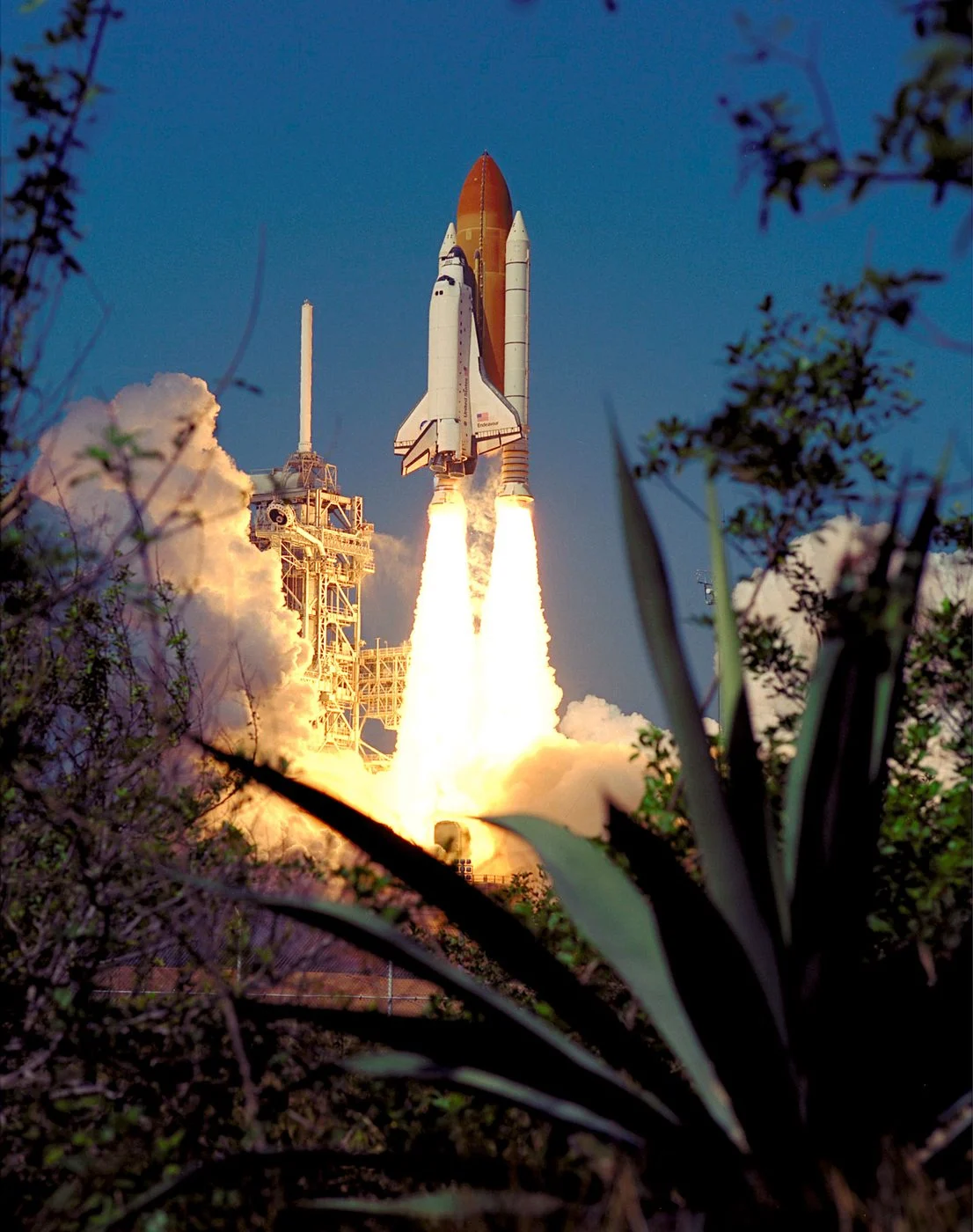
Space Shuttle Endeavour lifts off from Kennedy Space Center on STS-99, February 11, 2000
Endeavour lifts off from Launch Complex 39A, February 11, 2000. NASA photograph.

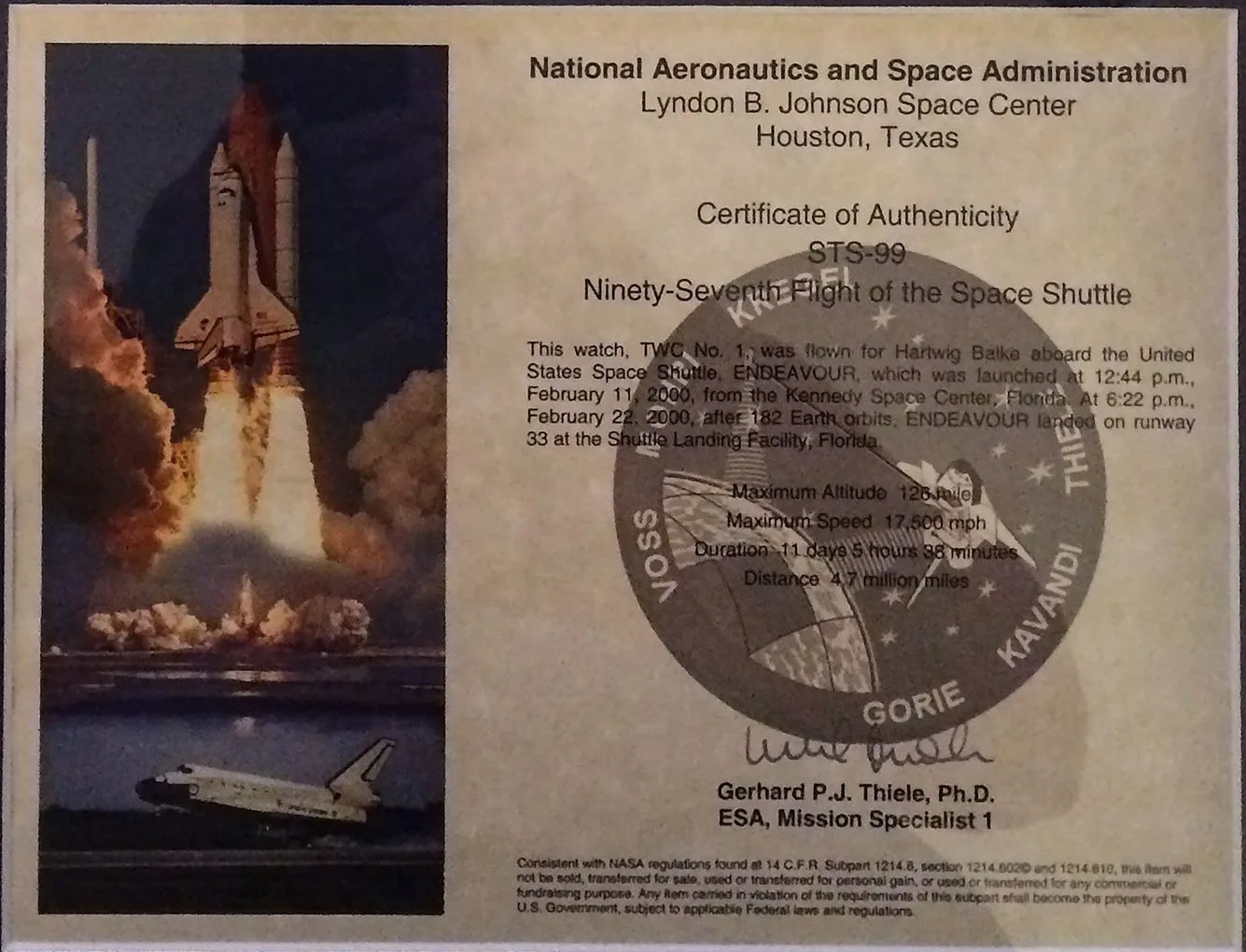
The NASA certificate

NASA Johnson Space Center Certificate of Authenticity for STS-99, recording that TWC No. 1 was flown aboard Endeavour, signed by Gerhard P.J. Thiele
Certificate of Authenticity, STS-99, NASA Lyndon B. Johnson Space Center, Houston. Signed by Gerhard P.J. Thiele, Ph.D., ESA, Mission Specialist 1.
This watch, TWC No. 1, was flown for Hartwig Balke aboard the United States Space Shuttle, ENDEAVOUR, which was launched at 12:44 p.m., February 11, 2000, from the Kennedy Space Center, Florida. At 6:22 p.m., February 22, 2000, after 182 Earth orbits, ENDEAVOUR landed on runway 33 at the Shuttle Landing Facility, Florida.

Hartwig Balke is Towson's co-founder and the watch's designer. The certificate also prints a maximum altitude of 126 miles, a maximum speed of 17,500 mph, a duration of 11 days, 5 hours and 38 minutes, and a distance of 4.7 million miles. Those figures are quoted as printed. The flight record above follows NASA's own mission summary.

The watch
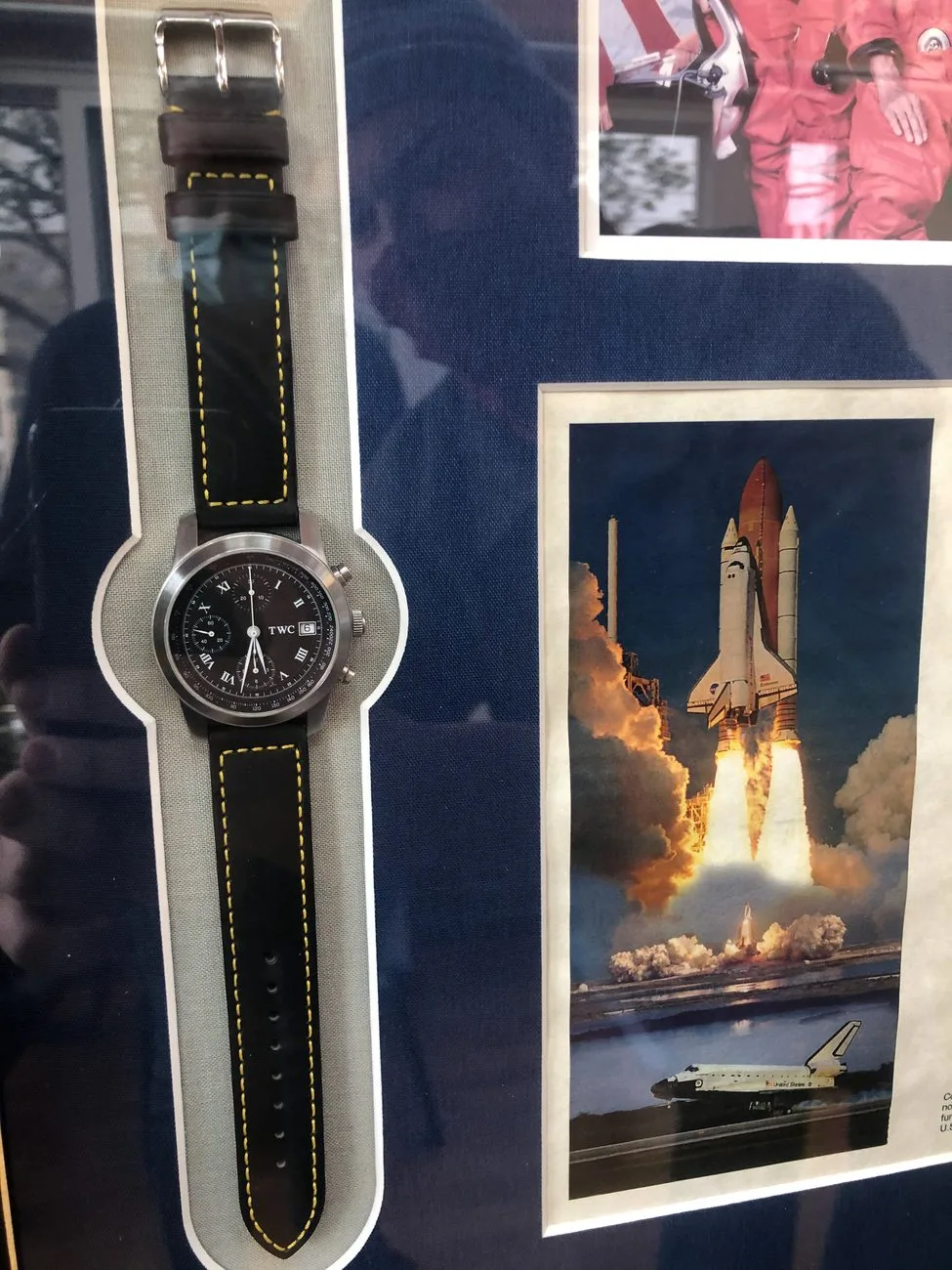
TWC No. 1, the black-dial Towson chronograph flown aboard Space Shuttle Endeavour on STS-99
TWC No. 1: black dial, three registers, black strap with contrast stitching.

No. 1 is a steel automatic chronograph with a black dial and three registers. In orbit it was a working watch, worn through the crew's shifts on the flight deck.
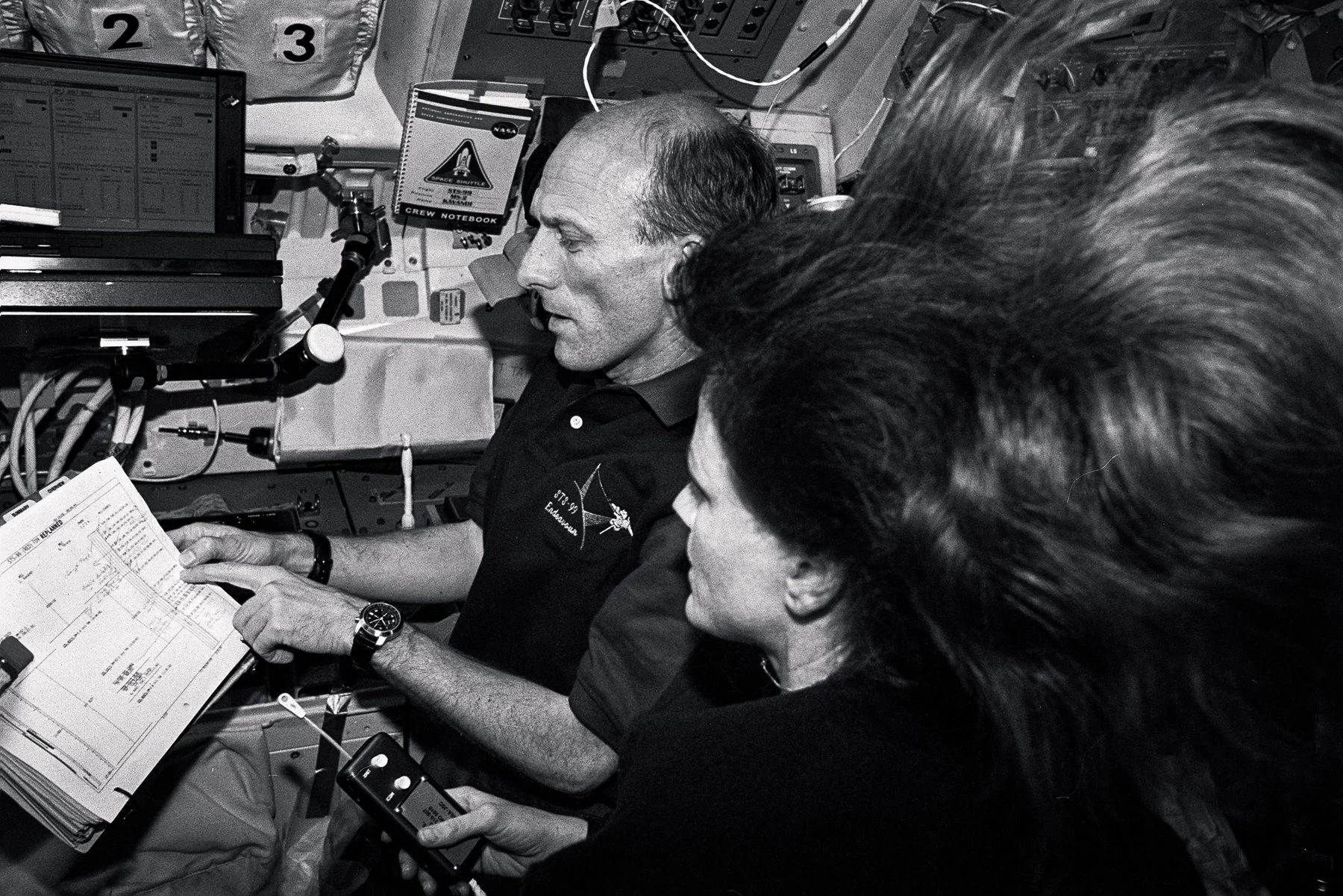
ESA astronaut Gerhard Thiele at a flight-deck workstation aboard Space Shuttle Endeavour during STS-99
Thiele at a flight-deck workstation during STS-99. NASA photograph.

Today No. 1 sits in a shadow box with the STS-99 crew patch, the crew's signed portrait and the certificate.
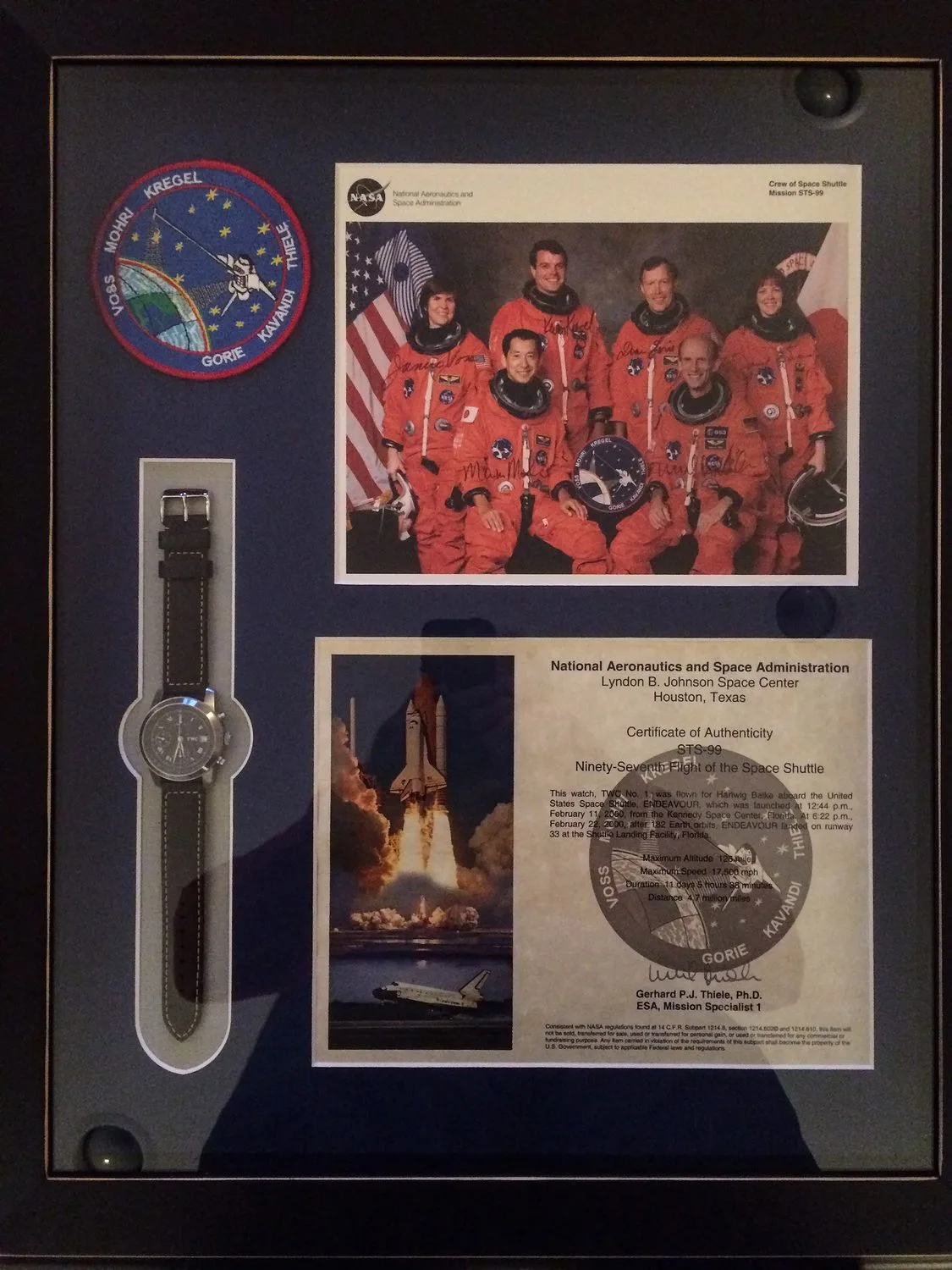
Shadow box holding TWC No. 1, the Towson chronograph flown on STS-99, with the crew patch, signed crew portrait and NASA certificate
TWC No. 1 as framed: the flown chronograph, the crew patch, the signed crew portrait and the NASA certificate.

Kept, not sold

The certificate carries a notice: "Consistent with NASA regulations found at 14 C.F.R. Subpart 1214.6, this item will not be sold, transferred for sale, used or transferred for personal gain, or used or transferred for any commercial or fundraising purpose."

We keep to it. TWC No. 1 is company heritage. It is not for sale and never will be.
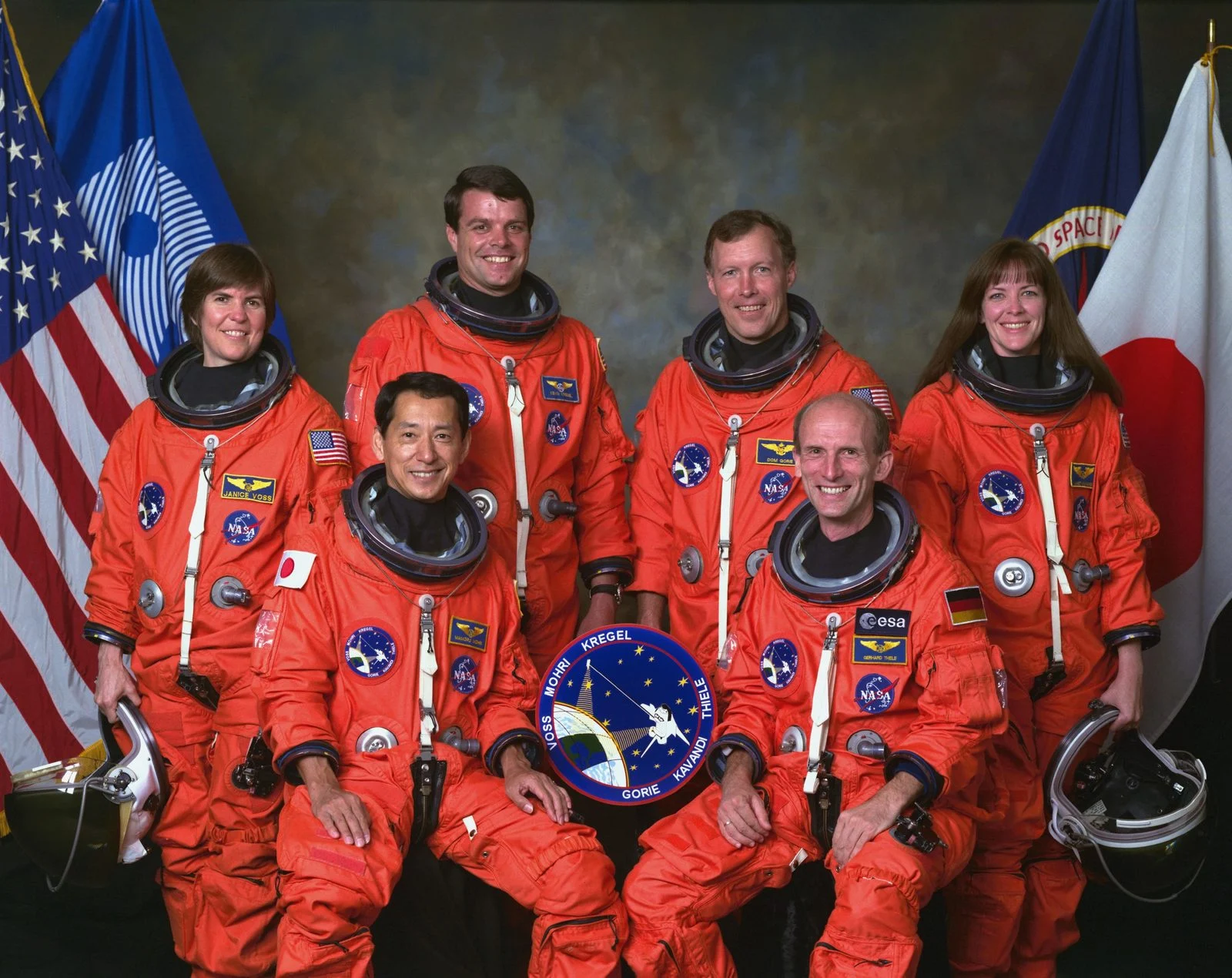
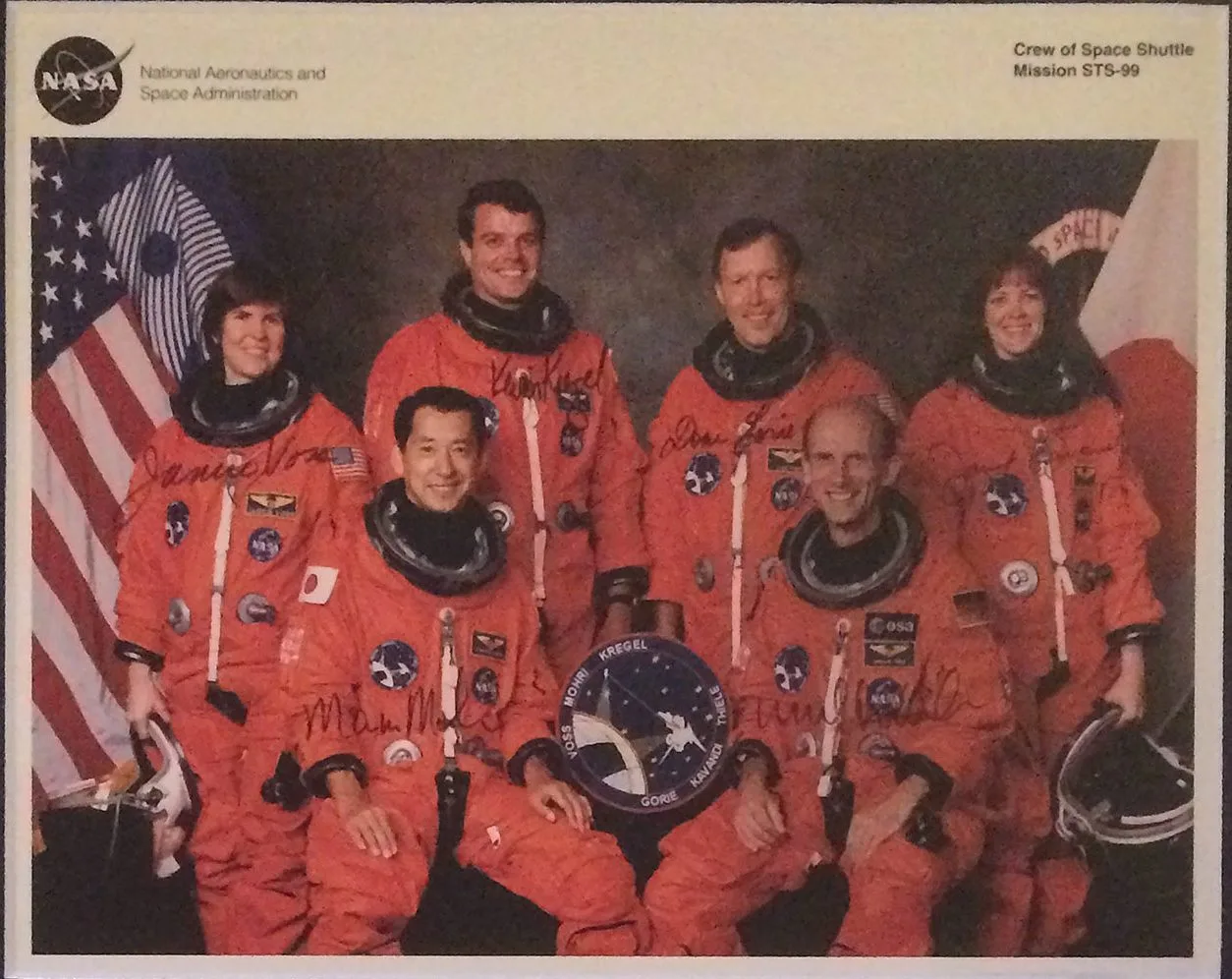
The crew

Official NASA portrait of the STS-99 crew: Kregel, Gorie, Thiele, Kavandi, Voss and Mohri
The STS-99 crew. NASA photograph.

Six people flew STS-99: Kregel, Gorie, Thiele, Kavandi, Voss and Mohri. Their signatures are on the portrait framed with No. 1, and their names ring the mission patch beside it.

Official STS-99 crew portrait signed by the crew, framed with TWC No. 1
The signed portrait, as framed with the watch.

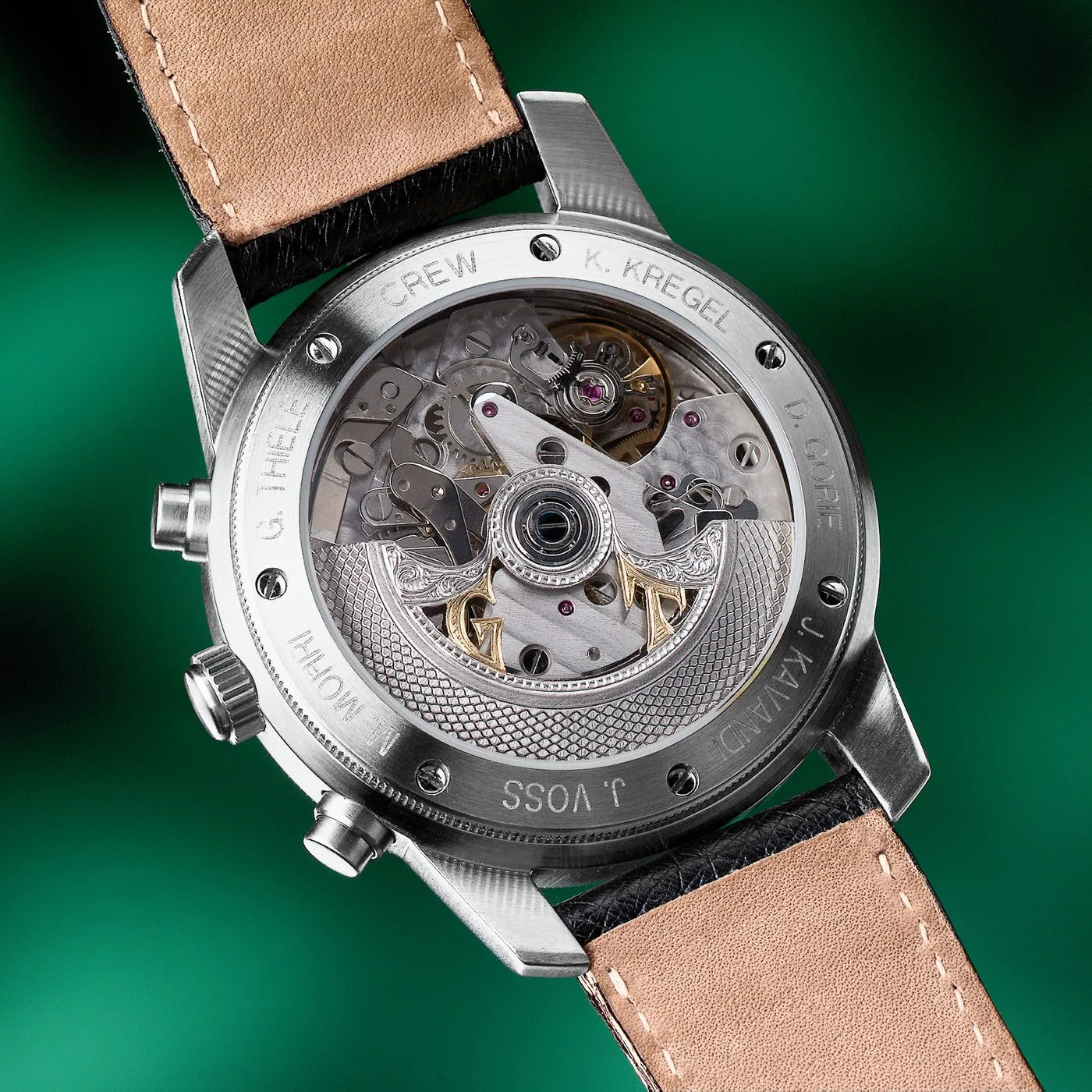
The same six names were engraved into steel. This caseback, from a Mission chronograph of the period, carries the full crew around its display window.

Towson Mission chronograph caseback engraved CREW with the six STS-99 surnames: Kregel, Gorie, Kavandi, Voss, Mohri and Thiele
A Mission chronograph caseback engraved CREW · K. KREGEL · D. GORIE · J. KAVANDI · J. VOSS · M. MOHRI · G. THIELE.

The mission

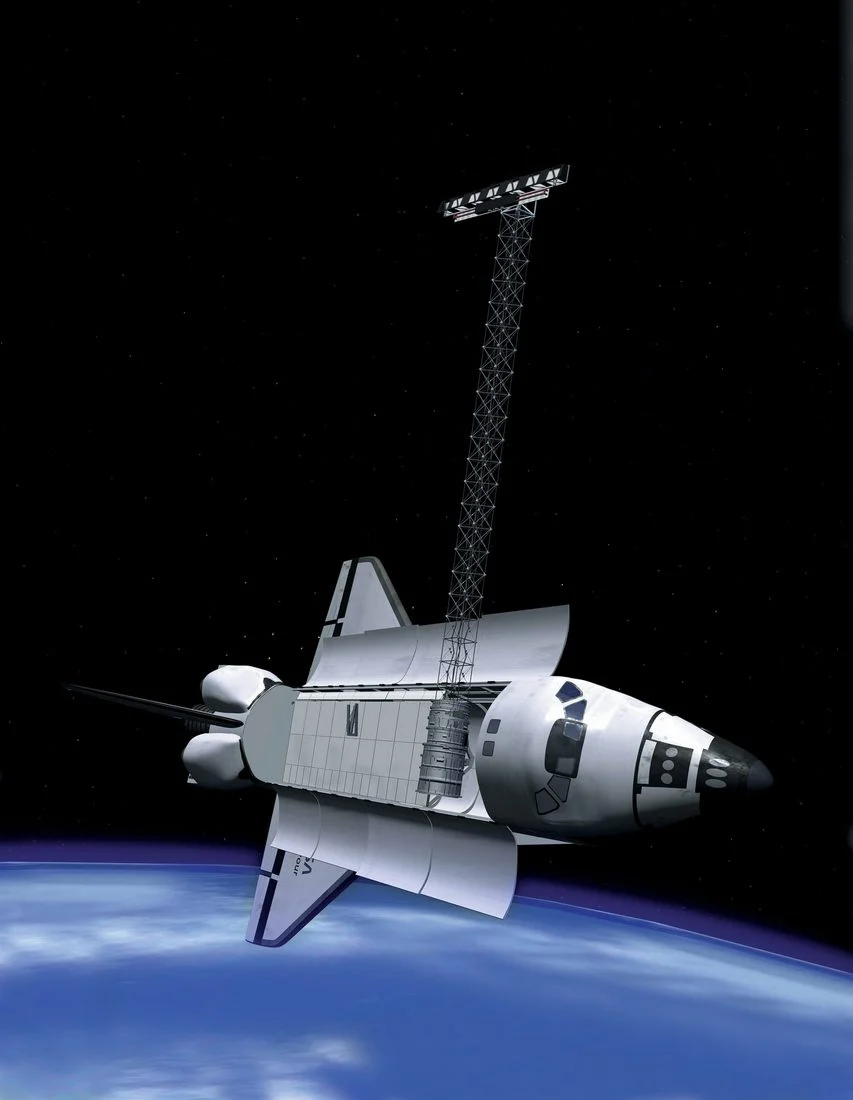
STS-99 was the Shuttle Radar Topography Mission. Endeavour carried two radar antennas, one in the payload bay and one at the tip of a mast about 60 meters long, and used the pair to measure the height of the ground the way two eyes judge distance. Working in two shifts around the clock, the crew mapped Earth's land surface between 60° north and 56° south. The result was the first near-global, high-resolution elevation map of the planet.

Illustration of Endeavour in orbit with the 60-meter SRTM radar mast extended from the payload bay
SRTM in orbit: the second radar antenna sat at the end of a mast extended from the payload bay. Illustration.

Automatic watches had flown before, on Gemini in the 1960s and on Skylab in the 1970s, so No. 1 was not a first. It is a watch designed in Maryland, worn in orbit by a working member of the crew, and documented by a certificate he signed.

Chronometer testing

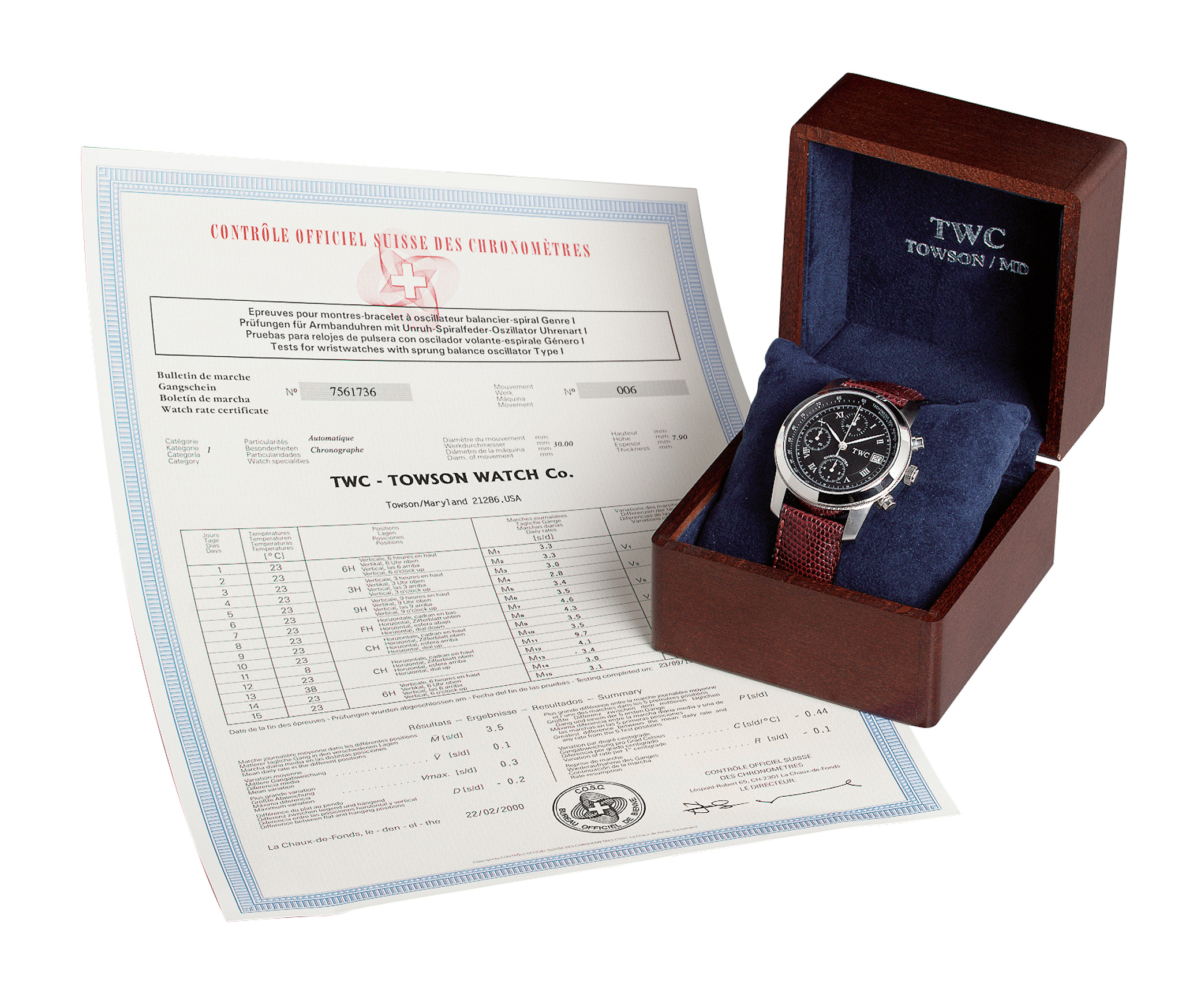
COSC watch rate certificate made out to TWC – Towson Watch Co., beside a boxed Mission chronograph
COSC bulletin No. 7561736, made out to TWC – Towson Watch Co., with a boxed Mission chronograph.

While No. 1 was in orbit, a Towson Mission chronograph was on the bench at the Contrôle Officiel Suisse des Chronomètres in La Chaux-de-Fonds. Its testing ended on February 22, 2000, the day Endeavour landed, with a mean daily rate of 3.5 seconds. The bulletin belongs to that production watch, not to No. 1.

The Mission collection

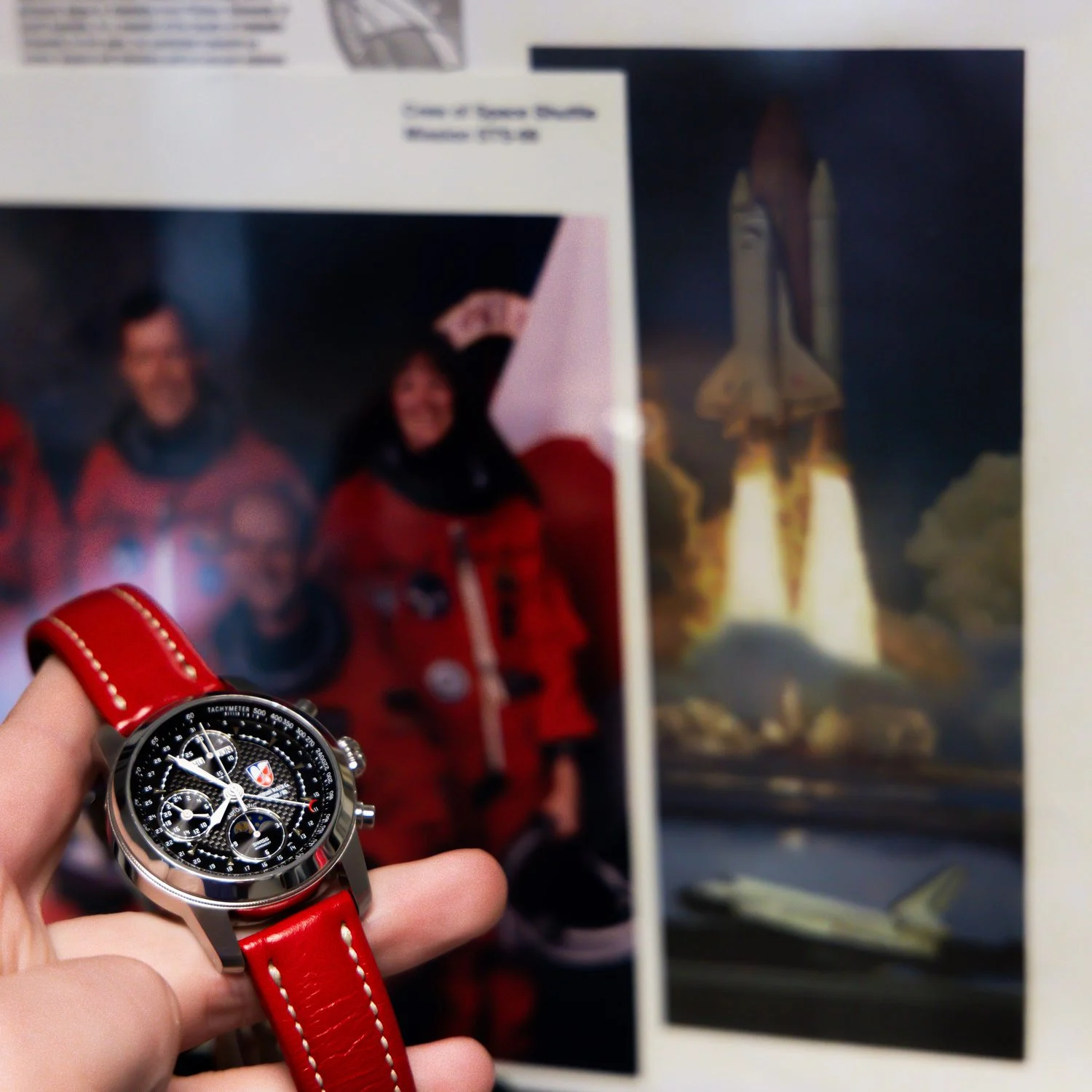
A Towson Mission chronograph photographed in front of the framed STS-99 NASA certificate
A later Mission chronograph in front of the framed certificate.

After the flight, collectors asked for the watch Thiele wore. Towson answered with the Mission collection. The chronographs Towson builds today keep No. 1's layout and its purpose: an automatic chronograph meant to be worn and used. Each is numbered, in an edition of 100 per dial, and retired references are not remade.

Speak with us about this reference. To ask about a Mission watch or caseback engraving, write to spencer.shattuck@towsonwatchco.com or call 410-733-2991.

Sources: NASA STS-99 mission summary for the flight record; Towson Watch Company archive for the certificate, the watch, the caseback, the COSC bulletin and the founders' account of the commission. NASA photographs are shown for historical reference and do not imply endorsement by NASA, ESA or any crew member.

Towson Watch Company. Maryland, since 1998.

Join our newsletter. New releases and workshop news.

Thank you! Your submission has been received!
Oops! Something went wrong while submitting the form.