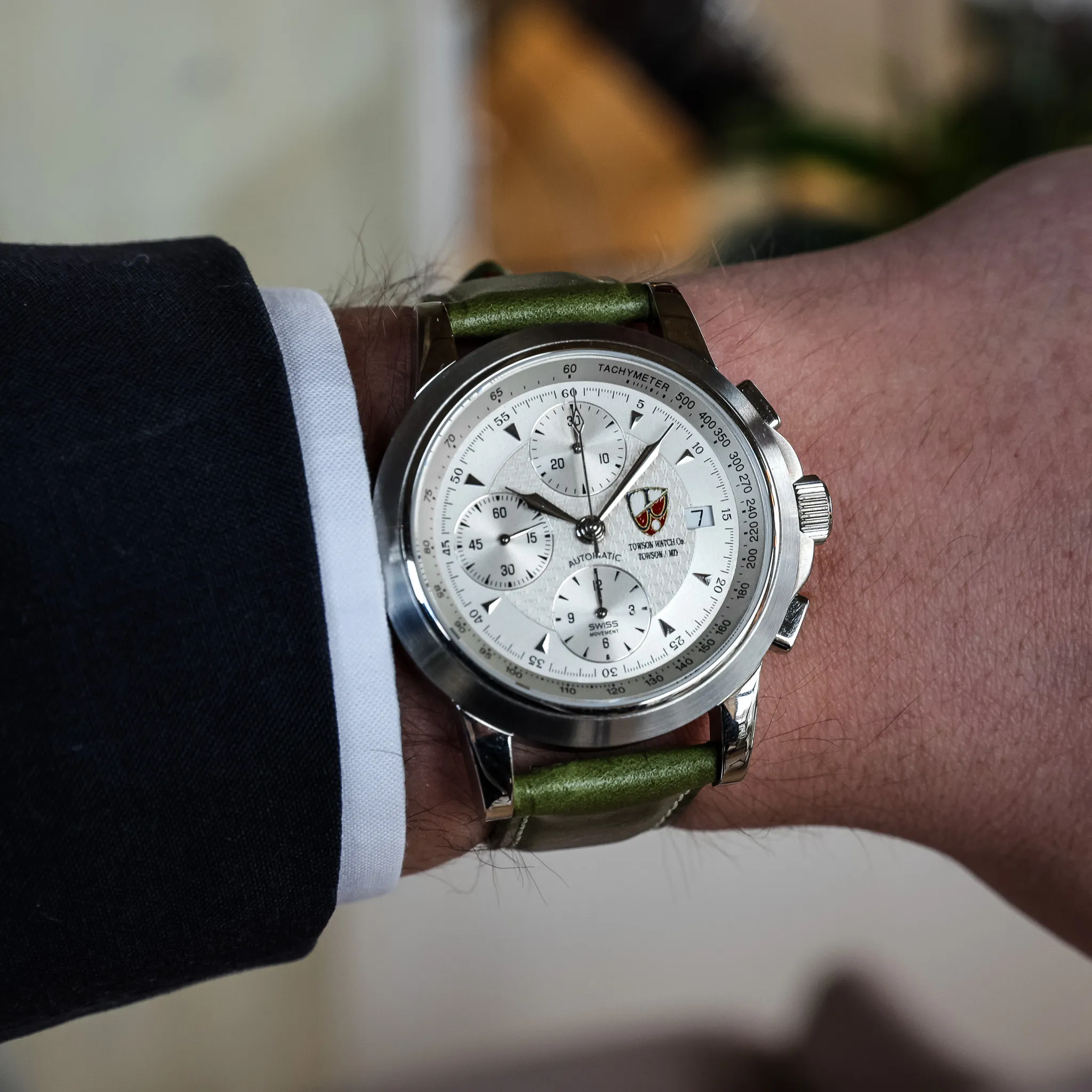
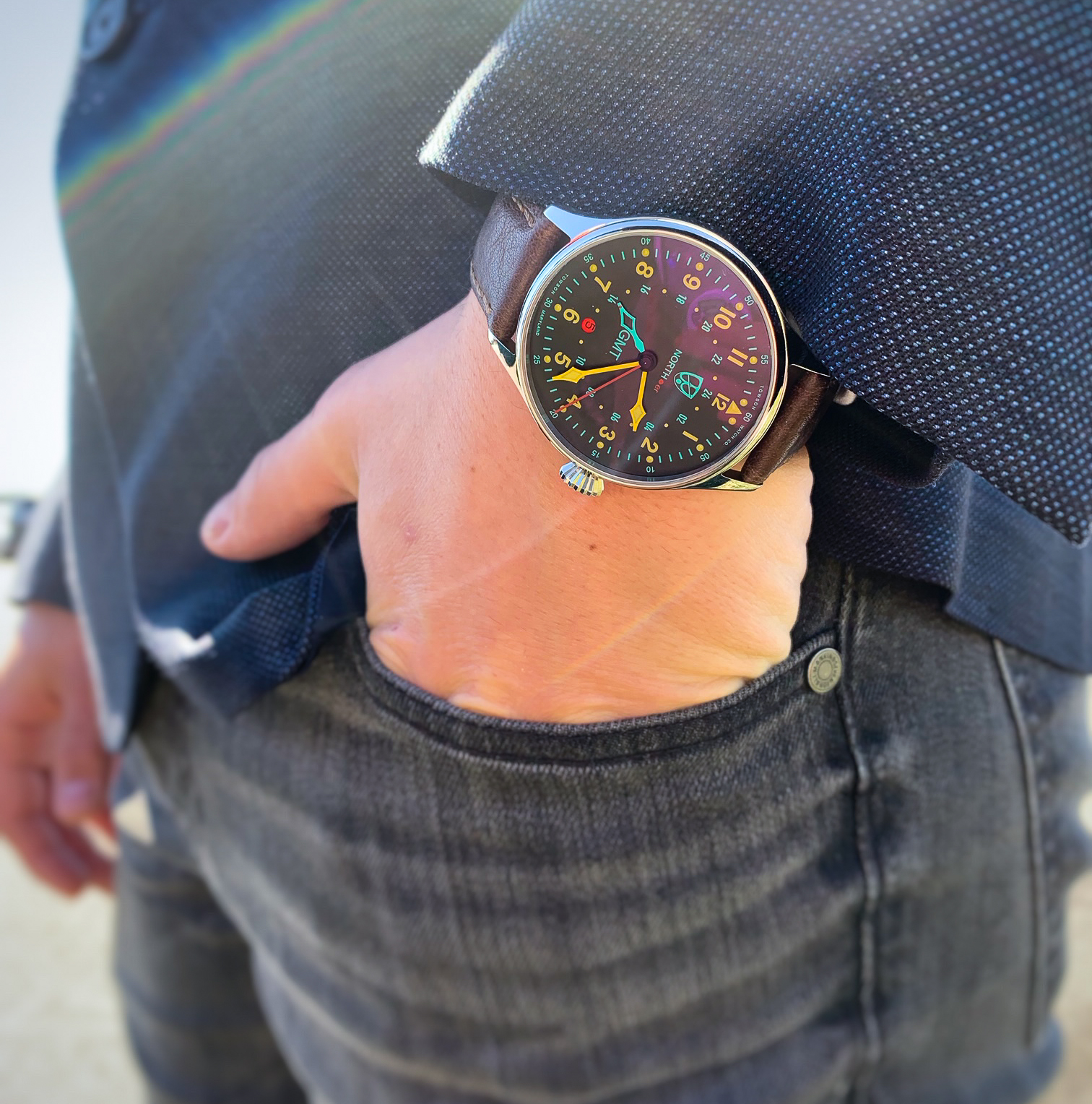
A cockpit clock, made to be worn
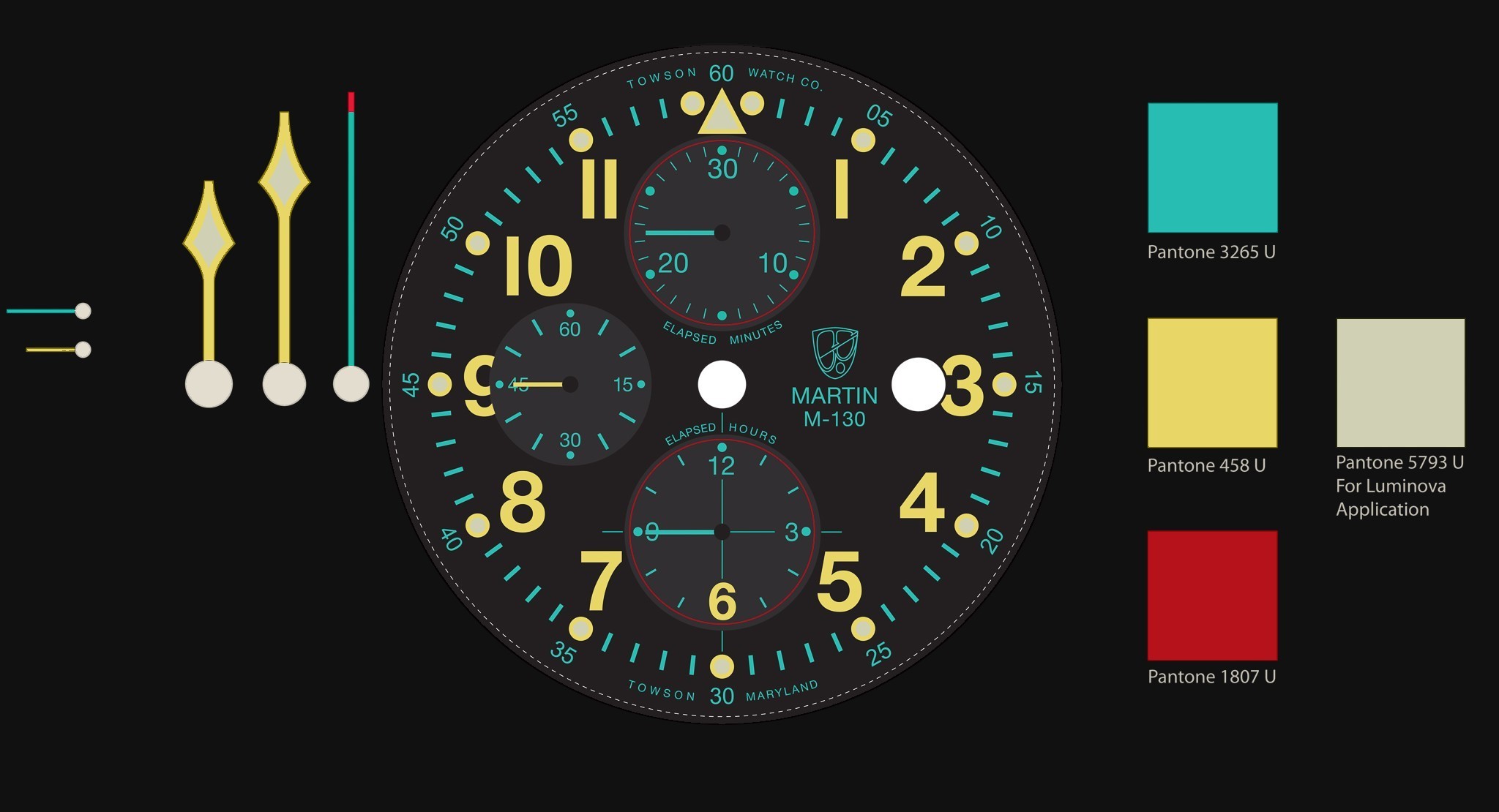
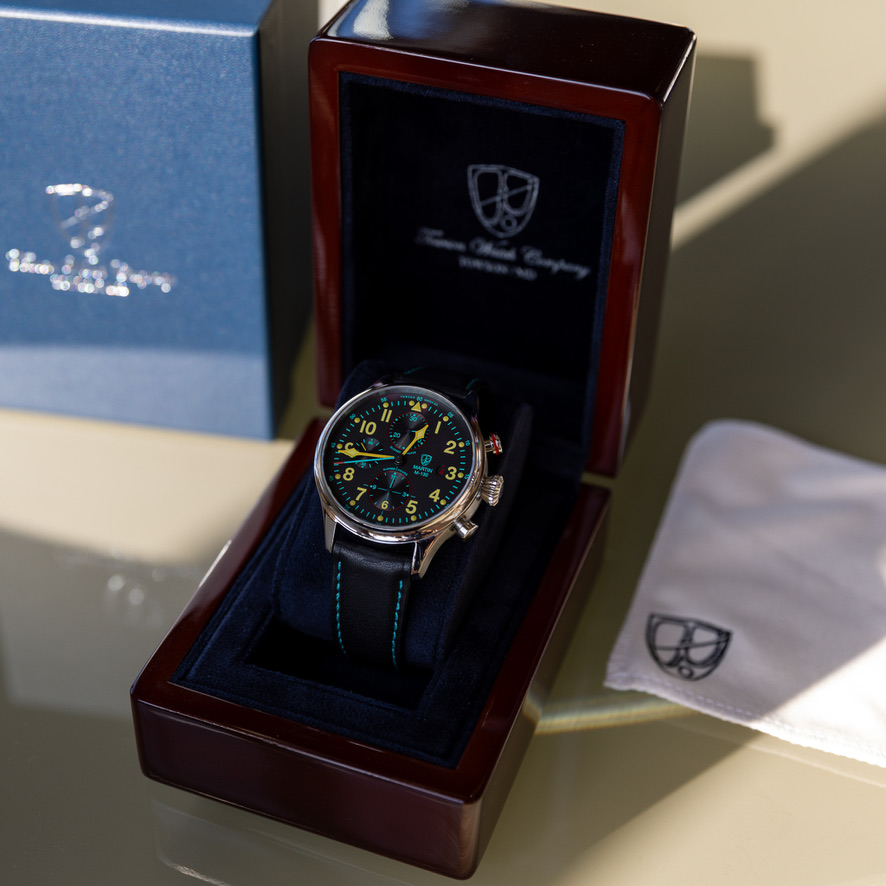
The M-130 is a pilot's chronograph with a dial that follows a 1930s cockpit clock. Color does the sorting: yellow for the time, turquoise for the chronograph, red for what starts it.
The clock
Hartwig Balke had already noticed an aircraft clock like it in a shop window in England. Then, on a Memorial Day, walking between terminals at BWI Airport, he stopped at a glass case of antique cockpit instruments and framed articles about the China Clipper, the Martin M-130 flying boat. Its 24-hour clock held him: luminous numerals on black, plainly a tool, and still modern. He photographed it before boarding his flight and spent the following weeks working on it.

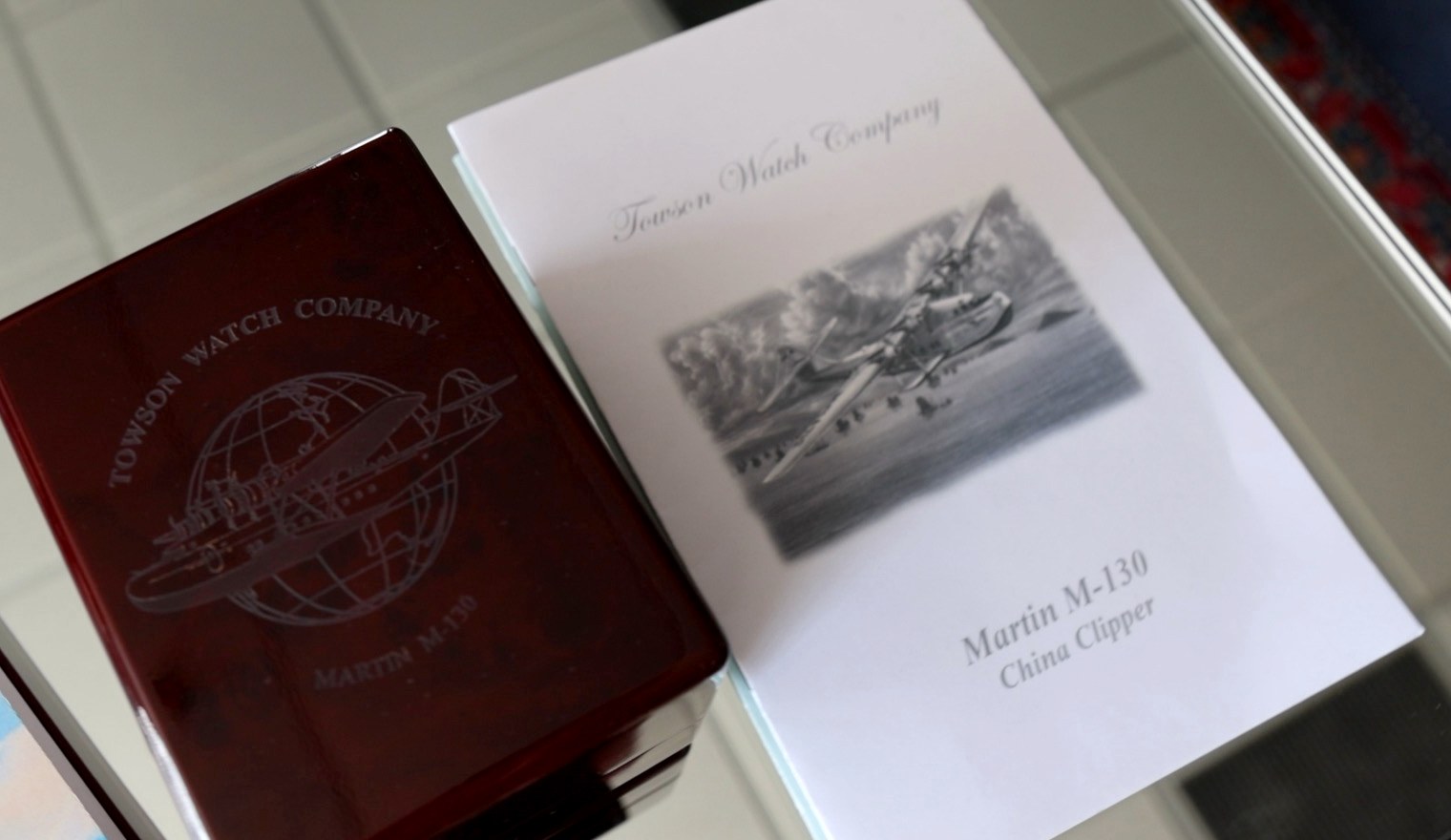
The China Clipper was the first of three M-130s that the Glenn L. Martin Company built in Baltimore for Pan American Airways. It was delivered on October 9, 1935. On November 22 it left Alameda, California, with the first commercial airmail across the Pacific, and it reached Manila on November 29 after 59 hours 48 minutes in the air.


The colors
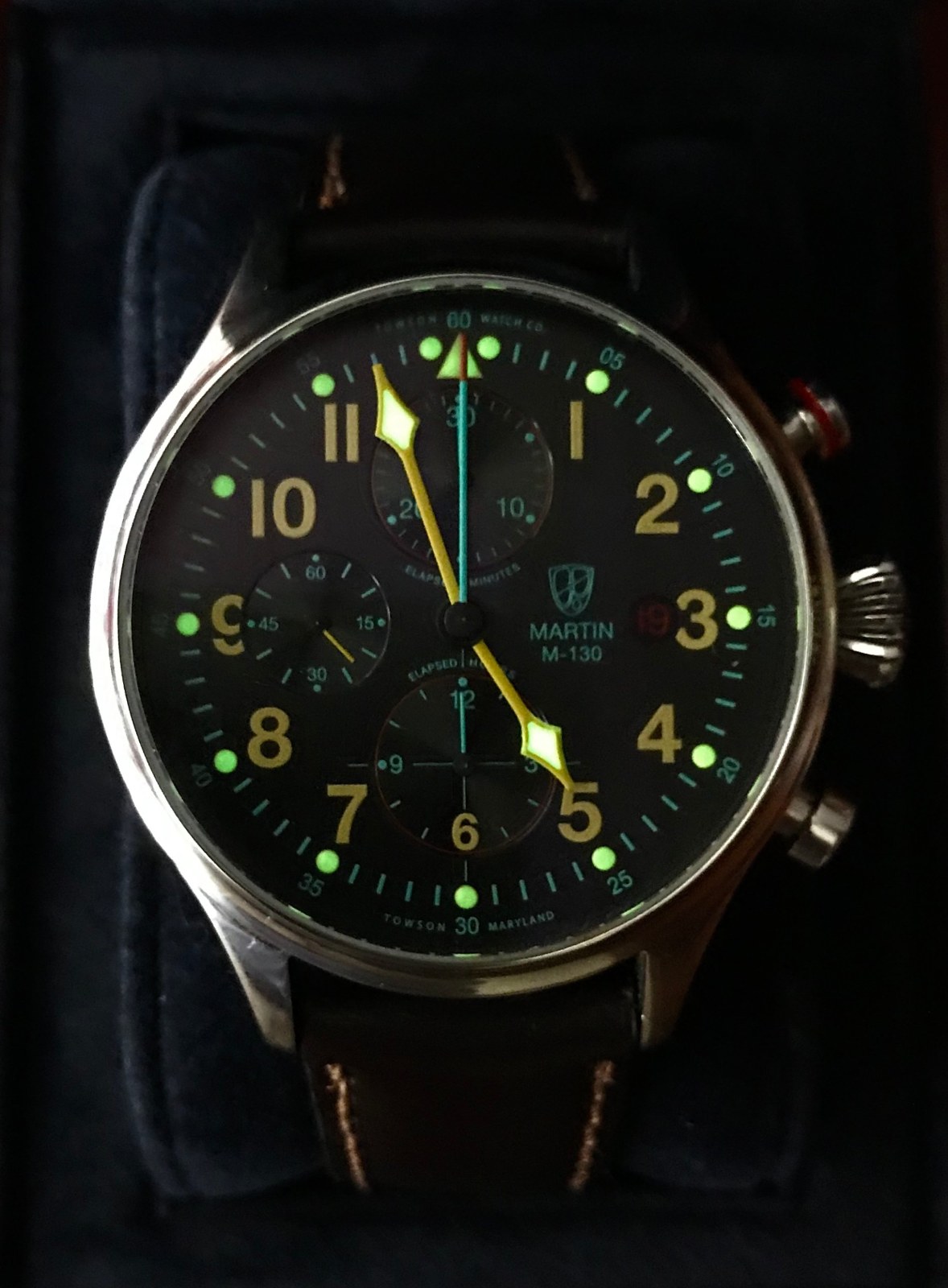
The clock gave Hartwig a rule rather than a theme. American cockpit instruments of the 1930s used color to tell one function from another; the pilot's watch later settled into black and white. The M-130 brings the color back. A 7750 chronograph puts a great deal on a dial; here the eye sorts it before it reads anything. The numerals and the hour and minute hands are yellow, the chronograph is turquoise, and red marks what starts and stops it. The numerals are large on purpose: his written brief asks that the time be readable when reading glasses are not to hand, and in twilight.
What he left out
A museum curator gave Hartwig permission to use a section of the aircraft's wing for the subdials. He decided against it, and against any relic of the aircraft: it would have been a gimmick. The aim was to portray the American pilot watch accurately, in the form of a modern wristwatch, and to let the design of the cockpit instruments speak for itself. There is no piece of the aircraft in this watch. What it carries is the clock.
How it is made
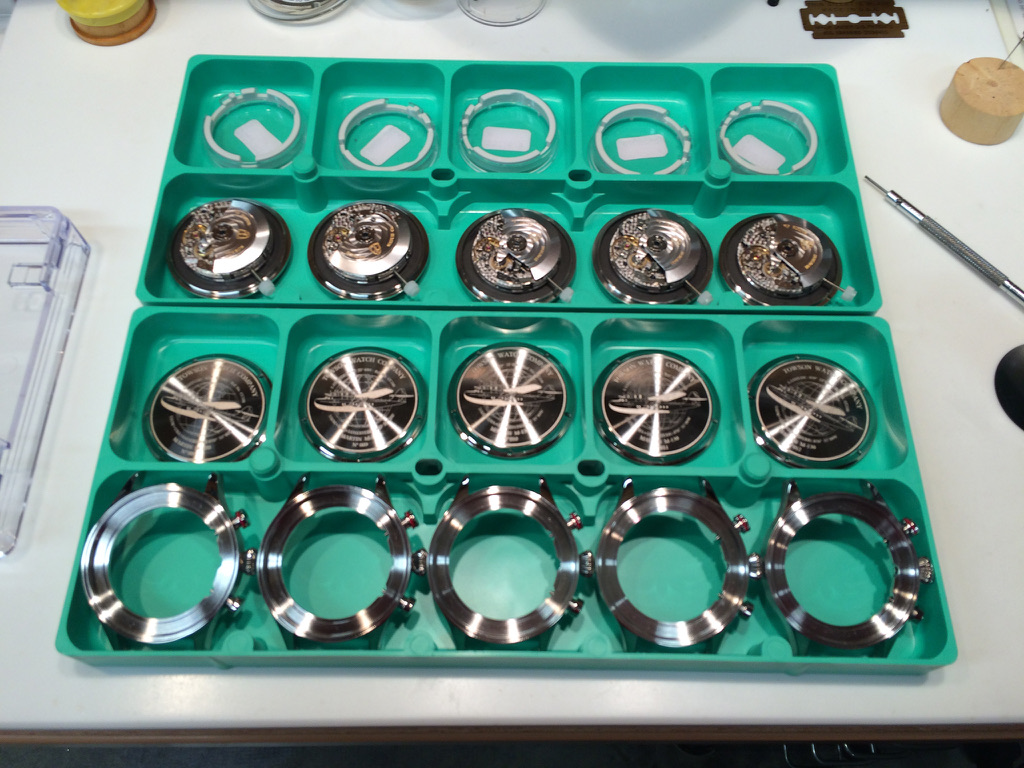
Hartwig engineered the M-130 and designed it with Patrick Ayoub of Detroit Watch Co. The first test was a printout of the clock dial on cardboard, set inside a POTOMAC case. His written specification then set down each part: a 42 mm steel case with a domed sapphire crystal, anti-reflective on both sides; a bezel groove like the SKIPJACK's; 20 mm lugs bent down so a smaller wrist can wear it comfortably.

The case is made in Pforzheim, Germany, to Towson's drawings, by a family-owned case maker that has milled and finished cases in its own workshop since 1924 and has been Towson's case partner since 2000. The dial and hands come from specialist makers, with the hands following a 1935 aircraft instrument. The movement is the Swiss ETA/Valjoux 7750 automatic chronograph, decorated and adjusted to five positions. Each watch is assembled and regulated in Baltimore by watchmakers the founders trained, and the closed caseback carries the China Clipper with the reference and the serial number.


On the wrist
Hartwig's brief was an everyday watch: put it on in the morning without thinking about winding or setting it, and keep its look when the strap changes. He drew the lugs so that, looking straight down at the dial, the ends of the strap still show past them. Eight straps are offered at checkout, from Vector Black and Diplomat Brown to Pilot Tan, all on 20 mm lugs. One of 100 numbered pieces, with a two-year warranty and service at Baltimore Watch Company.


Own an M-130 and need a replacement strap? Ask us with your reference number, using the form below. The M-130 sits with the NORTH•er, RECRUIT and CADET in the Pilot & Field collection.