
Cut by hand
Sterling silver dials and skeleton movements, engine-turned and engraved by Jochen Benzinger and built into Towson watches in Baltimore. Two friends from the same German town have worked this way for about 25 years.
Towson began in Pforzheim
Towson Watch Company has two founders on paper, Hartwig Balke and George Thomas. In practice there has always been a third maker at the table: Jochen Benzinger, the engraver Balke grew up with in Pforzheim.
Pforzheim is Germany's watch and jewelry town, a place of small family workshops that make cases, dials and hands. Balke left it as an engineer and came to Baltimore in 1989. When he and Thomas began building watches, he went back to the people he knew. They were friends who shared his standards, and their doors opened to a new American house because he was the one knocking.
So Towson began as an American gateway to those workshops: drawn and engineered in Maryland, made with friends in Pforzheim, finished and regulated in Maryland. The founders have a name for it. Thomas put it as “TWC is a collection of artists.” Balke says, “George and I often say that we collect artists.” Benzinger was the first of them.

Each taught the other his trade
The two grew up together and have worked together ever since. The friendship is also an exchange of skills, and it runs both ways.
Balke, the engineer, showed Benzinger how to engineer and assemble a fine watch. Benzinger showed Balke how to frost a sterling silver dial, skeletonize a movement and run a rose engine, the hand-cranked lathe that cuts guilloché one line at a time. Both sets of skills went into Towson's watches from the start.
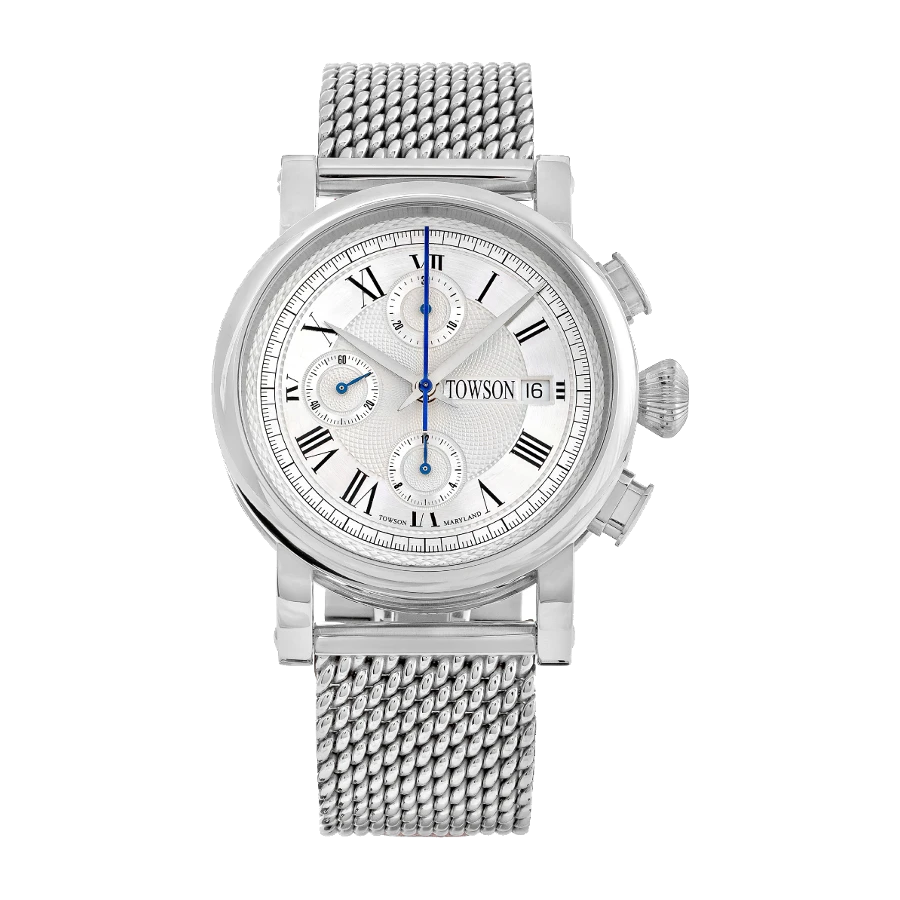
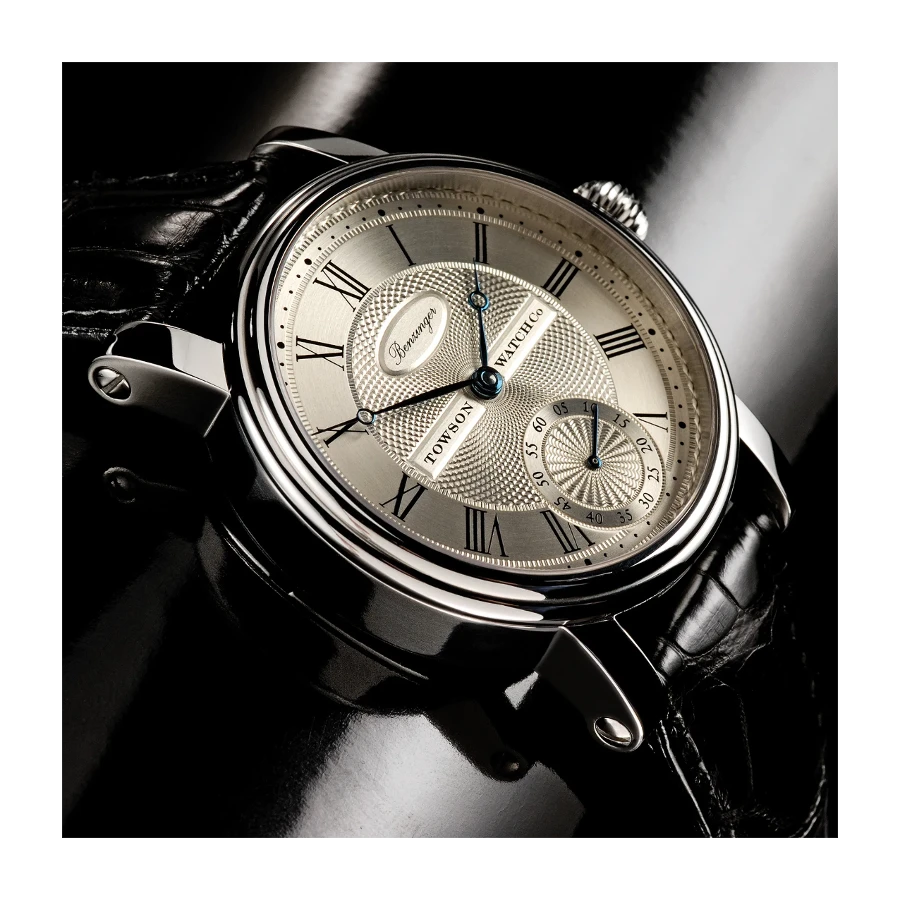
Benzinger has cut guilloché for more than 40 years, and some of the most established names in watchmaking call on him. His workshop holds vintage rose engines, mills, plating baths and lathes, and all of them are used on Towson watches. A single CHOPTANK dial takes him more than 60 hours.
The division of labor has not changed. Balke engineers the watch. Benzinger cuts the dial and opens and engraves the movement. Ickler, also of Pforzheim, makes the case. Thomas and the watchmakers he trained assemble and regulate it in Maryland.
From converted pocket watches to the space watch's rotor
Benzinger's hand is on Towson watches from the first years to the current collection.
In production
Four Towson × Benzinger watches are made today. Like every Towson watch, each is limited to 100 numbered pieces. The Benzinger CHOPTANK is available by request. Each watch is assembled and regulated in Baltimore and carries a two-year warranty.
Chronograph with four hand-cut guilloché patterns on one dial. 100 numbered pieces. $8,000 on the steel mesh bracelet.
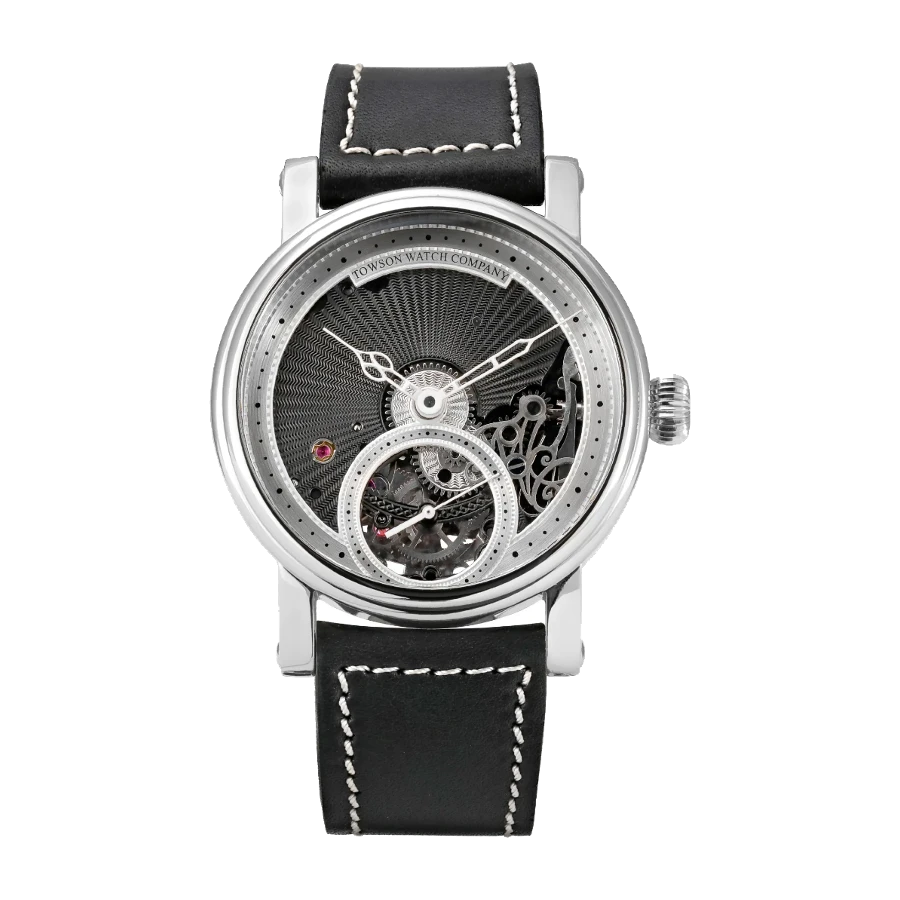
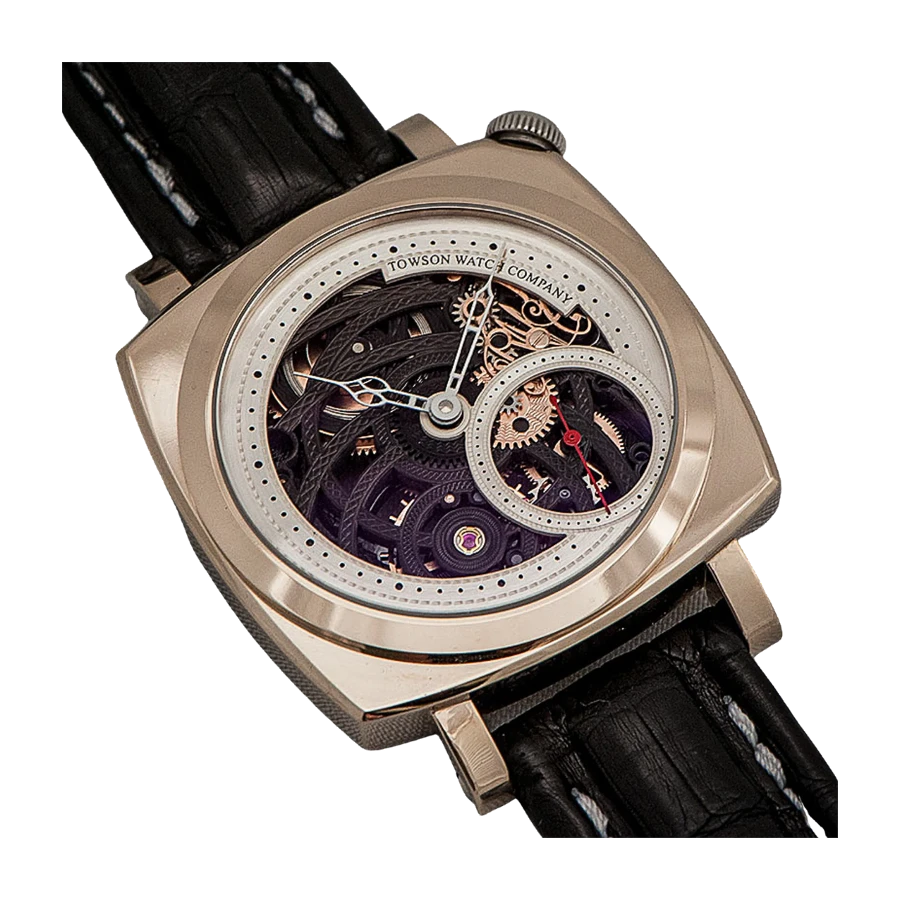
Skeleton movement on a ruthenium base plate, with the TWC initials cut in at four. Limited to 100 numbered pieces.
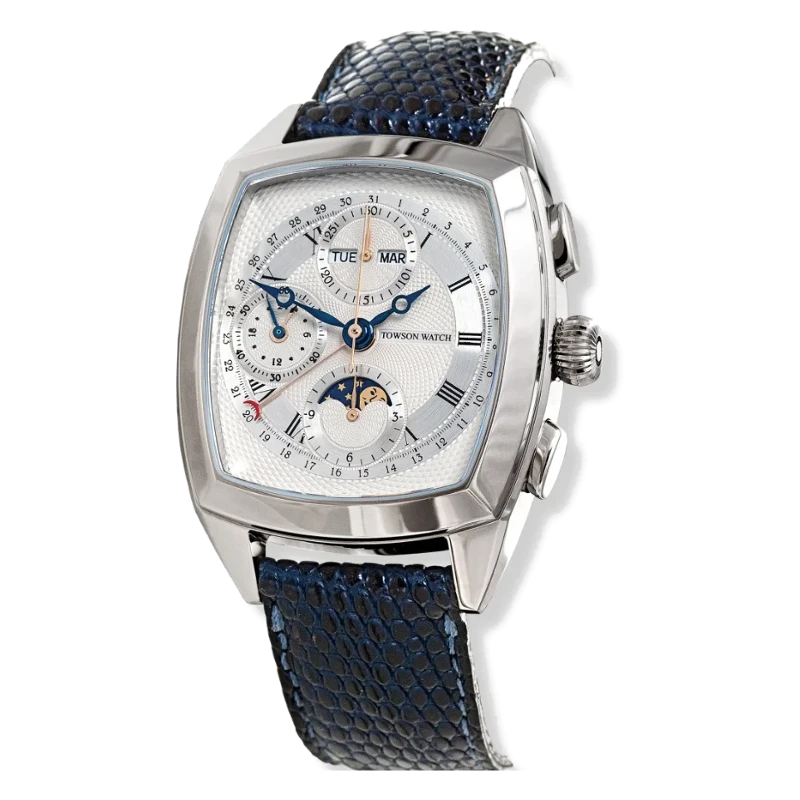
Full-calendar moonphase chronograph with a silver dial that takes more than 60 hours to cut. 100 numbered pieces. Available by request.
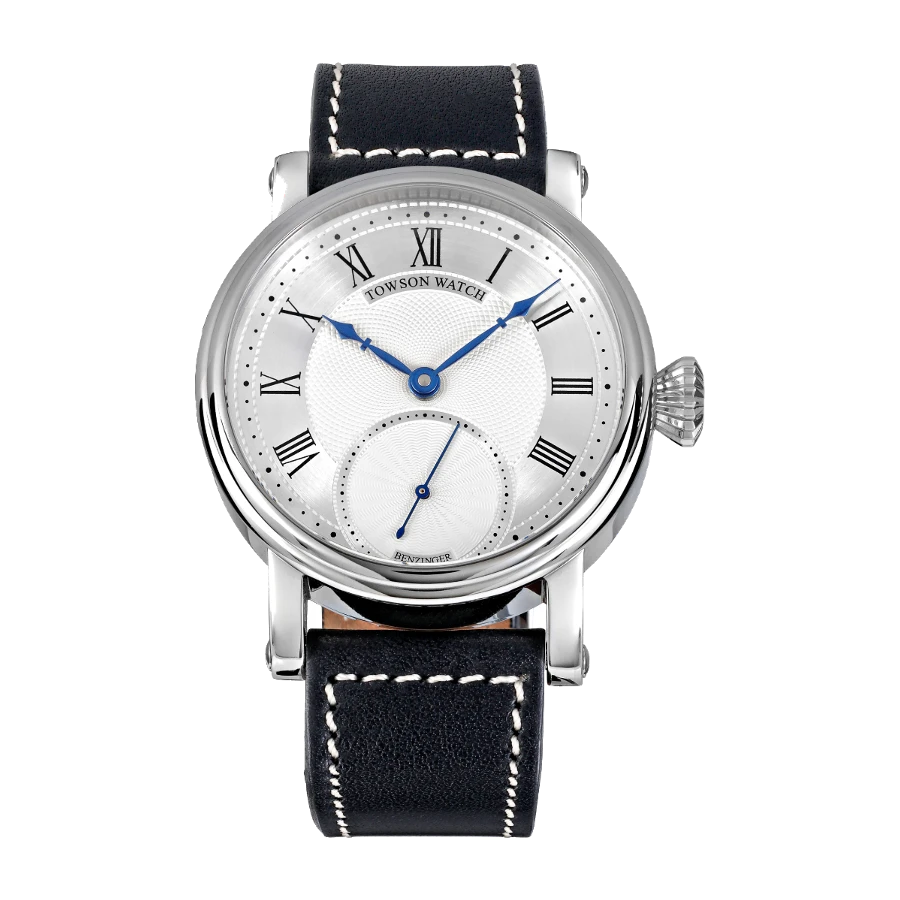
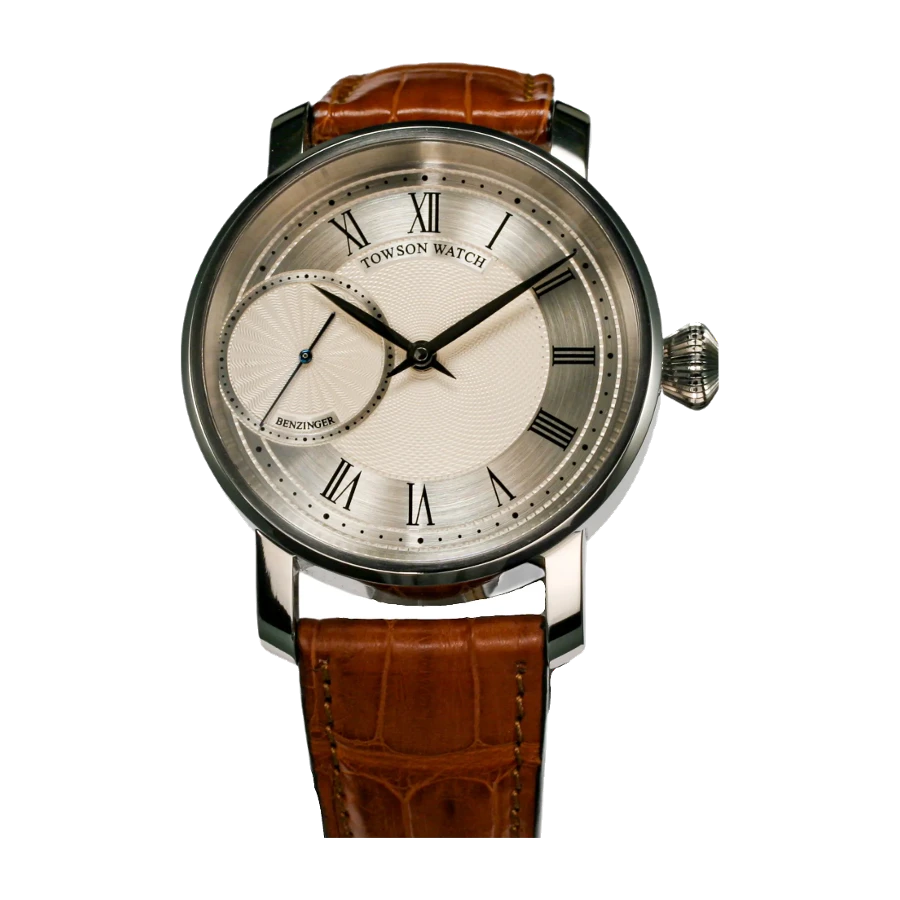
Hand-wound, with a barleycorn guilloché dial and a swan-neck regulator. 100 numbered pieces.
The mark at four o'clock
In 2009 George Thomas opened Abraham Lincoln's pocket watch at the Smithsonian and found a message a watchmaker had scratched inside in 1861, unseen for nearly 150 years.
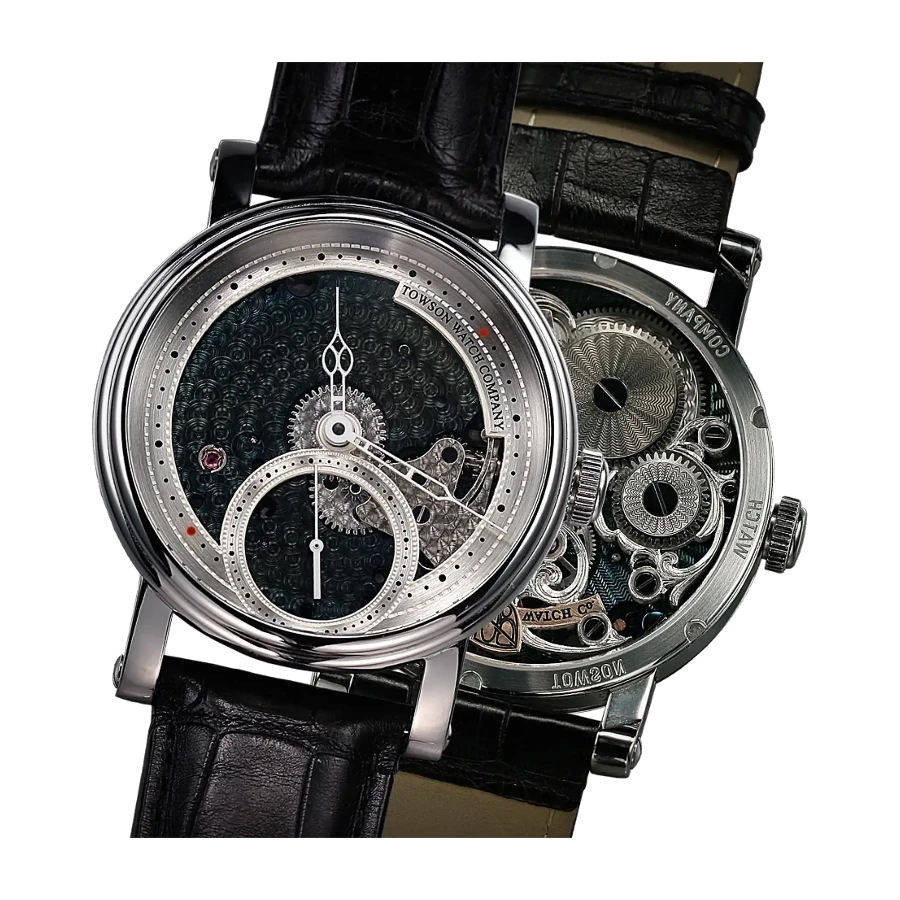
The HALF-SKELLY carries a mark in the same spirit. At four o'clock the TWC initials are cut into the skeletonized base plate, where a watchmaker's eye would look.
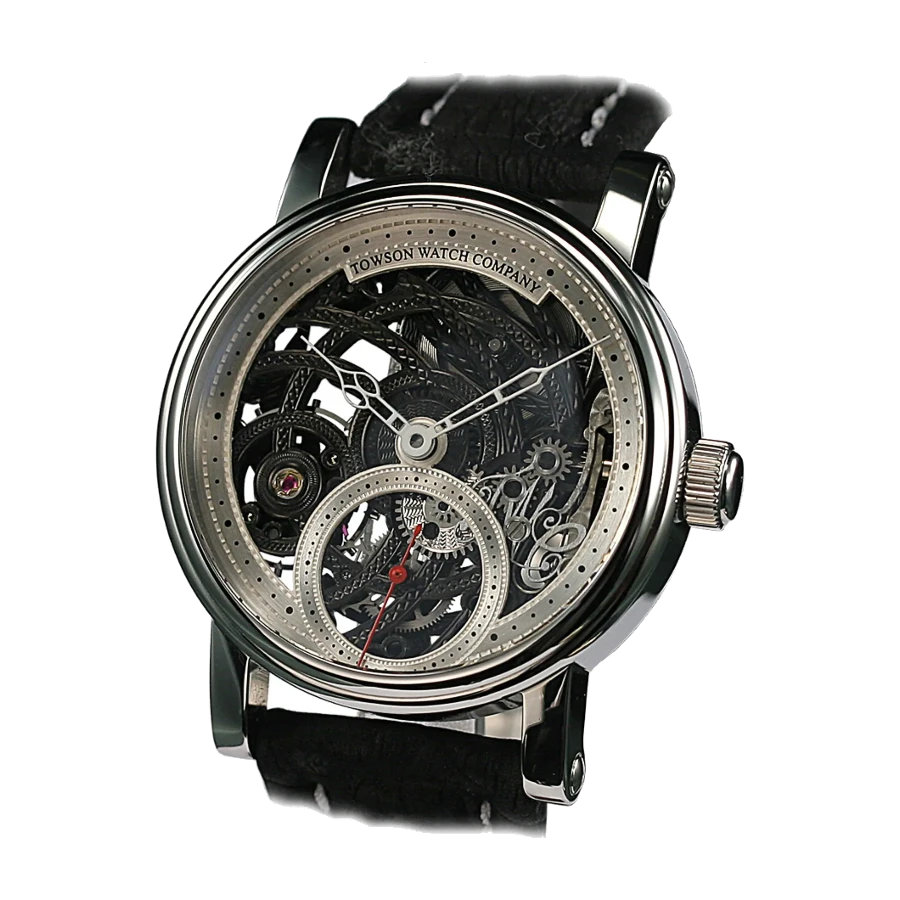
The Skelly watches take the POTOMAC's 6498 pocket-watch caliber and open it. The FULL-SKELLY removed the dial altogether. The QUARTER-SKELLY set silver chapter rings over an open plate. The HALF-SKELLY, made since 2020, shows part of the movement and keeps part of the dial, on a base plate plated in ruthenium, a dark mirror finish sometimes called black gold.
Words on the dial, not a logo
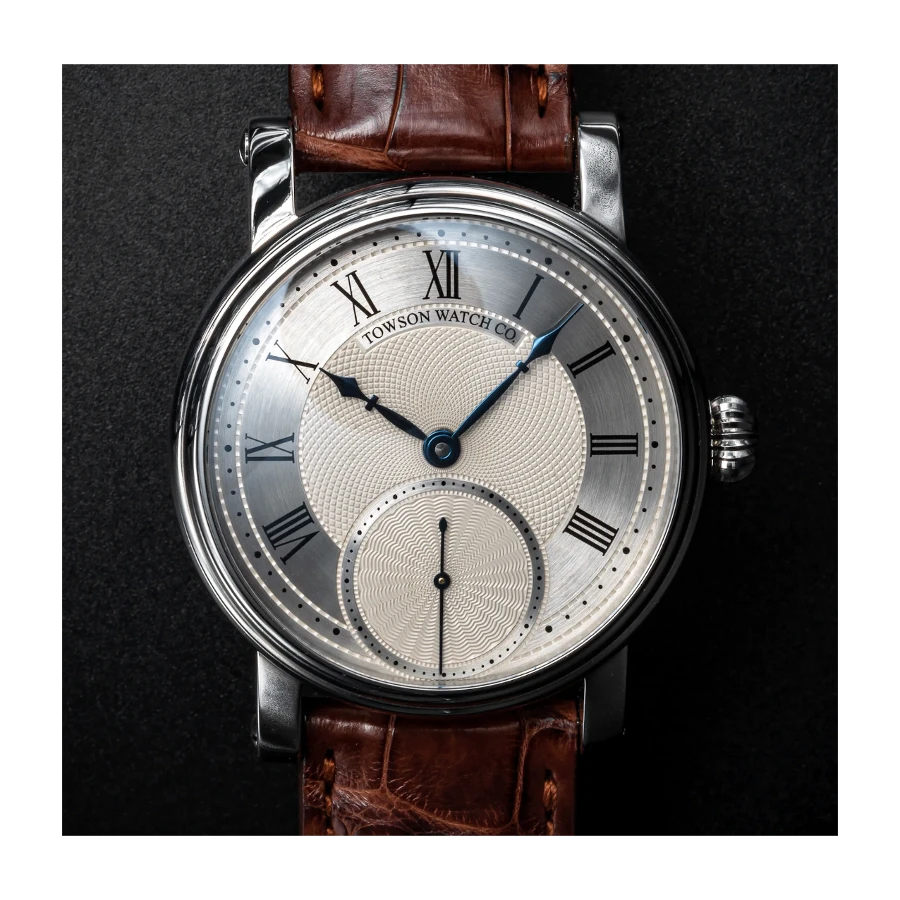
The Towson Classic watches are the oldest part of this collection: frosted sterling silver dials, rose-engine guilloché and a hand-wound 6498 finished in Pforzheim.
They are signed in text, not with a logo, so the work stays in front of the name. Each takes well over two months. Towson's watchmakers take the movement apart, Benzinger skeletonizes, engraves and plates it, and it comes back to Maryland to be assembled and regulated.
The line reached past the wrist. The founders converted pocket-watch movements into wristwatches, made a rose gold pocket watch, built an edition sold only at Tiffany & Co. in New York, and made the Towson Driver, with its off-center dial for reading at the wheel, which Balke calls the most challenging watch he made. Today the name continues in the TOWSON CLASSIC CR100 chronograph.
Every reference
Benzinger's work runs through four groups of Towson watches. Every Towson watch is limited to 100 numbered pieces. Retired references stay in the record, and every one can still be serviced in Baltimore.
Hand-wound dress watches with frosted silver dials, and the chronograph that carries the name today. Each reference is limited to 100 numbered pieces.
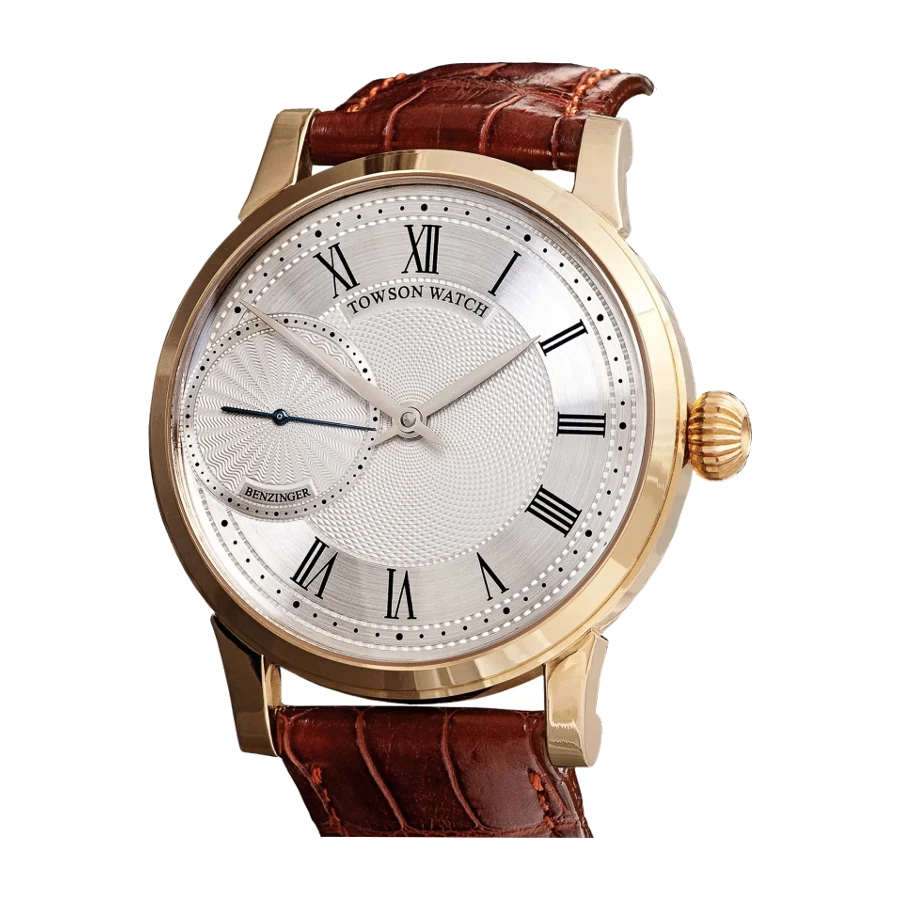
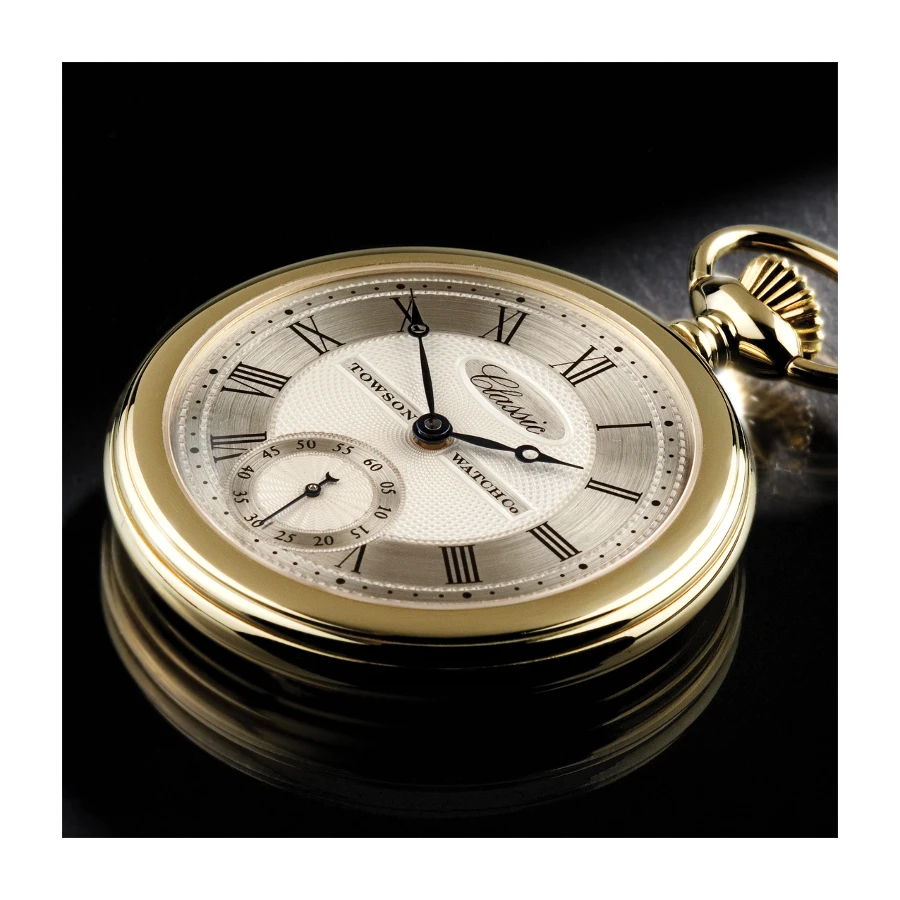
The 6498 opened up, in three degrees. Each is limited to 100 numbered pieces; the HALF-SKELLY is made at about 25 a year.
The Driver, and two rose gold chronographs with movements skeletonized and gilt by Benzinger.
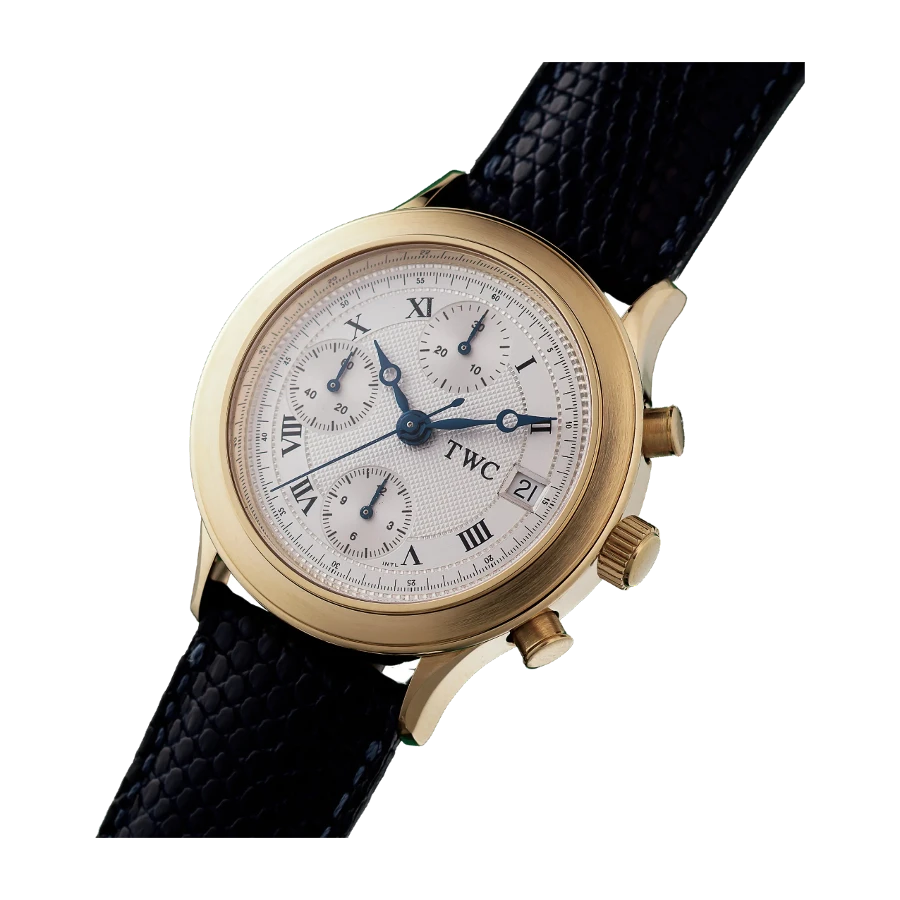
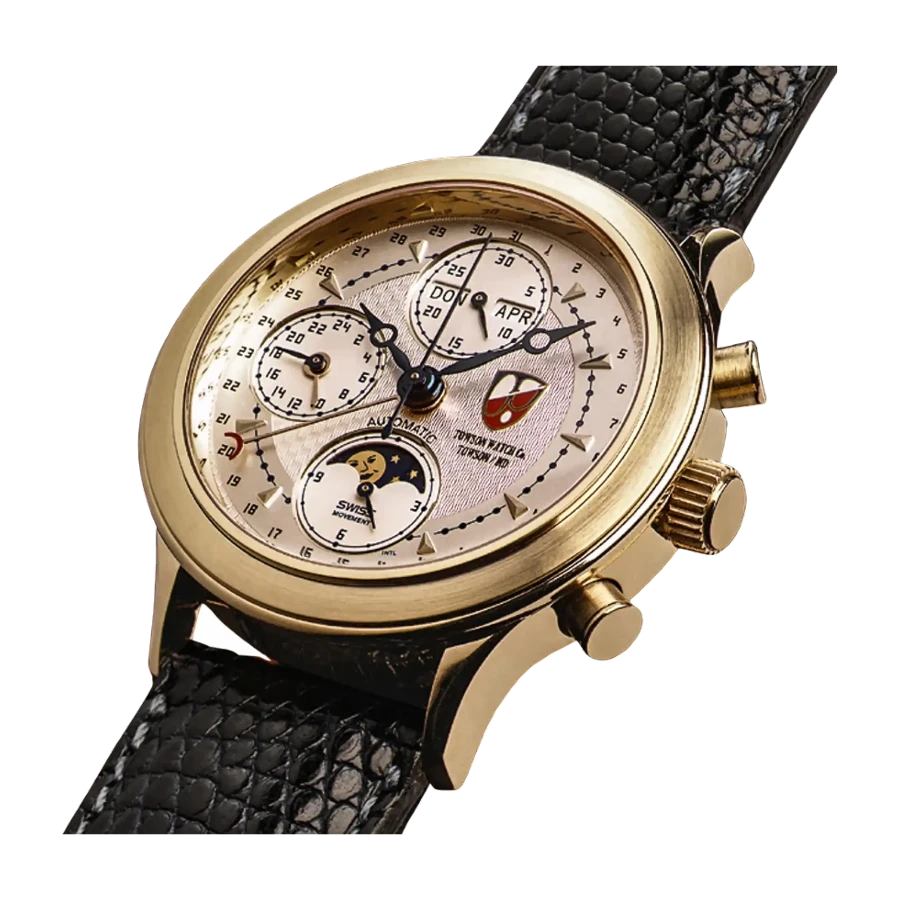
Benzinger dials on the CHOPTANK and the POTOMAC. 100 numbered pieces each.