
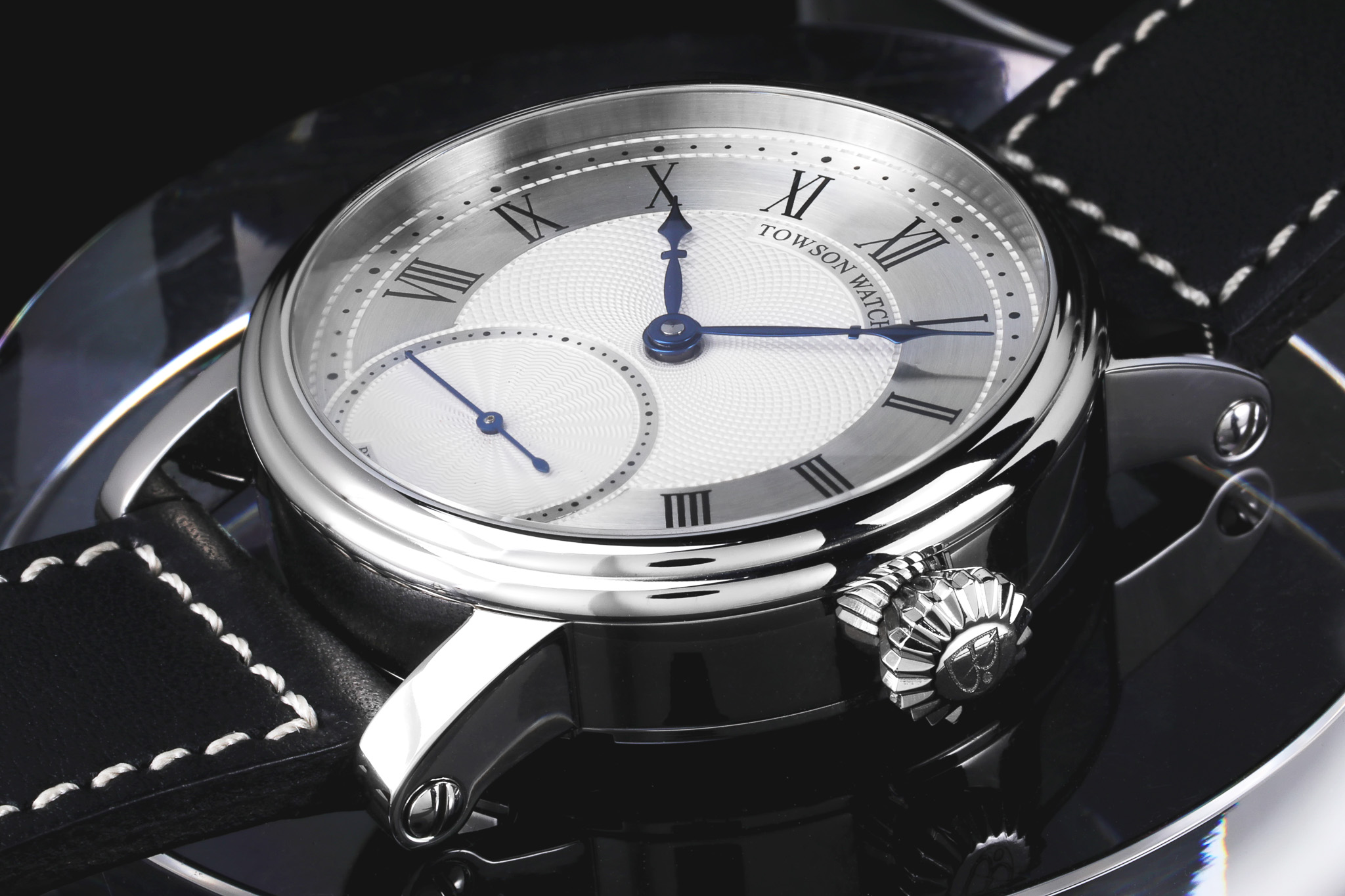
Blued steel hands
The blue on a Towson hand is not paint, lacquer or plating. It is the steel itself, colored by heat, and it turns from near black to bright blue as the light moves across it.
The color is in the steel
Polished steel changes color when it is heated. A film of oxide, far thinner than a coat of paint, forms on the surface, and as it grows the steel passes from straw to brown to purple and then, at about 300 °C, to blue.
Nothing is added to the hand. The blue is light reflecting from that film and from the polished steel beneath it, which is why it changes with the angle: near black in shade, deep blue across a room, bright when light strikes it directly. A painted or lacquered hand is the same flat blue from every side.
Watchmakers have blued steel this way for centuries, first to temper screws and springs, then because little reads better against a silver dial. The window is narrow. A few degrees short and the hand stays purple; a few degrees over and it fades toward grey, and it has to be taken back to bare steel and blued again.
A hand maker in Grenchen
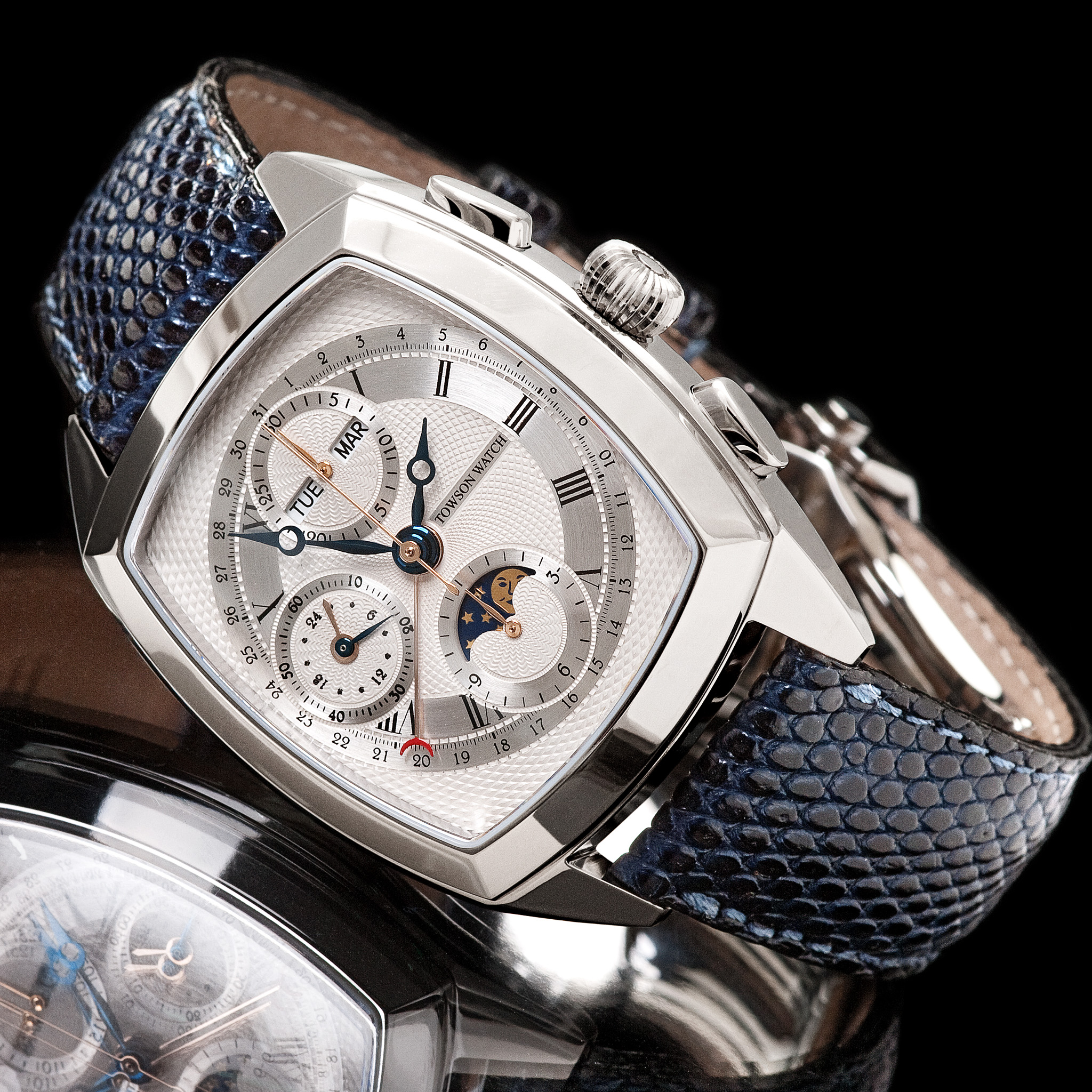
Every Towson watch with blued steel hands carries hands from one maker: a specialist in Grenchen, the Swiss watchmaking town at the foot of the Jura.
The firm has made hands for the Swiss watch industry for decades, and it has chosen genuine blued steel, one of the most demanding hands to make, as the work it wants to be known for. Its effort goes into what an owner ends up seeing: control of the bluing itself, the same shade on every hand in a set, the finish under the color, and inspection of each piece.
The same workshop makes polished, rhodium-plated, diamond-cut and luminous hands, and it cuts each Towson hand to the drawing for that reference.
The hands come to Maryland in sets. Our watchmakers in Baltimore fit them by hand when the watch is assembled, setting the height of each hand so that it clears the dial, the other hands and the crystal.
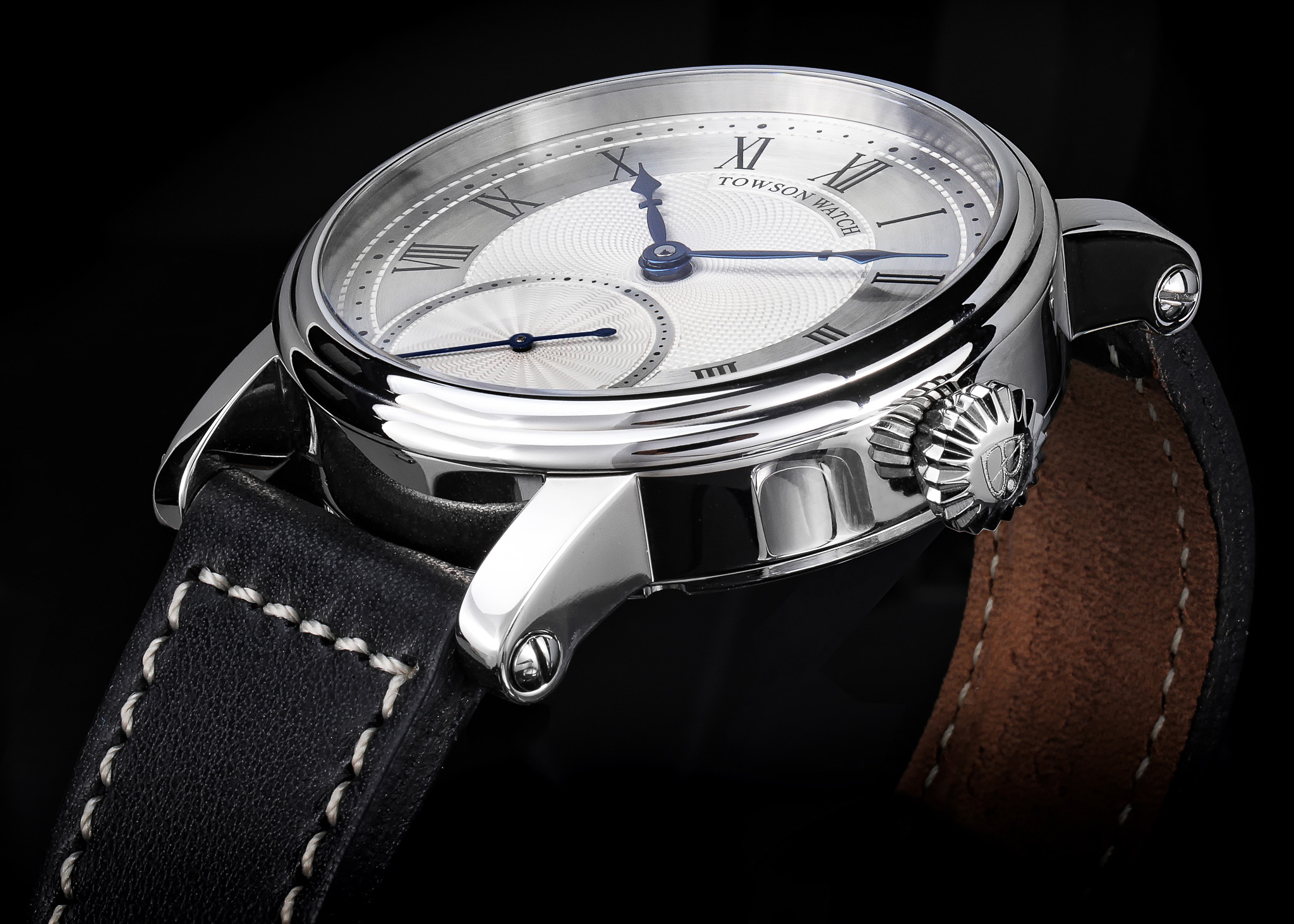
Five steps, one narrow window
The order of work is the same for a cathedral hour hand and for the thinnest chronograph seconds hand.
Where to see them
Three watches in production carry blued steel hands, and a fourth is sold out. Each is limited to 100 numbered pieces, assembled and regulated in Baltimore, and carries a two-year warranty.
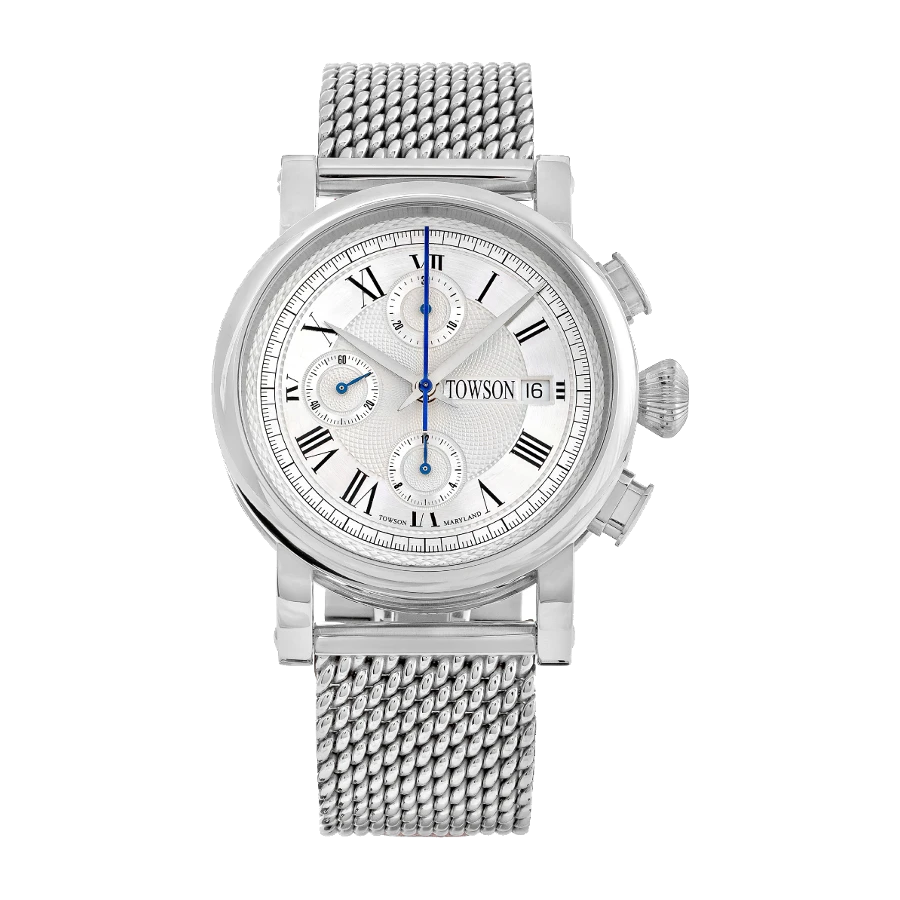
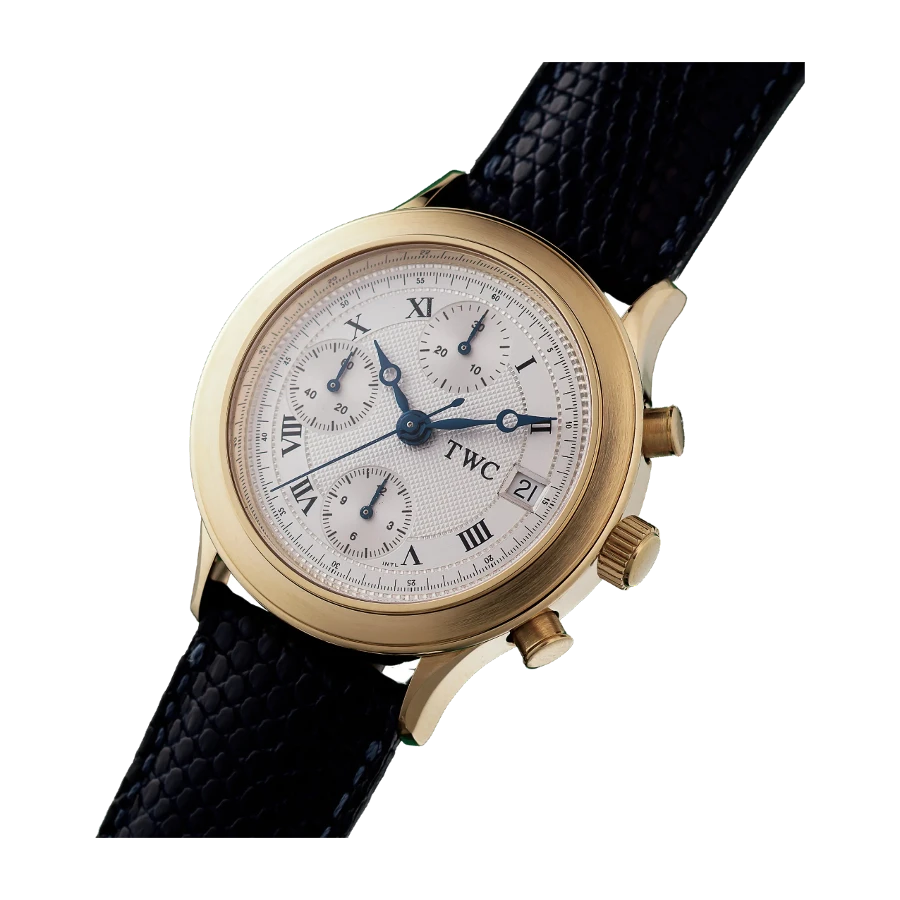
Rhodium hands tell the time; the chronograph seconds and the three register hands are blued, so the stopwatch reads apart from the hour. $8,000 on the steel mesh bracelet.
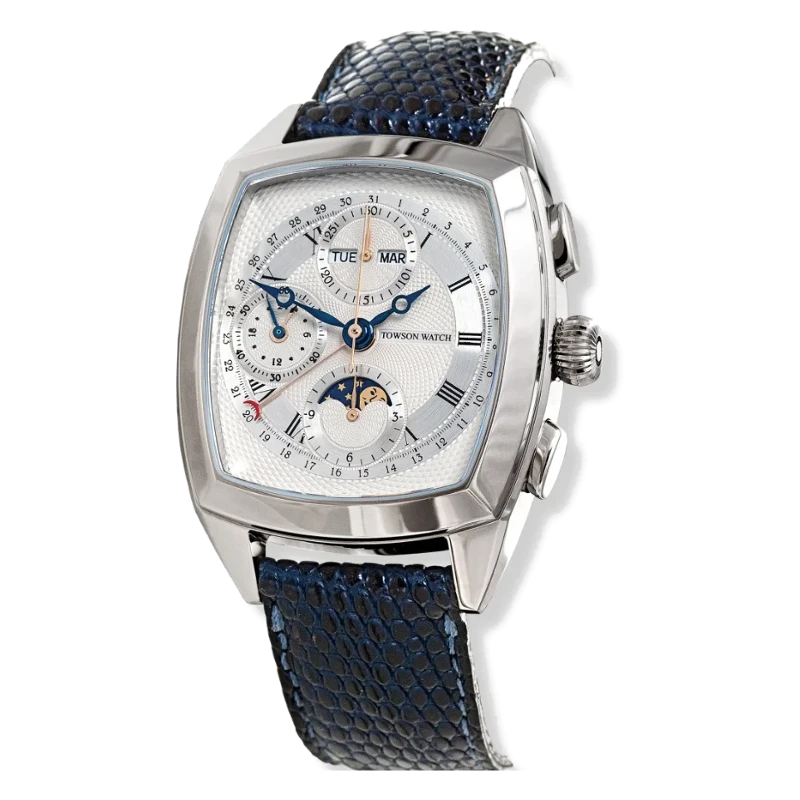
Blued hour and minute hands, with rose gold, yellow gold and platinum hands for the chronograph and calendar. 100 numbered pieces. Available by request.
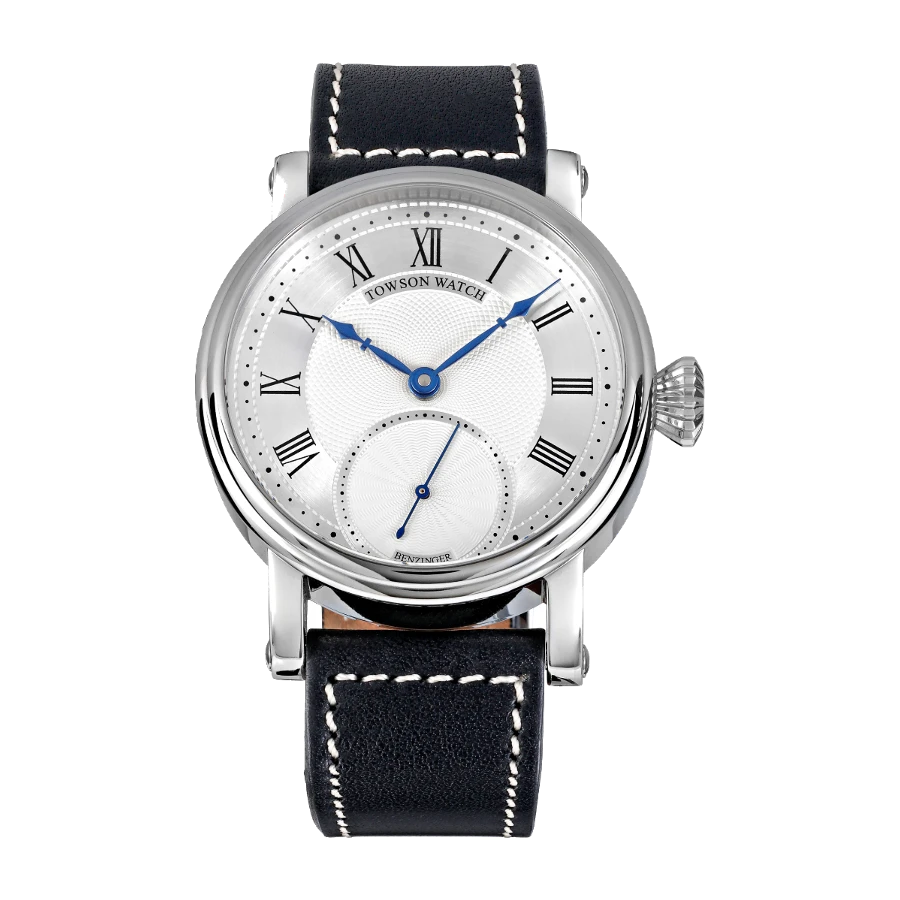
Hour, minute and small-seconds hands in blued steel over a hand-cut sterling silver dial. Hand-wound. 100 numbered pieces.
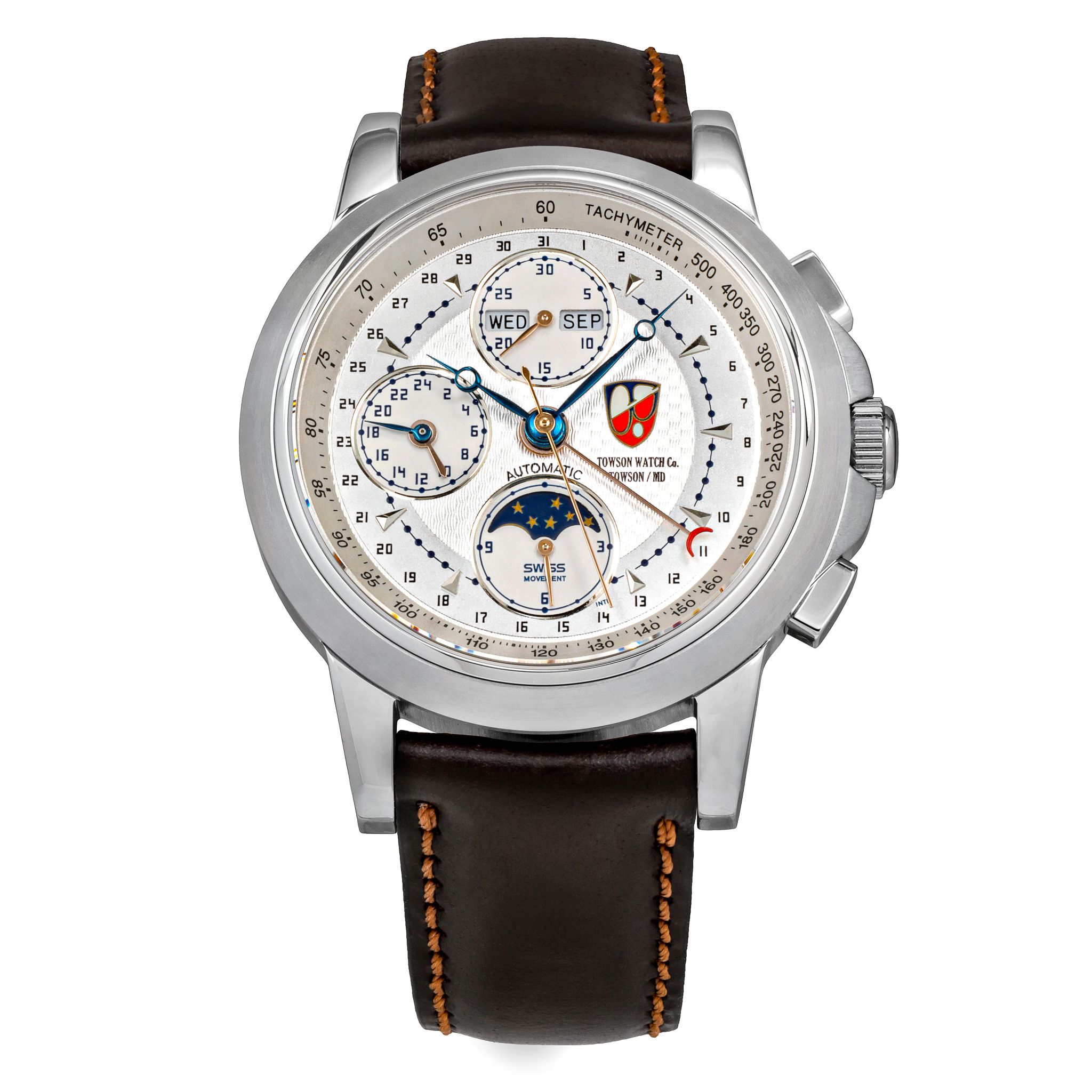
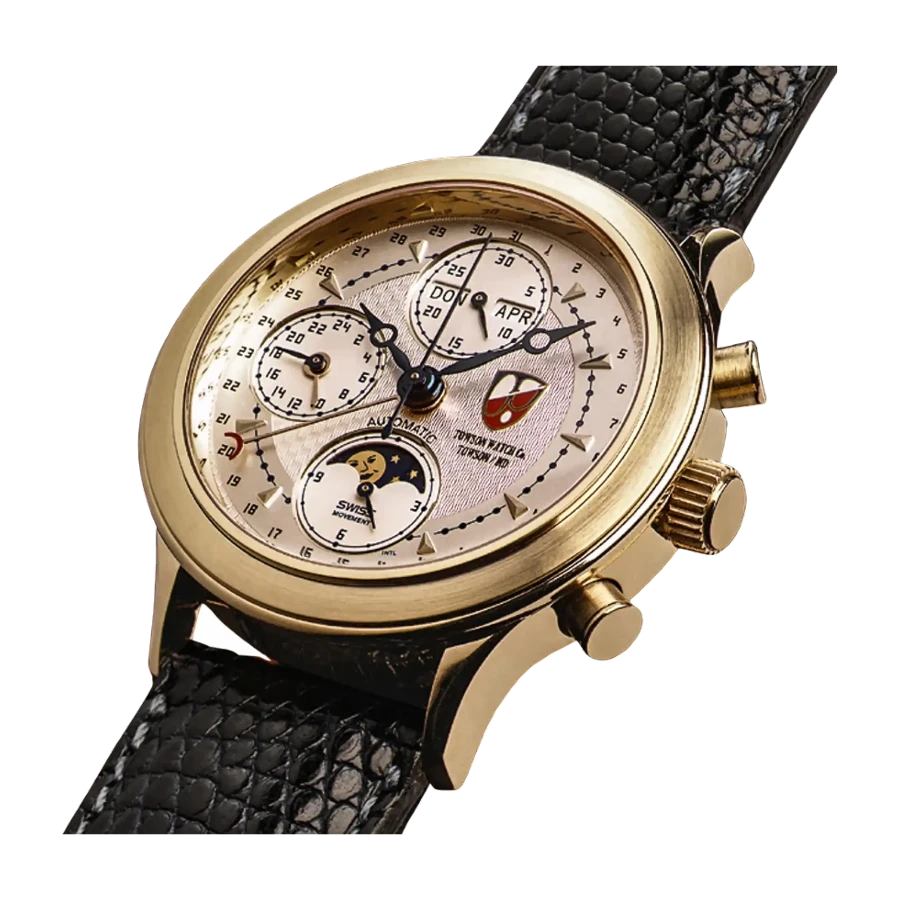
Full-calendar moonphase chronograph with heat-blued spade hands on an engine-turned silver dial. Numbered 1 to 100.
Blued hands in the record
Blued steel runs through the Towson record, on dress watches, chronographs and skeletons. The references below are retired, and every one can still be serviced in Baltimore. Blued hands also appear on the Mission Moon I, the Cockpit Moon, the first COCKPIT, the SAGAMORE and the Triple Crown.
Hand-wound watches with frosted silver dials by Jochen Benzinger. Each was made with blued steel hands; some references were also offered with rhodium or rose gold hands.
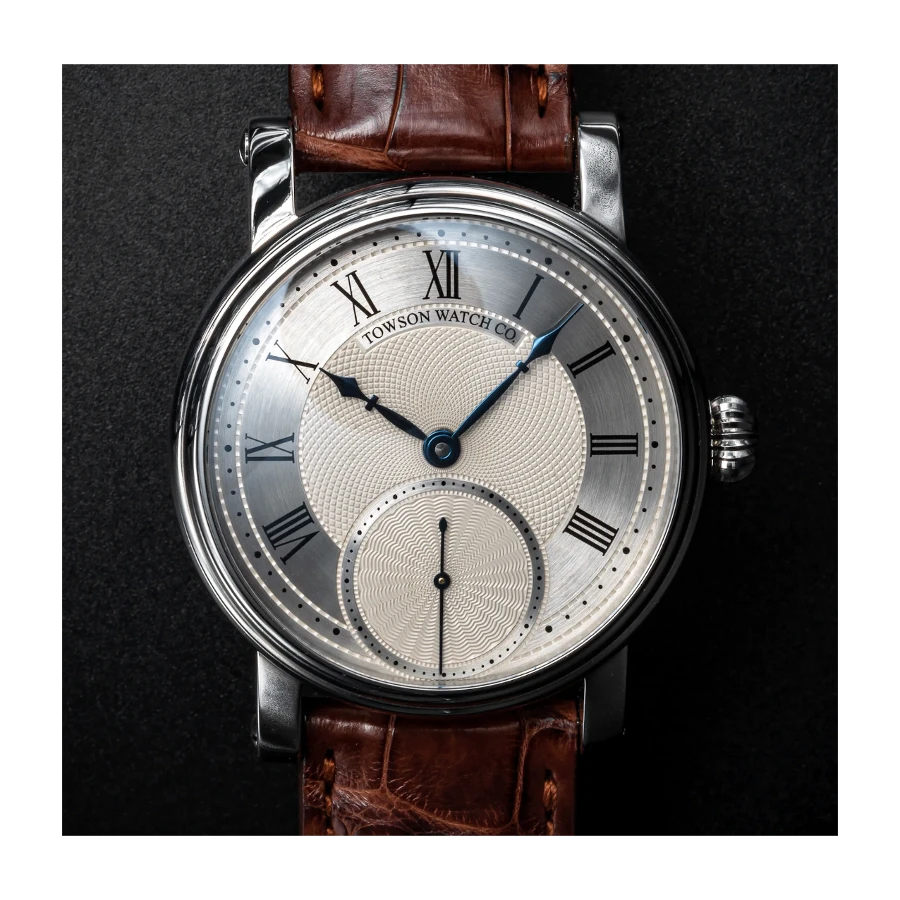
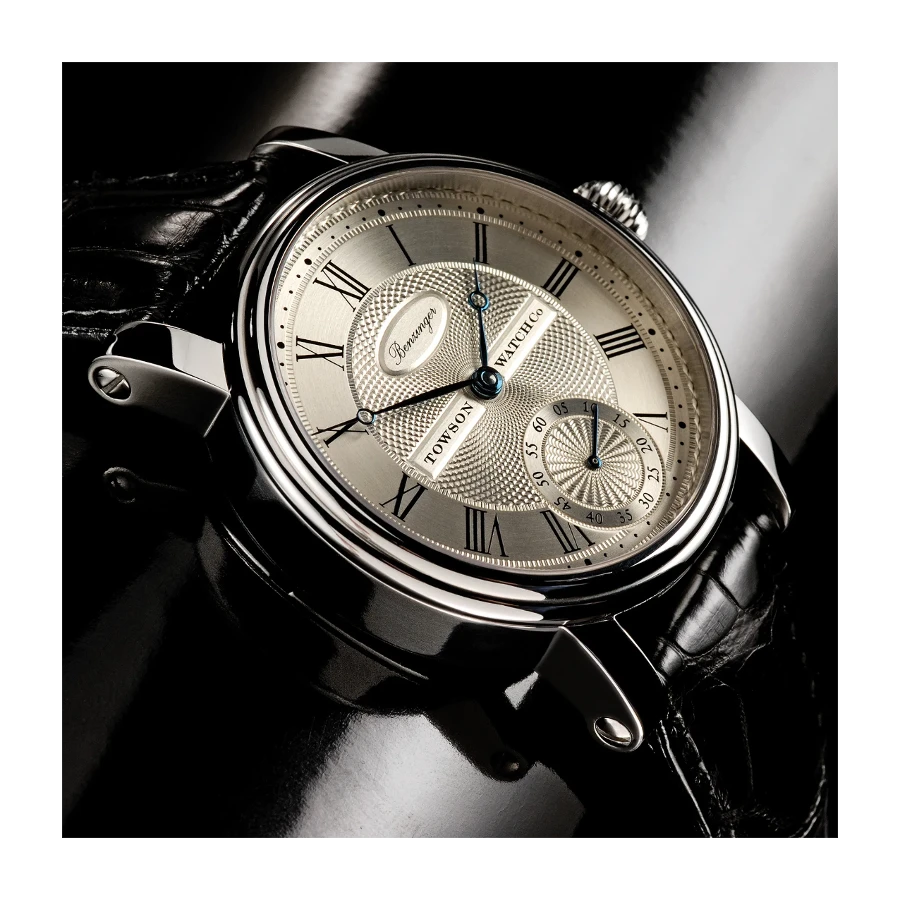
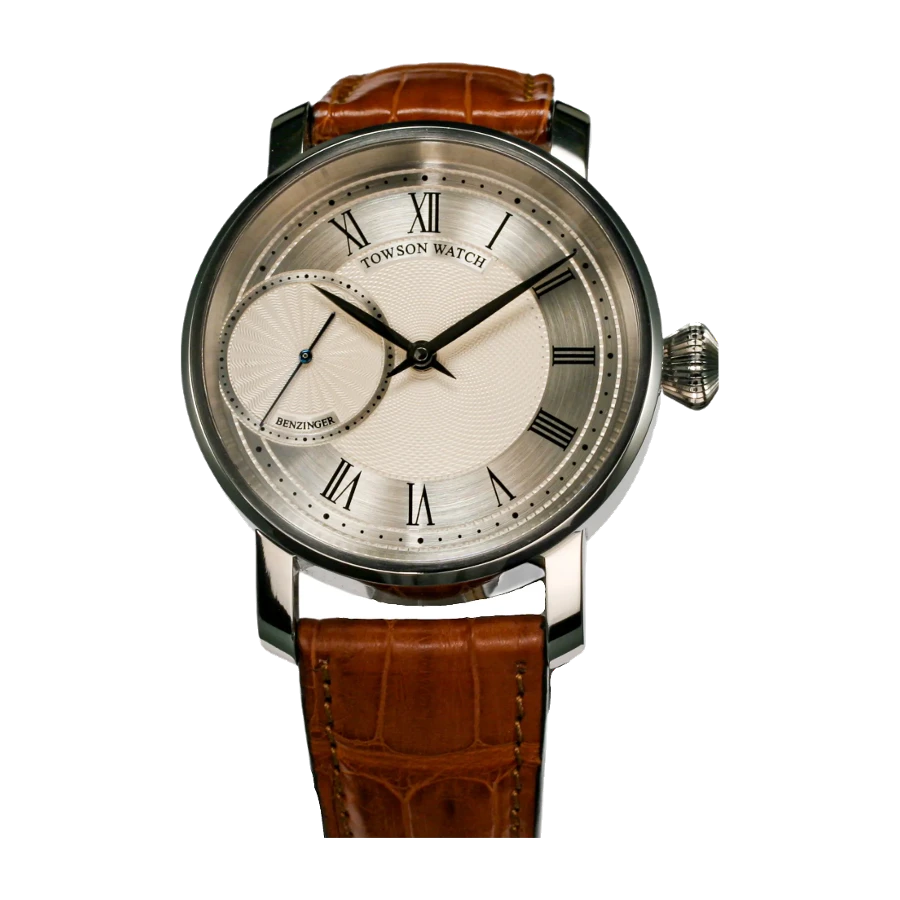
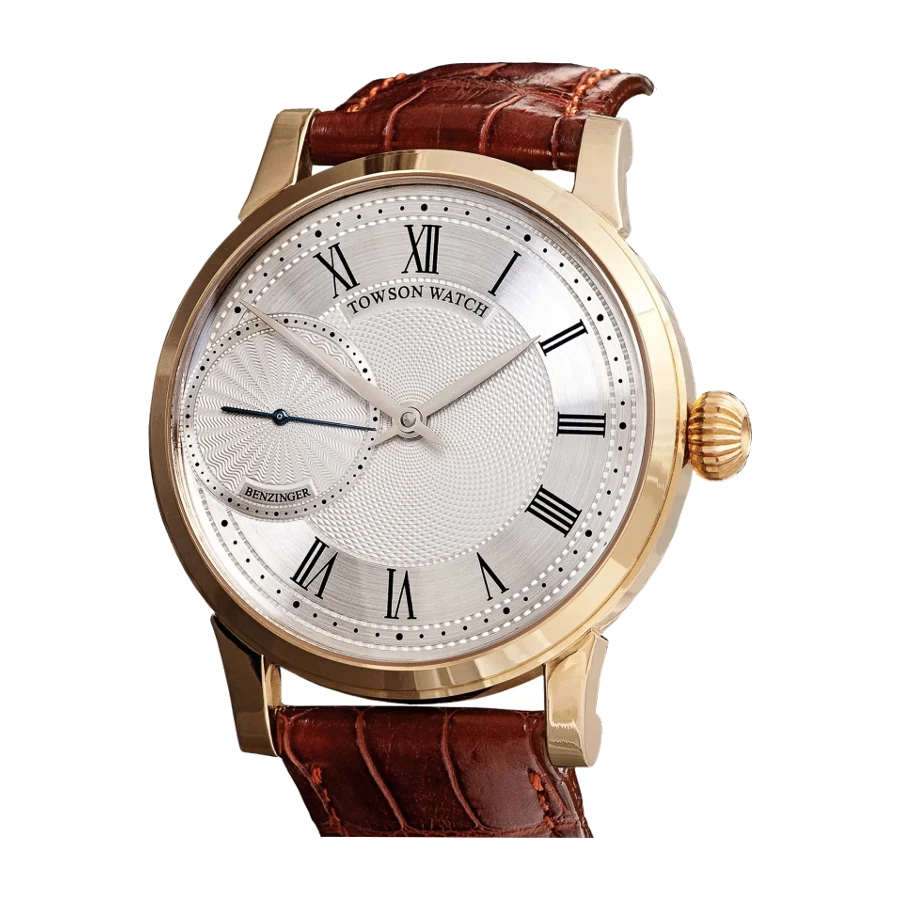
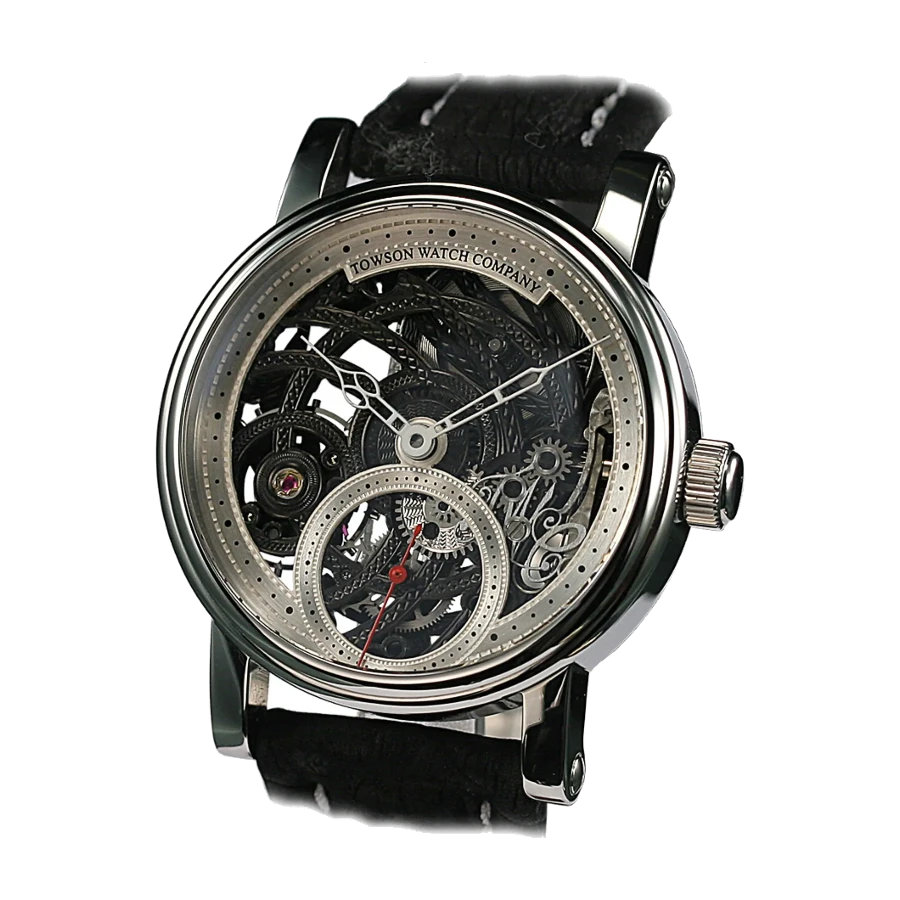
The 6498 opened completely, with the hours and minutes read from blued steel hands on a frosted silver chapter ring.
Two rose gold chronographs with blued Breguet-style hands.
Questions about the hands
Ask the people who build it
Hand sets, availability, straps or fit on your wrist. A person replies by email.